

Middle East Flight Cancellations 2026: Trips in Limbo? Here’s What to Do
Middle East flight cancellations 2026 is of a scale that has no modern aviation precedent — except, perhaps, the early months of Covid. Following US and Israeli strikes on Iran on 28 February 2026, a cascade of airspace closures has brought one of the world’s most critical aviation corridors to a near-standstill. And unlike the brief flare-up we saw in June 2025, this one is not resolving quickly.
The scale is worth sitting with for a moment. The Middle East handles somewhere in the region of 200 million passengers a year and acts as the primary bridge between Europe, Asia, Africa, and Australia. Aviation consultant Tony Stanton described it well: “When that bridge collapses, the traffic doesn’t largely disappear — it tends to funnel either north or south into two narrow corridors, and those corridors become very congested.” Over 52,000 flights have been cancelled since the conflict began, and the disruption is reshaping global routing in real time.
For many of you reading this — especially those with upcoming trips — this is personal. It certainly is for me. So let me cover both the big picture and the practical detail.
Middle East flight Cancellations 2026
The airspace closures are not uniform, and they keep shifting. As of mid to late March 2026:
- Iran, Iraq, Syria, Bahrain, Kuwait — fully closed to all civilian flights
- Qatar (DOH) — limited reopening underway, but far from normal; Qatar Airways is operating a reduced schedule through at least 28 March
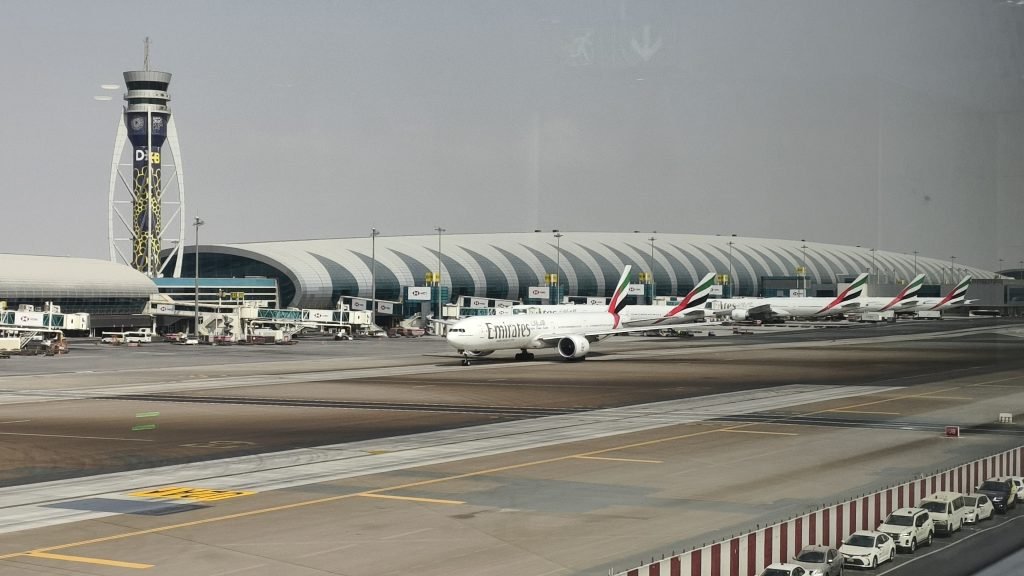
- UAE — restricted access under an Emergency Security Control of Air Traffic (ESCAT) zone; Dubai Airport briefly closed entirely on 16–17 March after a drone strike near Terminal 3, the fourth incident at the airport since the conflict began
- Saudi Arabia — partial closures affecting areas bordering Iraq and the Persian Gulf
- Jordan — technically open but with advisories to carry extra fuel
The disruption has even spilled into the Caucasus. On 5 March, an Iranian drone struck the terminal building at Nakhchivan Airport in Azerbaijan, the first time the current conflict reached that far north. The Armenia–Azerbaijan corridor, now carrying heavy rerouting traffic, is under strain.
For long-haul routes between Europe and Asia, this means airlines are either cancelling entirely or adding 2–4 hours to journey times via alternate corridors, burning dramatically more fuel in the process.
Jet fuel has hit around $109 per barrel. War-risk insurance premiums have surged 50–500% on affected routes. Air cargo rates are up 70%. The knock-on effects on ticket pricing for summer 2026 could be significant. There has been reports of huge pricing spikes in direct flights between Europe and Asia as well as indirect ones avoiding Middle Eastern air space !
Airline Operations: Where Things Stand
Emirates is targeting a return to close to full capacity and has been gradually restoring routes from Dubai. As of mid-March, they were operating a skeletal route compared to their previously planned network — but this is subject to change rapidly.
Etihad restarted a limited commercial schedule covering 70+ destinations between 6–19 March. Operations remain reduced, and any itinerary through Abu Dhabi should be treated as subject to change.
Qatar Airways has had the most dramatic grounding of any major carrier. Nine of their widebody aircraft were ferried to Teruel Airport in Spain (one of Europe’s largest aircraft storage facilities) since the strikes began. Qatar is operating a reduced network through at least 28 March, maintaining service to a limited set of destinations including London Heathrow, Paris, Bangkok, and Tokyo Narita. A full restart date remains unconfirmed.
British Airways has cancelled all flights to Dubai, Amman, Bahrain, and Tel Aviv through 31 May 2026, and Doha through 30 April. Abu Dhabi is suspended with no confirmed restart date for the rest of the year. This is the most significant European carrier withdrawal from the Middle East since the 2003 Iraq War.
Virgin Atlantic has suspended its London–Dubai seasonal service for the remainder of the winter 2025/26 season. Riyadh services are also paused and being assessed.
Lufthansa Group (Lufthansa, SWISS, Austrian Airlines, Brussels Airlines, Eurowings, ITA Airways) has extended suspensions to varying dates depending on route — Tehran through April, Tel Aviv and others through late March. A gradual, route-by-route resumption is underway but coordinated through UAE airport authorities, so nothing is guaranteed.
Air France/KLM remains one of the few European carriers still attempting to serve some Gulf routes, though with significant adjustments. Air France has added extra frequencies to Bangkok, Singapore, Delhi, Mumbai, and Nairobi to absorb displaced demand.
Wizz Air has gone furthest of any LCC, suspending Dubai, Abu Dhabi, Amman, and Jeddah from all European bases until mid-September 2026.
Airline Policies: Your Rights on Refunds and Rebooking
Policies are evolving — always check the airline’s website directly before acting. The below reflects the latest publicly available information as of 23 March 2026.
⚠️ One critical piece of advice before we get into individual airlines: if your flight hasn’t been officially cancelled yet, resist the urge to proactively rebook or cancel and pay fees for the privilege.
Many airlines are holding off on official cancellations until close to the departure date. If you wait for the airline to pull the trigger, you typically unlock far more generous terms — including full refunds — than if you voluntarily rebook a flight that’s technically still showing as operating.
More on this in my own experience below.
British Airways
BA’s evolving waiver now covers all flights to Abu Dhabi, Amman, Bahrain, Doha, Dubai, and Tel Aviv.
- Refund: Full cash refund available for cancelled flights via Manage My Booking. Note: some users have reported the online system incorrectly attempting to charge a £70 fee — if this happens, contact BA directly via live chat and cite the official waiver.
- Rebooking date: Up to 31 May 2026 per the current policy, though this is a date that has already moved several times.
- Partner airlines BA can rebook you on: Air France, Lufthansa, SWISS, Iberia, SAS, Austrian Airlines, Brussels Airlines, American Airlines, Malaysia Airlines (to 30 April), Cathay Pacific (to 30 April), Oman Air, Royal Jordanian (Amman only), EL AL, Finnair.
- Avios bookings: Explicitly included in the waiver as of the March 1 update — you can rebook or reclaim your Avios for cancelled flights.
- Important catch: Rebooked tickets must be in the same cabin class. If your original airline or partner has no availability in that class, your options narrow fast (as I discovered with Saudia and the First Class issue I’ll detail below).
- Compensation: Airspace closures are classified as extraordinary circumstances under UK law, so you are not entitled to the standard £220–£520 compensation per person — but you are absolutely entitled to a full refund or alternative routing.
Virgin Atlantic
Virgin is asking affected travellers to contact the airline directly rather than using an automated system. Flexible rebooking options are available for affected Middle East routes. Contact: ba.com Manage My Booking or call 0344 874 7747.
Emirates
- Refund: Full refund available for eligible flights scheduled between 28 February and 15 April 2026. Must be requested via Emirates’ dedicated refund form, not through standard Manage My Booking.
- Rebooking: You may rebook the same route up to nine times, provided travel is completed on or before 31 May 2026.
- If only one leg is cancelled: Refund applies only to the unused portion.
- Agent bookings: Must be handled by the original agent.
Qatar Airways
- Refund: Full refund on the unused portion of tickets for travel between 28 February and 30 April 2026.
- Rebooking: Free date changes (not destination changes) for travel up to 31 May 2026.
- Processing times: Qatar has warned that refunds may take longer than usual due to extremely high demand.
- Award tickets booked with partner currencies (BA Avios, Aeroplan, Velocity): You must contact the issuing loyalty programme — not Qatar Airways — for rebooking or refunds.
Etihad
- Refund: Full refund for completely unused tickets; pro-rated refunds for partially used tickets. Service charges waived. Applies to tickets issued on or before 28 February 2026 for travel up to 15 April 2026.
- Rebooking: Free rebooking on Etihad-operated flights up to 15 May 2026; ticket reissue must be completed by 15 April.
- Loyalty programme: Etihad has cut Tier Mile requirements by 25% for 2026 and is offering status protection for passengers unable to accumulate miles due to the disruption.
Air France
- Refund: Full refund for cancelled flights to Tel Aviv, Beirut, Dubai, and Riyadh.
- Rebooking: Free rebooking onto Air France, KLM, Delta, or Virgin Atlantic services.
- Waiver window: The initial waiver was tied to travel before 23 March 2026 — check the Air France website directly for the current extended window.
KLM
- Refund: Full cash refunds for cancelled services to Dubai, Riyadh, and Dammam through 17 May 2026. Tel Aviv suspended for the rest of the winter season.
- Processing time: 14–30 days for refunds.
- Rebooking: Free via the My Trip section on KLM’s website.
- Expenses: Claims for disruption costs (meals, hotels, calls) can be submitted through KLM’s expense reimbursement process.
Lufthansa Group (Lufthansa, SWISS, Austrian Airlines, Brussels Airlines, Eurowings)
One of the more operationally straightforward policies: a single waiver framework applies across all six carriers.
- Refund: Full refund available for all cancelled flights, submitted via the respective airline’s Help Centre or through a travel agent.
- Rebooking: One free rebooking onto any later Lufthansa Group-operated flight.
- Ticket waiver: Guests holding LHG tickets to Tel Aviv, Amman, Erbil, Dammam, Abu Dhabi, or Dubai issued on or before 1 March 2026 — with travel dates affected — may rebook fee-free or refund.
- SWISS specifically is adding extra capacity on Delhi–Zurich during this period to absorb displaced demand.
Know Your Rights (UK Passengers)
Whether your flight was a cash booking or an award, if an airline cancels your flight, UK law (and equivalent EU regulation) is clear: you are entitled to either a full cash refund to your original payment method, or alternative routing, or rebooking at a later date.
You do not have to accept a voucher unless you choose to. If the online system won’t process a full refund, push back and escalate, several passengers have had to do this, particularly with BA’s online tools.
You are not entitled to fixed-sum delay compensation (the £220–£520 per person) where cancellations are caused by the conflict, as this falls under the extraordinary circumstances exemption. But your right to a refund or rerouting is absolute.
If you have travel insurance purchased before late February 2026, most comprehensive policies will cover trip cancellation where the FCDO has issued a Do Not Travel advisory. The FCDO currently advises against all travel to Israel, and against all but essential travel to the UAE, Qatar, Bahrain, parts of Saudi Arabia, and Jordan. Policies purchased after the conflict became public knowledge (approximately 28 February 2026 onward) are very unlikely to pay out for Middle East disruption — it’s now a known event.
My Own Trips & Experiences Thus Far
I’ve been very intentional about pacing my travel this year — no more than eight long-haul trips, well-spaced. That discipline has helped, but three of my upcoming trips run directly into this disruption.
The Bahrain trip ( British Airways ): This one has been cancelled twice now. I planned it last May, and combined it with a trip starting in Milan — partly to make use of a voucher from a last-minute flight back from Milan I had to take separately.
The rebooking maze has been genuinely exhausting. BA has no Bahrain flights until end of year, and whilst their policy technically allows rebooking via partners, the reality is much narrower. Saudia was the only practical option, but then I hit the cabin class problem: I was booked in First Class, and Saudia’s highest class is Business. Qatar had no First Class award availability in April or May. And here’s the kicker — my ticket validity expires on 11 May due to the 12-month rule, so there was no way to push the trip far enough out to find viable alternatives. That trip is now cancelled entirely, and the main use of my BA voucher is lost. Sometimes there genuinely is no good outcome available.
The Oman trip (Qatar Airways): Qatar has let me rebook this to May. Whether that date holds is another question — I’m treating it as provisional.
The Dubai trip (Air France / Flying Blue): This one has become the most frustrating. I had expiring Flying Blue miles — which, despite flying SkyTeam revenue flights and then defaulting all the credit to Virgin without thinking, which did nothing to extend those miles.
Air France hasn’t officially cancelled the flight yet, and when I tried to rebook, they wanted to charge me for the privilege. My return leg on Virgin has already been cancelled. So I’m in the position of potentially having an outbound flight with no confirmed way home.
My strong advice here — and this is something I’d urge you to consider with any similar situation — hold your nerve and wait as close to departure as possible for an official cancellation. It might mean tolerating uncertainty until a couple of days before departure. But once the airline formally cancels, your rights shift dramatically in your favour.
If you blink first and rebook voluntarily (paying fees or fare differences), you’ve done the airline a favour at your own expense on a flight that would likely have been cancelled anyway.
A Note on Flying Blue Miles That Are Due to Expire
This came up in my own situation, so I know some of you will be in the same boat. A few important things to know:
Under the current Flying Blue rules (until 3 May 2026), only flight activity extends the expiry of miles earned from flights. Transferring Amex points or staying at an Accor hotel will only extend the miles earned from those partner activities — not your flight-earned miles.
However — and this is genuinely useful timing — Flying Blue is changing its expiry policy on 4 May 2026. From that date, any qualifying activity (flights, hotel stays, car rentals, partner purchases, even a small Amex transfer) will reset the 24-month clock on your entire miles balance. Existing balances will be merged at implementation, applying the most favourable validity period. If your miles are about to expire, the simplest near-term solution is to book any cheap qualifying activity before they lapse, or — if you can get through to the new policy window — a small partner earning after 4 May will buy you another 24 months on everything.
If your Flight Blue miles are refunded following a cancellation, be aware that under normal T&Cs, involuntary cancellations do entitle you to a miles refund — but the new validity of those returned miles may depend on the timing. Call Flying Blue directly to confirm rather than assuming.
What Happens Next — The Three Scenarios
Based on current situation, there are broadly three ways this plays out:
Scenario A — De-escalation before late March: EASA’s advisory expires, Qatar restores full operations by 28 March, other carriers follow through April. Airfares begin normalising by May. Easter travel is disrupted but manageable.
Scenario B — Conflict continues at current intensity: EASA extends its advisory, Qatar’s restart is delayed again, disruptions persist through Q2. Summer airfares are noticeably higher due to sustained fuel and insurance costs.
Scenario C — Escalation: Emirates and Etihad pull back again, insurance premiums spike further, Gulf hub recovery pushed to Q3 2026 or later.
Right now, Scenario B feels most likely based on the pattern of the past three weeks. Plan accordingly.
Practical Checklist if You’re Affected
- Do not go to the airport without direct confirmation from your airline that your flight is operating.
- Wait for official cancellation before voluntarily rebooking, unless you’re genuinely comfortable with the terms being offered right now.
- Check the FCDO — if there’s a Do Not Travel advisory for your destination, your travel insurer may cover you regardless of whether the airline has formally cancelled.
- If your flight is cancelled, you are entitled to a full cash refund. Don’t accept a voucher unless it genuinely suits you.
- Award bookings via partner currencies: Contact the programme that issued your ticket (e.g., if you used BA Avios to book Qatar, call BA — not Qatar).
- Document everything — cancellation notices, receipts for any expenses, email correspondence. This matters for insurance claims.
- Patience on hold times. Airlines are prioritising passengers with imminent travel. If your trip isn’t in the next week, you may have a long wait. Use online tools and chat where possible.
A Final Thought
Once again we are navigating tense times that, ultimately, were avoidable, unlike the Covid crisis
For those of us whose hobby and livelihood is built around travel, there’s a particular frustration in watching carefully planned trips unravel through no fault of our own. The practical reality is that the best move right now is informed patience — understand your rights, don’t be pressured into decisions before you have to make them, and wait for clarity where the situation allows.
If you’ve had specific experience with Flying Blue miles being refunded after expiry — or any other edge case I’ve touched on here — I’d genuinely love to hear from you in the comments. We’re all navigating this together.
You can see all the latest Emirates Flight Schedules here
Qatar Airways status and rebooking policies

Faze, founder of Wander Up Front and Elevate Your Stay, is a London-based travel specialist with a deep passion for aviation. With over 2 million miles flown, he has spent the last 8 years focusing on First and Business class experiences.
Faze provides straightforward, no-frills insights into premium airline products and services, sharing what matters to help travellers make informed choices.
Follow him on his adventures and behind the scene stories on Instagram !
If you want to want to travel in style in more cost affective ways – check out his starter guide to utilizing Miles & Points