
Finnair A350 Business Class Review: AirLounge on the Polar Route (2025)
Updated on June 11th, 2026 at 12:33 pm
This is my eighth Finnair Business Class flight since 2017, and my most demanding test of the AirLounge seat yet. Previous reviews covered shorter sectors and bulkhead positions.
This time I wanted to put the product through its paces on a 14-hour overnight sector in a standard mid-cabin seat — the configuration that the majority of passengers will actually experience. The result was more nuanced than my earlier, more glowing assessments.
The route added another layer entirely. Seoul Incheon to Helsinki via the North Pole is one of the more unusual flight paths operating today, and a first for me across thousands of hours of flying. Whether the conditions would deliver anything worth seeing out the window was another matter entirely.
The central question of any Finnair AirLounge review remains the same one the product has faced since launch: can a seat that does not recline truly work as a lie-flat bed on a very long flight? After many flying hours, I finally have a complete answer.
Quick Verdict: Finnair A350 Business Class AirLounge
A genuinely distinctive business class product with excellent food, strong service and a beautifully Nordic cabin design. The AirLounge seat works very well on medium-haul sectors and in bulkhead positions. On a standard 14-hour seat it is comfortable but the footwell remains a real limitation for sleep quality. If you can book a bulkhead, do. Either way, at Finnair’s competitive pricing it is a product worth choosing.
| Seat (standard position) | 7.5/10 |
| Seat (bulkhead position) | 9/10 |
| Dinner service | 8.5/10 |
| Breakfast service | 5/10 |
| Crew and service | 8.5/10 |
| Value for money | 9/10 |
| Overall | 8/10 |
Read on for the full flight report, honest sleep assessment, polar route detail and my overall view after 8 Finnair business class flights since 2017.
Flight Details
- Route: Seoul Incheon (ICN) to Helsinki (HEL)
- Flight Number: AY42
- Date: April 2025
- Departure Time: 23:00
- Flight Duration: 13 hours 45 minutes
- Aircraft: Airbus A350-900 (AirLounge seats)
- Seat: 5L (standard window, mid-cabin)
The Finnair AirLounge Seat: What You Need to Know First
Before the flight report, a quick primer on the seat itself for anyone new to the product — because it is genuinely unlike anything else in business class and the concept divides opinion.
The AirLounge is a fixed-shell seat in a 1-2-1 configuration, meaning every passenger has direct aisle access. The critical distinction from every other business class seat is that it does not recline. Instead, the seat base slides forward and the fixed shell converts into a fully flat bed. The idea is that the fixed position creates a wider, more lounge-like surface than a traditional recliner can achieve within the same footprint.
| Specification | Detail |
|---|---|
| Configuration | 1-2-1, all direct aisle access |
| Seat mechanism | Fixed shell, non-reclining. Seat base slides forward to create flat bed |
| Bed surface | Fully flat, wide, comfortable — one of the wider beds in business class |
| Footwell (standard seat) | Narrow and angled — a genuine limitation on very long flights |
| Footwell (bulkhead seat) | No restriction at all — completely open. A different experience entirely |
| Available on | All Finnair A350-900 and retrofitted A330 long-haul aircraft |
| IFE screen | Large touchscreen with Bluetooth headphone support |
| Connectivity | USB-A, USB-C, PC power, Wi-Fi |
| Overhead bins | Central bins removed for a more open cabin feel; luggage space reduced |
One important configuration note: row 1 on the A350 consists only of the two central seats — there are no window seats in row 1 and therefore no window view from the front row. Rows 2 onward have both window and central seats. If a window seat and natural light matter to you, select row 2 or further back.
Also note that Finnair removed the central overhead bins above the business cabin to make the space feel more open and airy. The trade-off is reduced luggage storage, which means if you are in rows 1 or 2 you will likely need to stow bags behind you.
The AirLounge is also fitted to Finnair’s retrofitted A330 fleet. The seat itself is identical. The A350 wins on the larger windows and a more cohesive cabin design – the galley entrance on the A350 integrates far better with the overall aesthetic than the A330 retrofit. For the seat experience itself, choose the A350 simply because it is a more modern aircraft, not because the product differs.
Check-In at Seoul Incheon
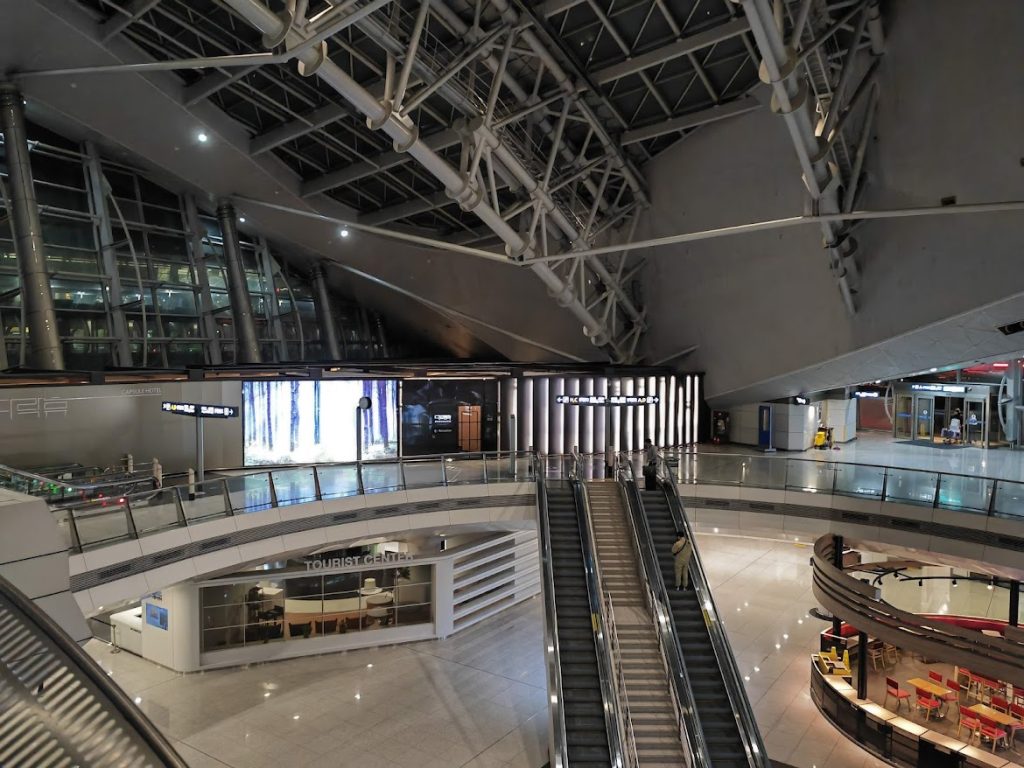
Seoul Incheon is a genuinely pleasant and efficient airport, though it is getting busier. Many airlines operating from ICN are unable to open their check-in desks until three or sometimes just two hours before departure, which catches travellers off guard.
This was one of my rare trips with a checked bag. With no bag drop option available before the desks opened, I waited around 20 minutes for the Finnair counters to activate.
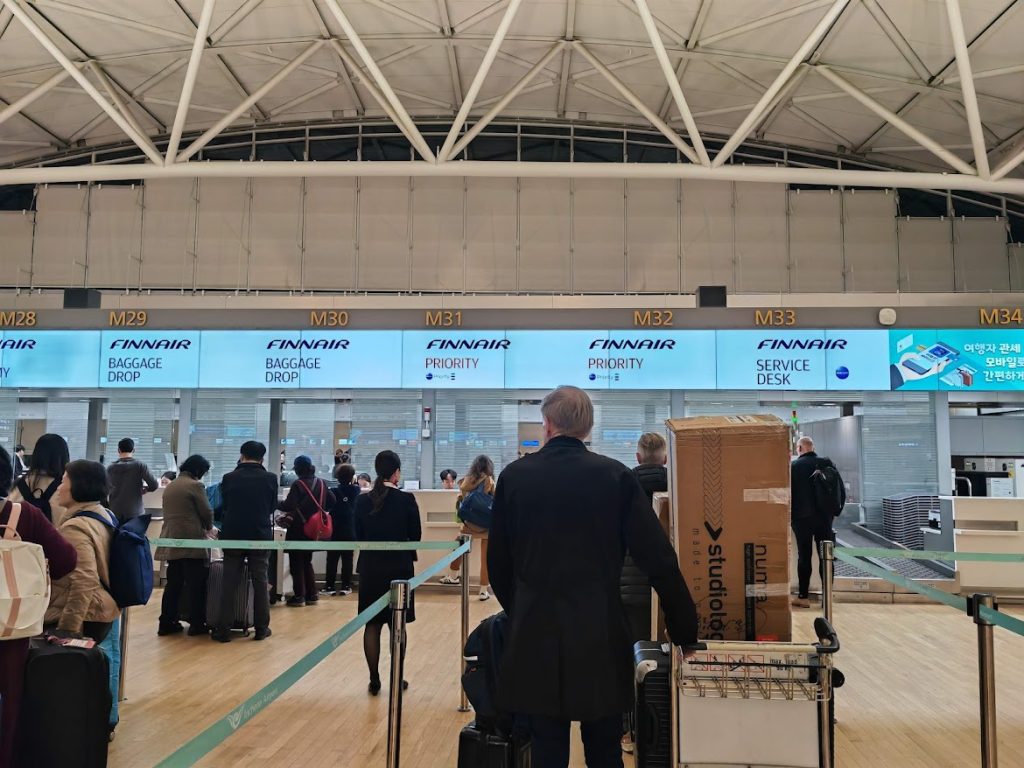
Several passengers were already waiting ahead of me, but the Priority lanes moved at a reasonable pace once open.
Lounge and Security
Finnair does not operate its own lounge at Incheon. Business class passengers are directed to the oneworld Lounge at ICN, which can get slightly crowded but is well-equipped and a perfectly decent pre-flight option.
I used the time for a light dinner before the late departure, which turned out to be a wise decision given how quickly the meal service followed takeoff.
There is no Fast Track security at ICN, so all passengers join the main queues organised by boarding gate zone. It is not as fast as a dedicated Fast Track lane, but the system is orderly and moved efficiently enough on this occasion.
Boarding: Finnair A350 Business Class
After a longer wait than anticipated for the showers in the lounge, I found myself rushing to the gate around 10:30pm after a staff member came to alert me that boarding was about to close. The gate, as is often the case at ICN, was a considerable distance from the lounge.
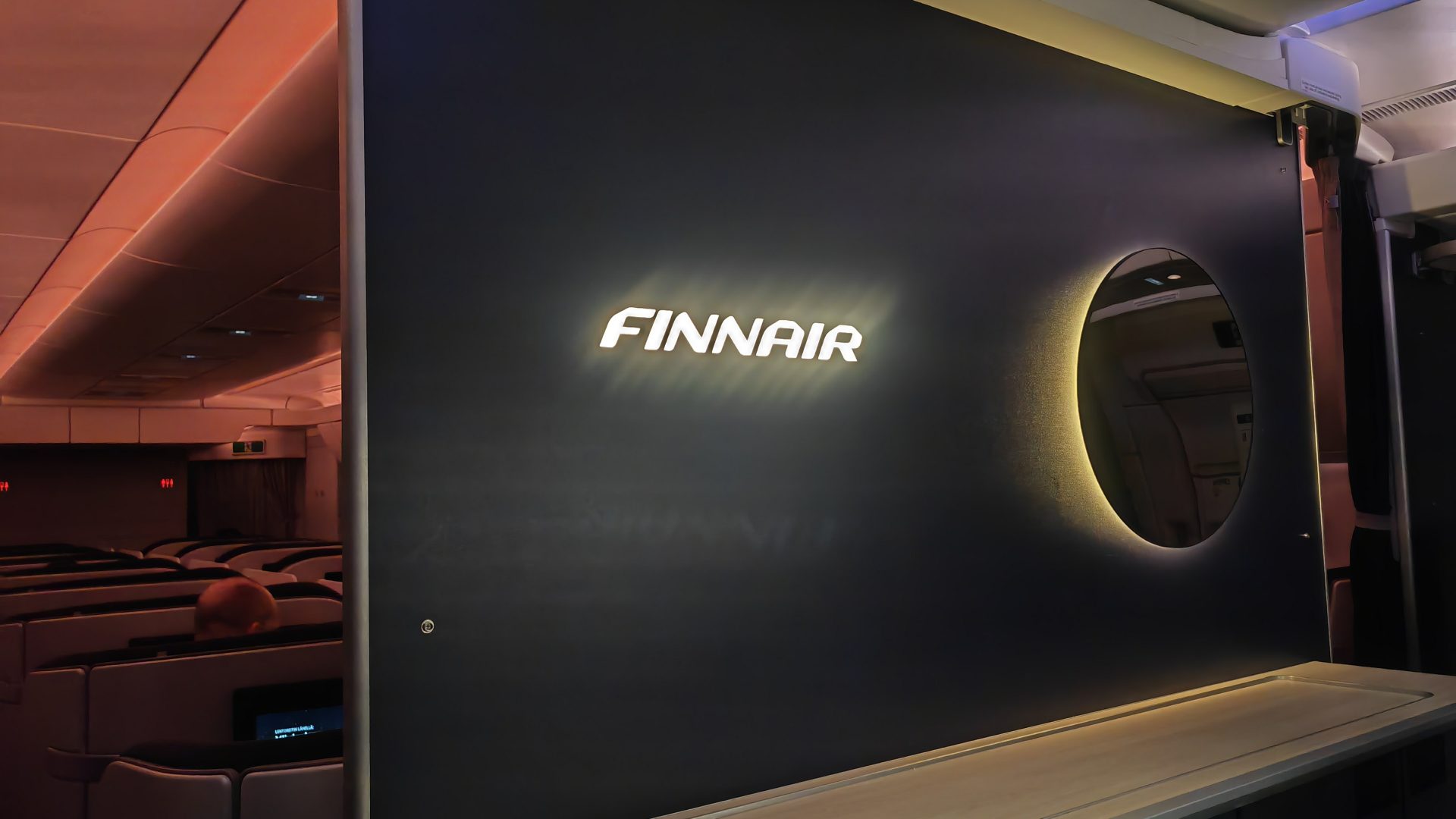
Inside, the cabin looked fresh and immediately welcoming.
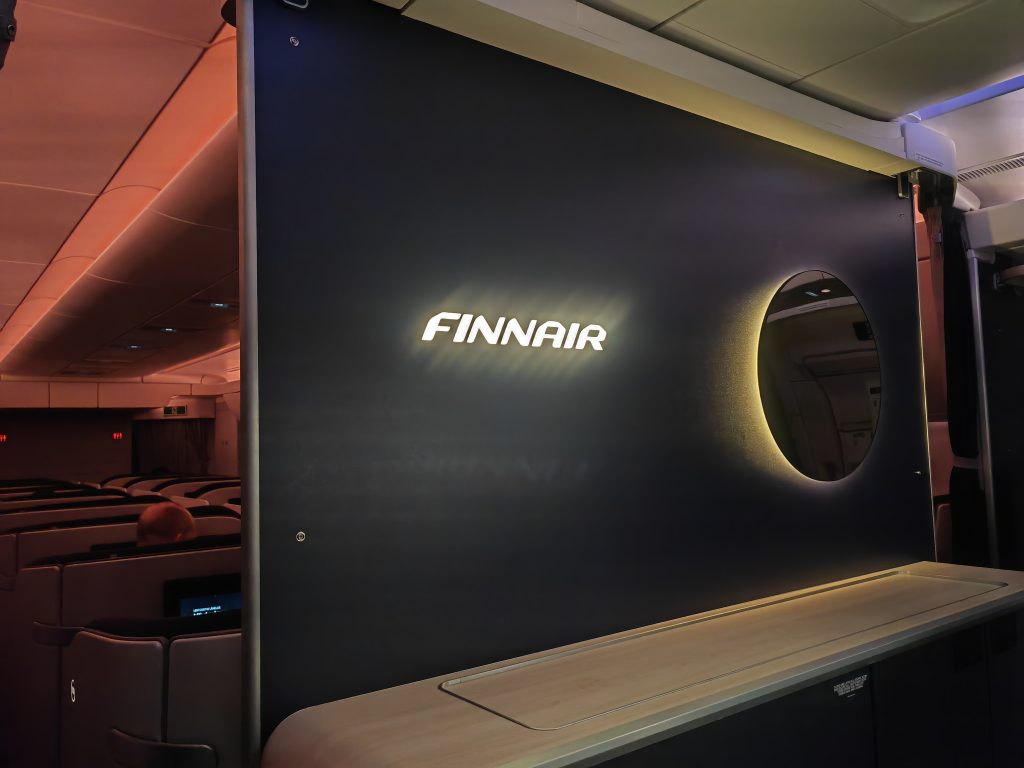
The A350’s galley entrance integrates more cohesively with the overall design than the retrofitted A330 version. Once inside the cabin itself the look is almost identical, with the primary difference being the larger A350 windows which let in noticeably more of the ambient light.
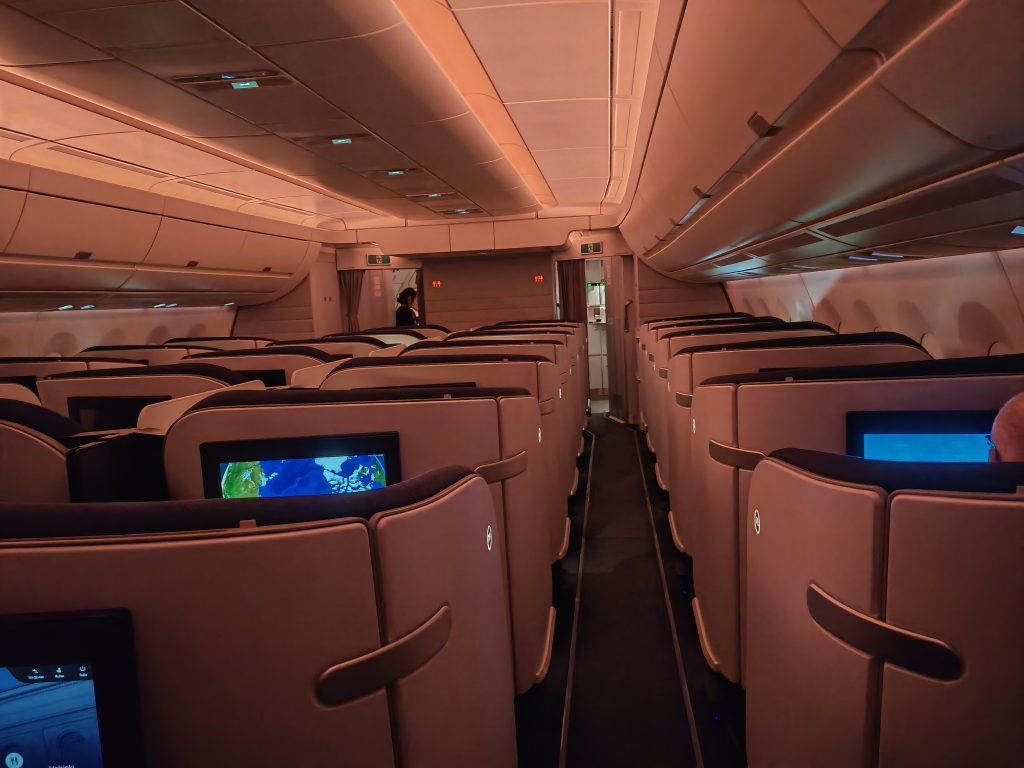
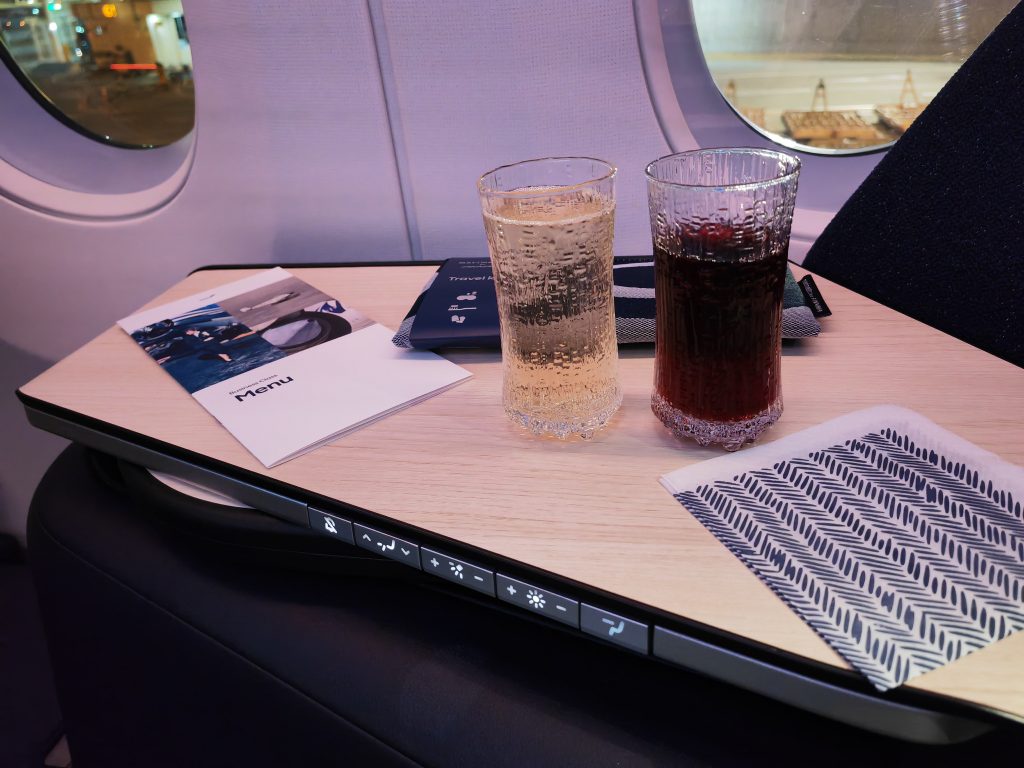
The cabin was kept almost fully dimmed from boarding, setting the mood for a long overnight flight. Despite the rushed boarding, the crew managed to serve not one but two welcome drinks before pushback, and we still left the gate a few minutes early. A small operational detail, but a telling one about how well-drilled this crew was.
Full video review of the Finnair AirLounge on the A350. Subscribe to my channel Million Miles Up on YouTube for more.
Service and Dinner
Finnair provides a clear flight schedule card at each seat — the same approach as United Polaris — outlining exactly when each service will run so you can plan your sleep accordingly.
On a 14-hour overnight departure, this is a genuinely useful touch.
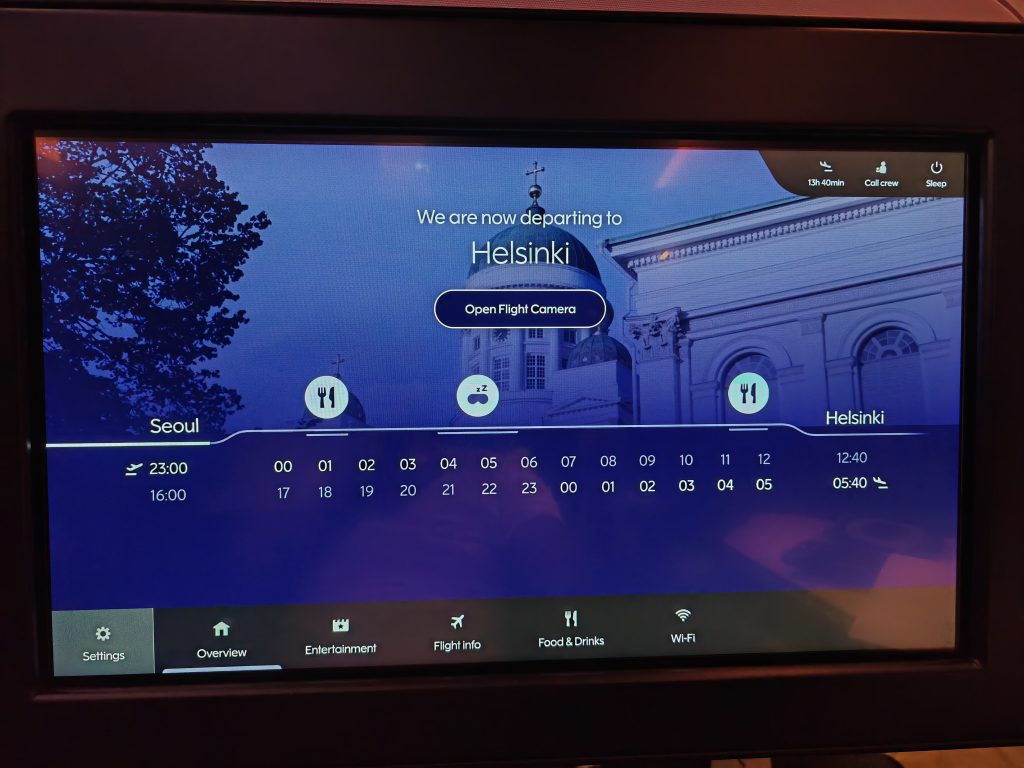
Having eaten a light dinner in the lounge at around 9pm, I was not particularly hungry. What I did not expect was the speed of the service: dinner began just 30 minutes after takeoff, with no pre-drink service beforehand. For a late-night departure with a long overnight sector ahead, this is probably the right call — it gets the meal done and gives passengers the maximum window for sleep.
But if you are expecting a leisurely cocktail before your menu arrives, adjust your expectations.
The meal was served express-style on a single tray, which is a deliberate Finnair design choice rather than a shortcut. The selection was genuinely impressive given the format:
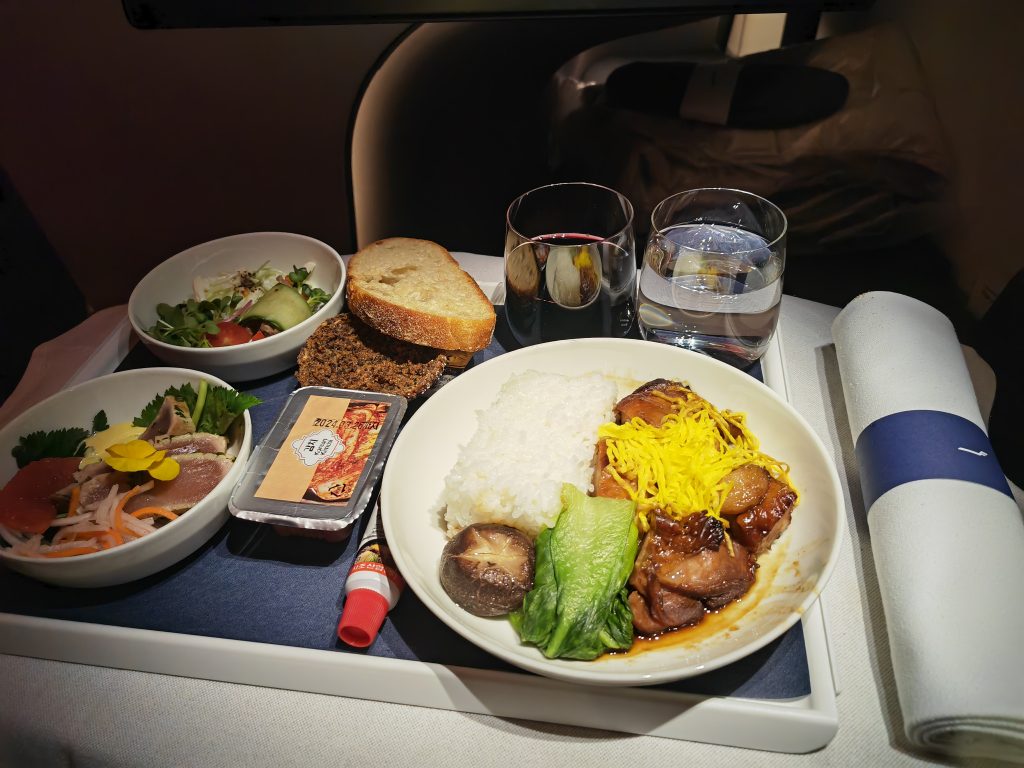
Appetizers:
- Beef bulgogi and cucumber roll with celery, apple salad and cherry tomatoes
- Tuna tataki with pickled carrots, turnip and grapefruit
Main course:
- Teriyaki chicken with plum, steamed rice, mushrooms and bok choy
The menu is available via the IFE, though a printed paper menu was also placed at each seat on this flight. Full menu below.
Despite not being hungry I cleared the entire plate of teriyaki chicken. The ingredients were fresh and the dish genuinely well-balanced — the plum element in particular worked better than it had any right to on an aircraft. If clearing a plate you were not planning to eat is not an endorsement, I am not sure what is.
The crew checked in during the meal and cleared plates promptly. Taking a more leisurely pace, I followed with the cheese course and a light dessert.
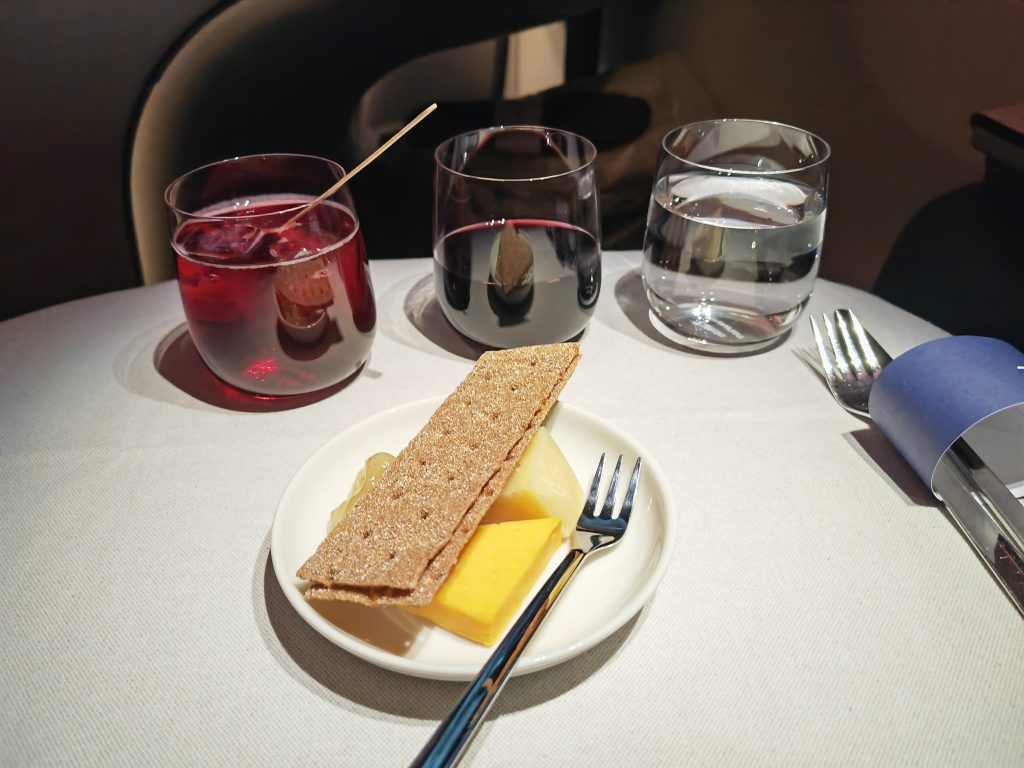
The cheese course was near-identical to my previous two Finnair business class flights. Consistent, if perhaps slightly unadventurous for the eighth time around.
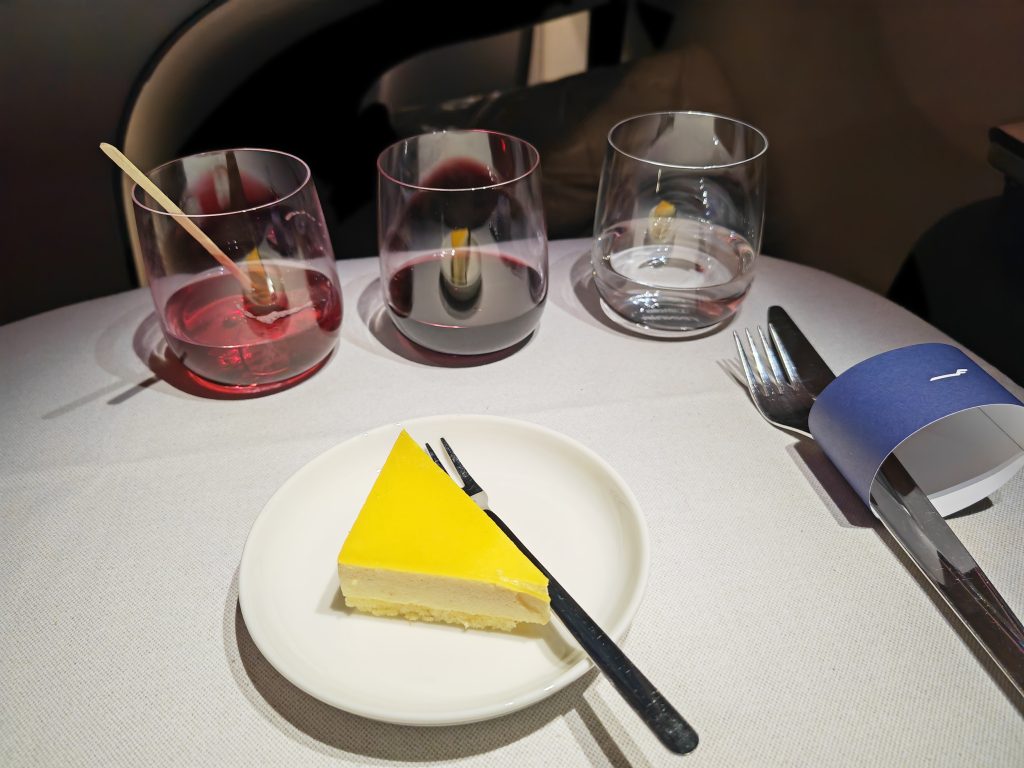
The cabin quietened considerably after dessert. Not everyone opted for the full course sequence, and the mood shifted quickly toward sleep mode.
A note on Finnair’s catering trajectory across my 8 flights since 2017: food quality and presentation have genuinely improved over the years, the ingredients are fresher and the menu more thoughtfully composed. The one area where I have noticed a regression is portion sizes, which have shrunk on some dishes compared to earlier iterations of the product. The dinner on this flight was generous enough, but it is worth flagging as a trend.
Amenities
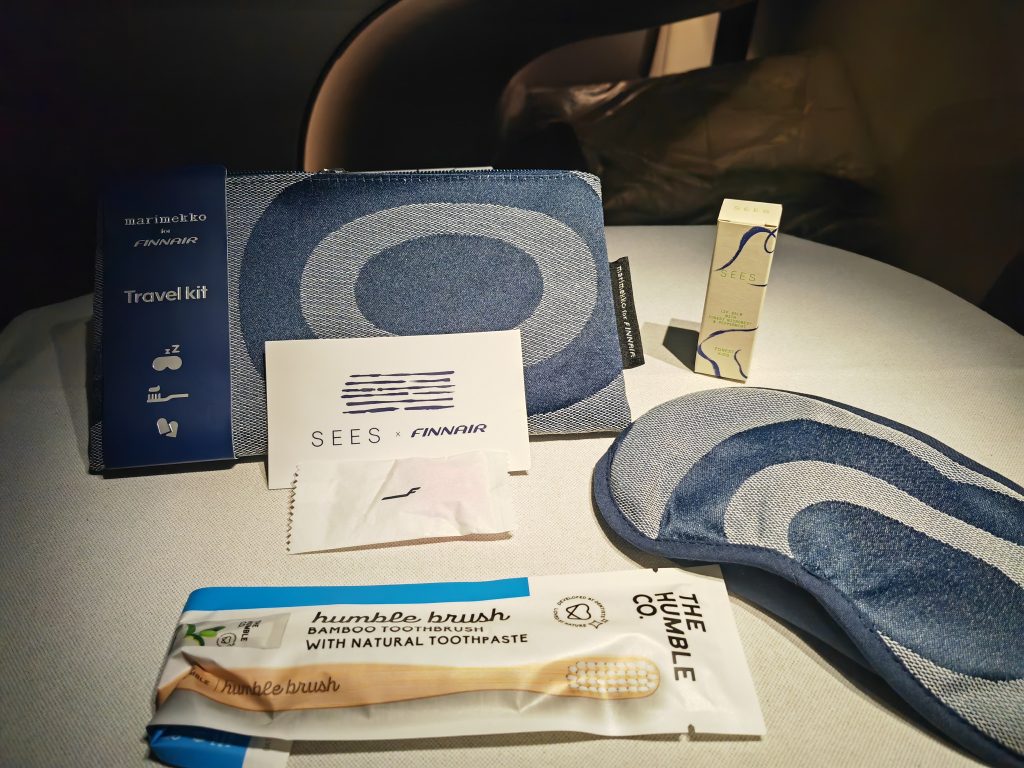
Finnair provides a well-considered amenity kit and a full bedding set including slippers, which remains a welcome detail on a long overnight sector.
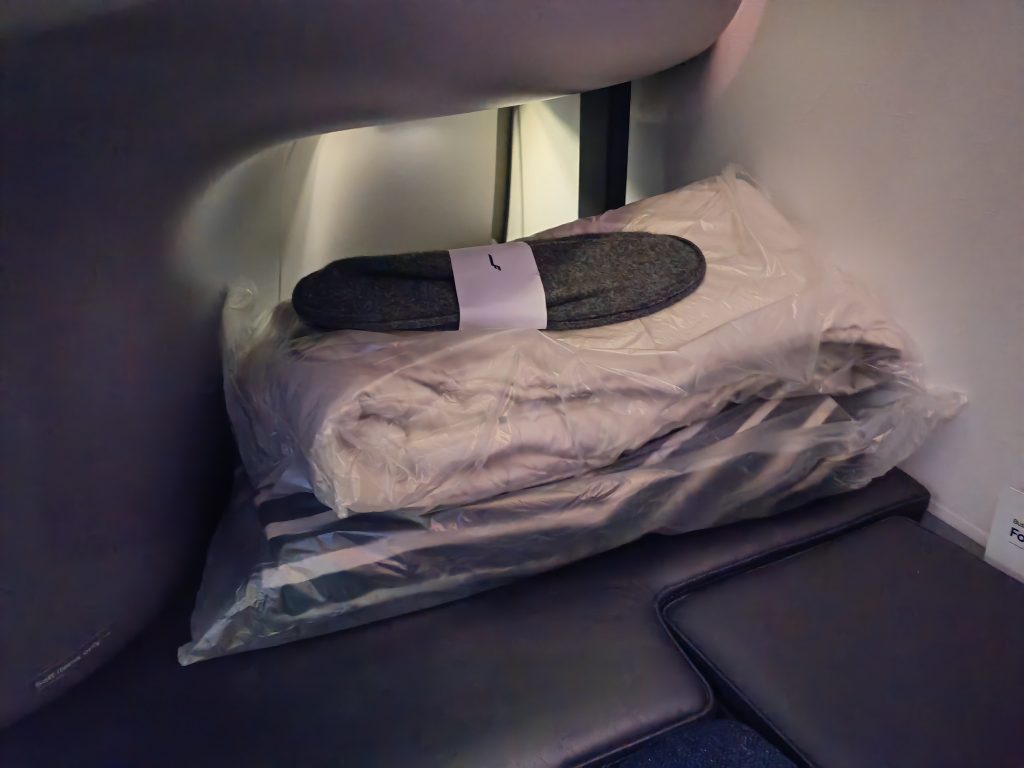
Pyjamas are not provided. On a 14-hour sector this is a gap worth knowing about in advance — bring your own comfortable sleepwear. It makes a meaningful difference to sleep quality on a very long overnight flight.
The amenity kit has been updated with products from Finnish brand SEES, including eye cream and lotions. The kit itself remains largely the same format as previous years but the product quality has stepped up noticeably.
Midnight Snacks and the Polar Route
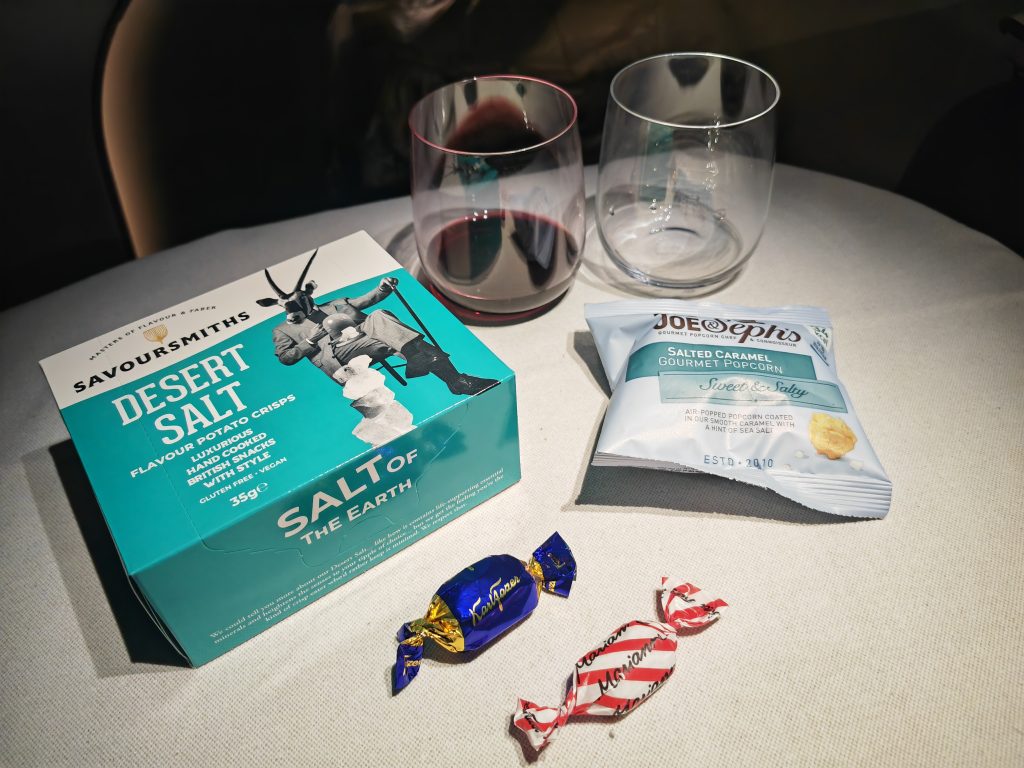
Around 90 minutes after dinner, the crew brought out snacks for those still awake. These were also available self-service from the galley throughout the flight, a practical and unobtrusive approach that suits a night flight well.
The flight map provided the evening’s most intriguing entertainment. The polar routing takes the aircraft over the top of the world rather than the more conventional path across Central Asia or Russia, which produces one of those genuinely perspective-shifting map views — the kind where Europe and the USA have almost disappeared from the frame entirely and you are looking at a version of the world most people have never seen.
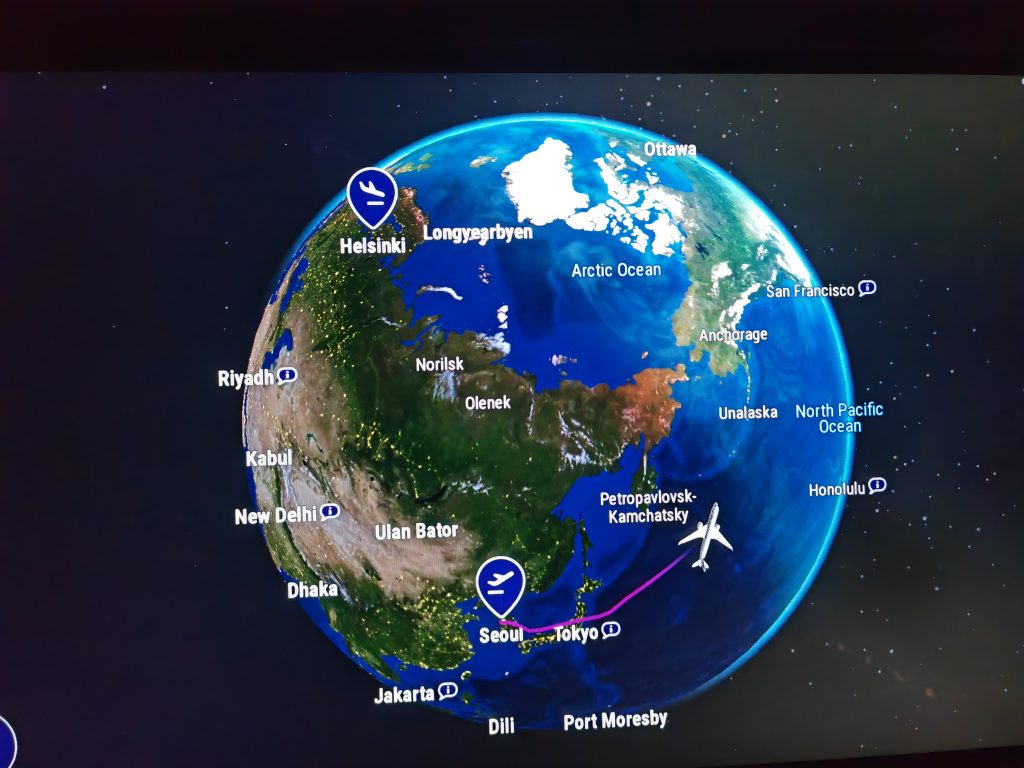
I had genuinely been looking forward to this part of the flight, the possibility of seeing the northern lights or Arctic ice from the window was a real draw.
The honest answer is that I was fast asleep while we crossed the pole. When I woke, we were already past it. I asked the crew, and there were no aurora sightings on this particular night either, which was at least some consolation.
The certificate presented on landing (more on that shortly) served as the only real evidence we had been there at all.
Sleep on the Finnair AirLounge: The Honest Assessment
This is the section most people are actually here for, and after eight flights I can give a more complete answer than most reviewers who have done one or two.
Four and a half hours, one film and a couple of stand-up comedy episodes into the flight, I was tired enough to sleep.
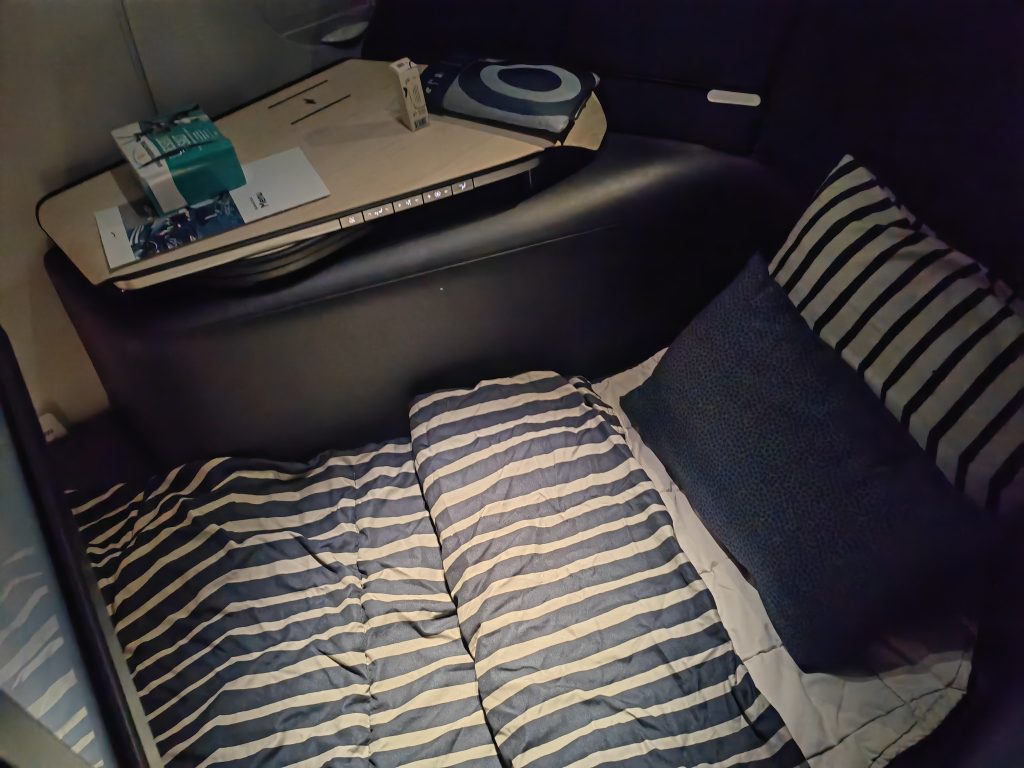
This is where the review becomes more honest than my earlier assessments of this product.
The bed surface itself is genuinely snug and comfortable. Wide, flat and well-padded — on those metrics it competes with the best in business class. But in a standard mid-cabin seat, the footwell is narrow and angled in a way that creates a real problem over a very long night. It is not simply that feet are constricted — it is that the angle and narrowness of the footwell makes it difficult to find a neutral sleeping position and keep it. The seatbelt compounds this. I found myself shifting and waking repeatedly throughout the night, trying to get comfortable in a space that was simply not designed with 14-hour sleep in mind.
To contextualise this: it is not as bad as the Singapore Airlines A380 Business Class footwell, which is narrower still and sits beneath a harder bed surface. But the comparison came to mind, and that is not a compliment.
The critical distinction across my eight Finnair flights is this: in a bulkhead seat, there is no footwell restriction at all. The space in front opens completely. On my Stockholm to Doha A330 flight in a bulkhead position, the sleep experience was excellent. No awkward angles, no belt interference, no interrupted sleep. That is a completely different product in practice.
Seat selection advice: if you are booking Finnair AirLounge on any sector over 10 hours, try to secure a bulkhead seat. Rows 1 and 5 on the A350 are typically the bulkhead positions depending on the specific configuration. Check the seat map on ExpertFlyer or SeatGuru and prioritise this over proximity to the galley or window preference. It genuinely makes the difference between a great sleep and a disrupted one.
In total I managed around seven and a half hours of interrupted sleep before my body gave up. On a 14-hour flight, that is functional but not restorative.
Breakfast: A Missed Opportunity
As the flight drew closer to Helsinki, the cabin lights gradually came up and the crew began the breakfast service.
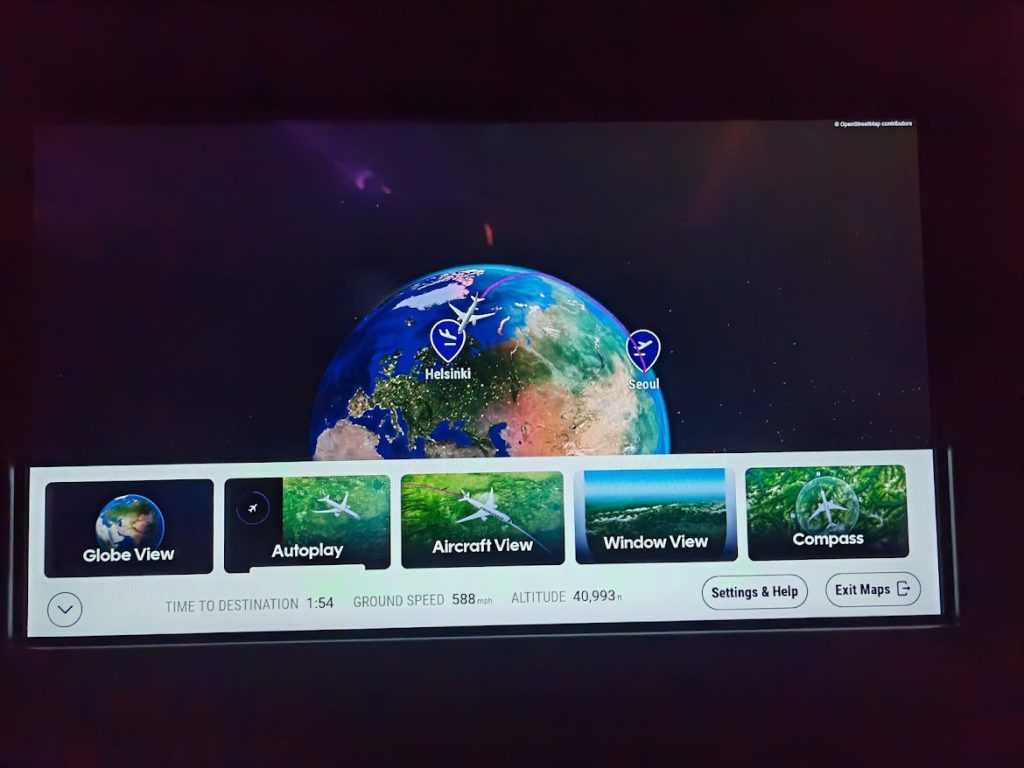
It was still pitch black outside. Given the seven-hour time difference between Seoul and Helsinki, most passengers were already awake well before the service began.
What followed was the most disappointing element of the entire flight. Finnair condensed the entire breakfast into a single tray — everything served simultaneously with no sequencing, no course structure and no sense that this was a premium service conclusion to a 14-hour sector.
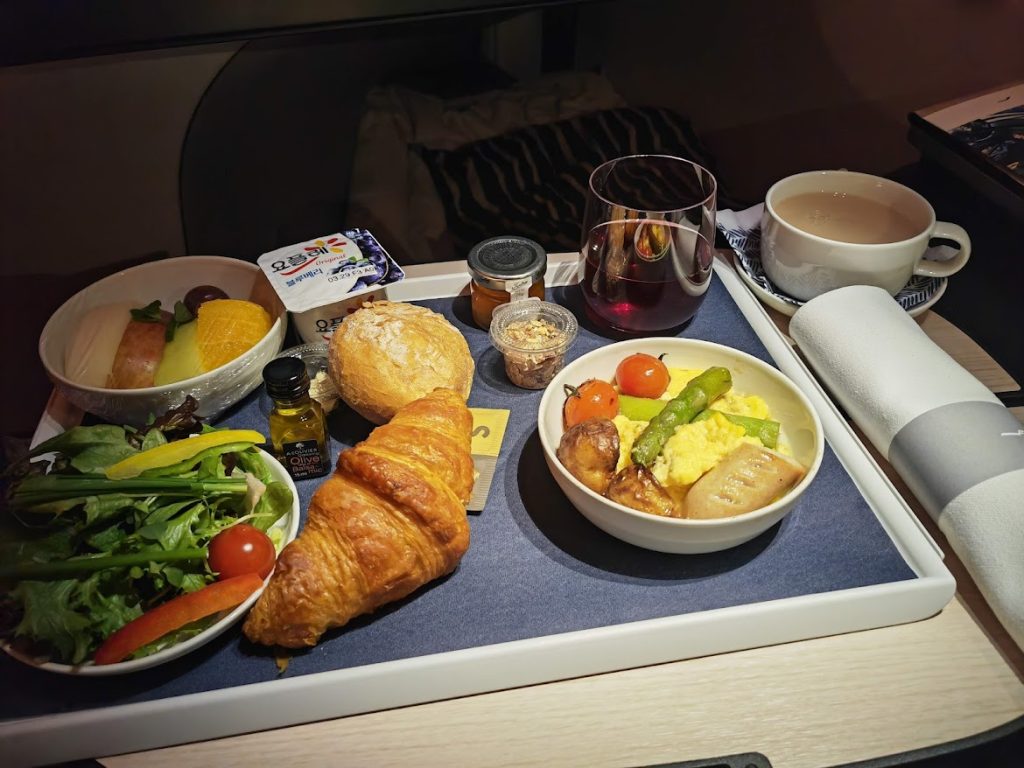
The contents were edible. Nothing more. For a flight of nearly 14 hours, a one-tray breakfast feels like a cost-saving decision that the passenger notices and remembers. The dinner had been excellent. The breakfast undermined it. This is a consistent gap I have observed across recent Finnair flights — they invest in the primary meal service and compress the arrival meal in a way that leaves a slightly flat final impression.
Overall Thoughts
Just before landing, something that made up for some of the breakfast disappointment: the crew personally thanked each passenger and presented a small certificate to commemorate the polar crossing.
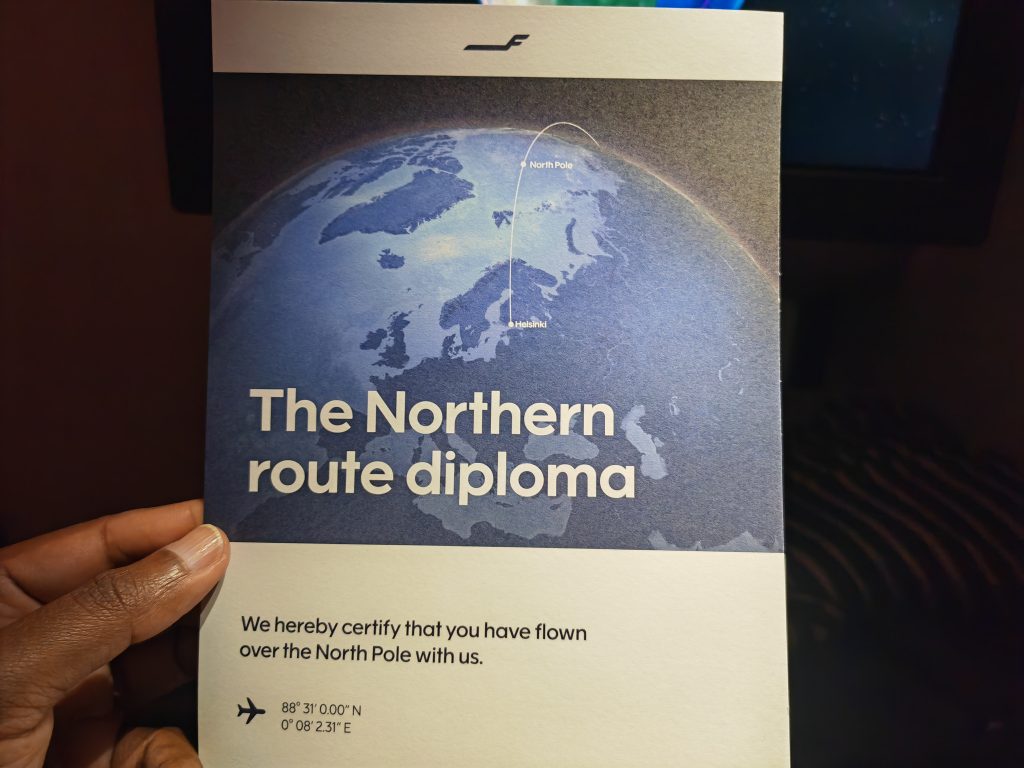
A thoughtful touch — and a small irony that I had slept through the actual moment we crossed it.
After eight Finnair business class flights since 2017, here is where I genuinely land on the product.
What has improved: food quality and presentation have moved meaningfully upward. The SEES amenity products are a step up. Service levels are now among the best in European business class — consistent, warm and efficient without being intrusive. The A350 cabin in particular has a calm, Nordic quality that I find genuinely relaxing.
What has not improved: portion sizes have crept downward on some dishes over the years. The breakfast service on long-haul sectors remains compressed in a way that does not match the length of the flight. And the footwell limitation in standard seats is still there — improved from the original Cirrus seat, better than Singapore’s A380, but still a real consideration on a 14-hour sector.
My overall recommendation: book Finnair AirLounge with confidence on medium-haul sectors and on any long-haul where you can secure a bulkhead seat. On standard long-haul seats, go in knowing that sleep quality will be functional rather than exceptional. At Finnair’s pricing — which remains competitive for a oneworld carrier — the value proposition is strong regardless.
It is a product I will continue to choose. Just with a better seat selection strategy than I applied here.
Frequently Asked Questions
Is Finnair A350 business class good?
Yes, particularly for food quality, service and cabin atmosphere. The AirLounge seat is genuinely innovative and works excellently in bulkhead positions and on medium-haul sectors. On standard seats over 10 hours the footwell is a real sleep limitation worth knowing about in advance.
Does the Finnair AirLounge seat recline?
No. The AirLounge is a fixed-shell seat that does not recline in the traditional sense. Instead, the seat base slides forward to create a fully flat bed. The mechanism works well and the bed surface is comfortable and wide. The limitation is the footwell, which is narrow and angled in a standard seat position.
Which is the best seat in Finnair A350 business class?
Bulkhead seats are significantly better than standard positions for sleep on long-haul flights. In a bulkhead the footwell restriction disappears entirely and the bed space is completely open. Rows 1 and 5 are typically bulkhead positions on the A350, though this varies by configuration. Check the seat map before booking. Window seats from row 2 onward offer the best views. Row 1 has only the two central seats and no window access.
Is Finnair A350 business class the same as the A330?
The AirLounge seat is identical on both aircraft. The A350 benefits from larger windows, a more cohesive cabin design and the general advantages of a newer aircraft. The A330 is a retrofit so the galley and cabin integration is less seamless. Either way the seat product is the same — choose the A350 where available simply because it is a more modern aircraft.
What is the Finnair polar route?
Finnair operates its Seoul Incheon to Helsinki route via a polar path over the North Pole, rather than the conventional routing across Central Asia or Russia. The flight map produces a genuinely unusual perspective showing a world where Europe and North America have almost disappeared from view. Finnair presents passengers with a certificate commemorating the polar crossing on arrival. Northern lights are possible but not guaranteed — on my April 2024 flight there were no aurora sightings.
How does Finnair business class compare to other European carriers?
After eight flights I would place Finnair’s service quality among the best in European business class, alongside Swiss and Lufthansa at their best. The AirLounge seat is more distinctive and arguably more comfortable in the flat position than many European alternatives. The catering has improved significantly since 2017 though portion sizes have shrunk slightly. The main gap versus carriers like Swiss or SAS is the absence of pyjamas on long-haul flights.
Verdict in numbers
-
Check-In & Ground Service
-
Seat
-
Bed & Bedding
-
Food & Beverage
-
Staff
-
Service Standards

Faze, founder of Wander Up Front and Elevate Your Stay, is a London-based travel specialist with a deep passion for aviation and unique destinations. With over 2 million miles flown, he has spent the last 8 years focusing on First and Business class experiences and travelled to 99 countries.
Faze provides straightforward, no-frills insights into premium airline products and services, sharing what matters to help travellers make informed choices.
Follow him on his adventures and behind the scene stories on Instagram !
If you want to want to travel in style in more cost affective ways – check out his starter guide to utilizing Miles & Points