

Oneworld vs Star Alliance vs SkyTeam: The Ultimate Airline Alliances Comparison
Oneworld vs Star Alliance vs SkyTeam
Fly 20, 30, even 50 times a year and still get treated like a first-timer ?
For many frequent travellers, that’s the hidden cost of spreading flights across too many airlines or simply not participating in any loyalty programmes at all.
Choosing the right airline alliance can be the difference between simply flying often and being consistently recognised for your loyalty. Focus your travel within a single alliance, and elite status—and its benefits, can arrive far sooner than you might expect.
There are exceptions, of course. During 2022 and 2023, I reached elite status across all three major airline alliances: British Airways Gold (oneworld Emerald), Flying Blue Gold with Air France–KLM, and Star Alliance Gold. This wasn’t the result of carefully planned status runs or chasing tiers for the sake of it – averaging around 65 flights a year made it happen naturally.
For a long time, I saw little value in airline status. When most long-haul travel is already in Business or First Class, priority boarding and lounge access can feel redundant. But frequent travel has a way of exposing the edges of the experience—tight connections, delays, last-minute changes, and that’s where status quietly earns its keep.
This is where airline alliances start to matter, and why choosing the right one can meaningfully elevate how you travel.
Why Airline Alliances Still Matter for Premium Travellers
This being an airline alliances comparison, we can safely assume you’re here because you know it would matter to you. Even if you mostly book Business Class—or don’t fly weekly—it’s easy to dismiss them as a marketing construct.
That assumption is wrong.
In reality, airline alliances often matter more the higher up the cabin you go.

Airline alliances directly influence:
-
Lounge access — inc whether you can enter First Class/top-tier lounges
-
Elite status recognition across partner airlines
-
Disruption handling during delays, missed connections, cancellations, or overbooked flights
-
Redemptions and upgrades across multiple carriers
This is where the difference between a seamless premium journey and a frustrating one becomes clear.
Status Protection When Things Go Wrong
During overbooked flights, elite members are typically the last to be denied boarding. In some scenarios, higher-tier status can even work in your favour—placing you closer to an upgrade than a downgrade.
These protections rarely appear on airline websites, but they matter most when travel doesn’t go to plan.
Hidden Perks You Don’t See Advertised
Some benefits are subtle but valuable. With British Airways Gold, for example, booking Economy often results in the adjacent seat being automatically blocked—providing extra space unless the cabin fills beyond a certain point.
It’s not guaranteed, but it’s a tangible upgrade to the experience.
Lounge Access: Where Status Still Beats the Ticket
Even when flying Business Class, alliance status can unlock better lounges:
-
First Class lounges instead of Business lounges
-
Lufthansa Senator lounges when flying Star Alliance
-
Guesting privileges—something a Business Class ticket alone usually doesn’t offer
This is one of the clearest examples of how airline alliance benefits extend well beyond the cabin itself.
What Is an Airline Alliance (and What It Isn’t)
The intricacies of airlines operations aside, from a PAXEX point of view, at their core, airline alliances are partnerships between independent airlines that agree to:
-
Recognise each other’s frequent flyer status
-
Offer reciprocal lounge access
- Shared frequent flyer infrastructure such as lounges
-
Coordinate schedules and routes ( including codeshare flights )
- Allows a travellers access to more destinations than their home airline flies to.
-
Allow mileage earning and redemption across partners
- Cross airline upgrades possible, if rare now
Whilst elite level benefits are standardised across the board, each airline maintains their own criteria to achieving each status level.
Furthermore, airlines can choose to differentiate and offer further benefits in addition or top of alliance wide benefits i.e Upgrade vouchers only redeemable with the airline that dispensed it.
The three global alliances are:
OneworldStar AllianceSkyTeam
What alliances do not do is standardise onboard products.
A business class seat, service style, and catering experience can vary wildly between alliance members.
Why Premium Travellers Should Care
Economy travellers usually care most about price and routing.
Premium travellers care about the elevated experience, consistency, access and recognition.
For business and first class passengers, alliances directly affect:
-
Lounge access ( especially for First Class)
-
Priority services during disruptions
-
Upgrade and award redemption flexibility ( some airlines let top Tier members free award cancellations or free Premium seat selections )
This is why two travellers flying the same route in business class can have radically different experiences, depending on alliance and status.
In the case of an overbooking scenario mentioned above, the passenger with alliance status is less likely to be bumped, has even more luggage allowance should they need it, and is likely earning even more frequent flyer miles ( the status bonus ) etc etc
Lounge Access Peculiarities
Where a traveller may be flying in a mix itinerary say Business and First Class, generally Oneworld carriers use the highest class to determine your lounge access.
To illustrate, if you are flying from Tokyo to Hong Kong to Sydney, with Tokyo – Kong being in Business with JAL and Sydney sector in First Class with Cathay, you can still enjoy First Class lounge access in your origin airport, Tokyo.
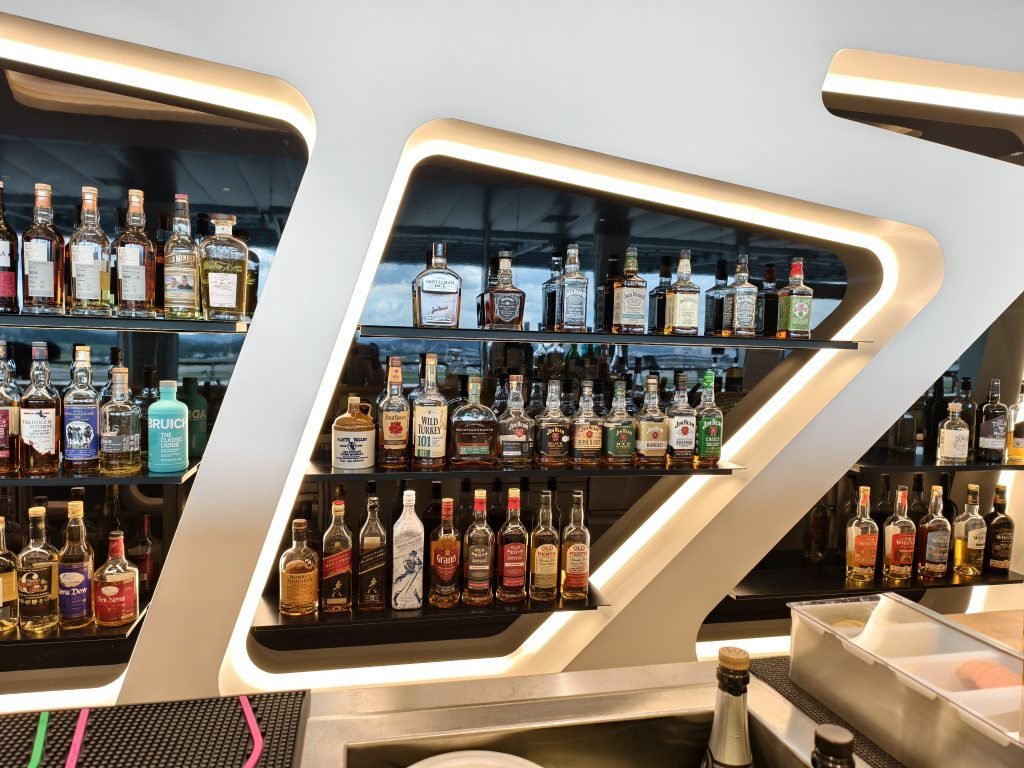
Star Alliance airlines on other hand sometimes go by the rule of immediate departure class, so can only get into a Business lounge in Tokyo. On a more positive note, some Star carriers, allows lounge access on the basis of arrival class when on connecting flights, even if departure class might not grant access.
Thus, Lufthansa will still allow you into their First Class terminal if you arrived in a Lufthansa group First Class flight that day, but leaving in Business for next sector. United, similarly, allows access to Polaris Lounge as long as you arrived in a Polaris Flight, but not other Star Alliance business flights ( which gain Polaris privilege on departure only )
Qatar for example, will not let you into the incredible Al Safwa First Class Lounge, even if you just flew in with Qatar First Class, but your next sector is departing in Business.
Extra Baggage Rules
One of my personal bug bears with Star Alliance is how vague and loosely extra baggage benefits are implemented in the ground between the different airlines. And funnily enough, I experienced this as someone who rarely checks in bags !
Officially, the Star Gold rules either allow an extra 20KG or an extra piece, and its left down to each airline to implement. However, this means airlines can implement the rules on a whim on any particular day, were you could be caught up in the wrong way and thus the whole benefit would be negated !
Oneworld airlines determine your allowance based on your ticketed conditions, thus if your ticketing mentions just weight i.e 30 KG, then you’re either allowed an additional 15 KG or 20KG depending on if you are Sapphire or Gold. On itineraries using the weight system, an additional piece is allowed.
If you are flying in Economy, the maximum weight for any luggage is usually 23kg or 32kg for Business.
From my experience, I find Oneworld fares/tickets makes it easier to interpret in advance.
I understand individual airlines will have different allowances for different fare types, which makes this complicated, but I feel the Alliances should make each airline clear during ticketing ( provided user has input their FFP details ) what the allowances are explicitly.
Airlines like SWISS/Lufthansa and United and BA/Finnair are clear with that, making it visible in the itinerary/mobile app but some like Turkish are not.
Finnair is even more general with allowances than the standard Oneworld rules, for examples by allowing even Ruby status holders from other Oneworld carriers, extra baggage.
Oneworld: Premium-Focused, Boutique by Design
Oneworld consists of the following airlines:
American Airlines, British Airways, Cathay Pacific, Qantas, Japan Airlines, Qatar Airways, Finnair, Iberia, Malaysia Airlines, Royal Jordanian, Royal Air Maroc, SriLankan Airlines, Oman Air, Fiji Airways, and Alaska Airlines.
Who Oneworld Is Best For
Oneworld is often the alliance of choice for travellers who:
-
Value high-end premium experiences
-
Regularly fly long-haul Business or First class
- Those based in Europe, North American or Asia Pacific
-
Care about flagship lounges and ground experience
It’s a smaller alliance, but one that leans heavily into premium branding.
Oneworld Frequent Flyer Programmes
Oneworld benefits are accessed through individual airline programmes that you are part of.
Depending on where you live and how you fly, some programmes are more valuable than others.
Typical examples include:
- Club Iberia Plus
-
Qatar Airways Privilege Club
-
American Airlines AAdvantage
-
Cathay Pacific Asia Miles
-
Japan Airlines Mileage Bank
Each programme offers a different balance of:
-
Status qualification difficulty
-
Redemption sweet spots
-
Partner airline access
Being UK based, I’ve naturally more knowledge and first hand experience with British Airways rebranded Club, but have also been separately used and acquired Elite status with Privilege Club, Finnair and AAdvantage. They all offer different advantages, especially when it comes to redemption of air miles.
With the major overhaul of how BA status is now achieved, I wrote about how Iberia Plus might be the better programme to achieve status via for some Oneworld flyers.
Oneworld Business & First Class Experience
Across the alliance, Oneworld is known for:
-
Strong long-haul business class products ( Qatar, Cathay, JAL and Finnair being particular standouts )
-
A meaningful First Class offering on select carriers. 4 airlines with good First Class coverage: BA, Cathay, JAL, Qantas
- 2 airlines with a Business Plus product, previously marketed as First: Malaysian and Oman Air
There are inconsistencies — but at the premium end, Oneworld generally feels intentionally designed, not just functionally connected.
Oneworld’s Strengths
Oneworld stands out for:
-
Strong First Class presence across multiple carriers
-
Flagship lounges that genuinely differentiate the experience
-
Generally good elite recognition across airlines
- Started rolling out dedicated Alliance wide lounges starting with Oneworld Lounge in Seoul
- Ability to select extra-legroom in Economy/free Preferred seating choices in Business for Elites across the board
Many Oneworld airlines have invested heavily in making First Class feel distinct, and here to stay. Even Qatar, which once questioned the future of First Class has now backtracked and re-investing in that product.
Shared Currency Integration
As of 2025, Aer Lingus, British Airways, Finnair, Qatar all now share the same currency – Avios. Enabling members to transfer points to/from each other seamlessly. This certainly makes life easier for travellers to stay within the Oneworld ecosystem but switch their home airline/ programme should their needs change.
On top of that, Avios is an easy to earn currency, not just from flying but various credit cards/finance products and shopping depending on the market.
Separately, while Alaskan, American’s AAdvantage & Cathay Pacific’s Asia Miles are harder to earn – they offers some great value redemption opportunities that aren’t as good in other programmes, when you start comparing the value per miles.
To me, Oneworld does feel more at “One” with the concept of integration and smoother traveller experience across the board.
Something to keep in mind however, is there are trade-offs between different programmes within the alliance. As a AAdvantage Elite which would normally have lounge access network wide, you will not be able to access American Flagship lounges if flying Economy domestically. But you can if you are a BA Silver for example.
Whereas a BA Silver member, can fly from London to Manchester and still get Galleries Club or First Class lounge access.
Where Oneworld Falls Short
-
Smaller global footprint than Star Alliance
-
Weaker coverage in some secondary markets.
British Airways for instance, heavily focuses on the American market with total black-spots in Asia and Africa. Within Africa, with South Africa being the exception, Qatar Airways & Royal Air Maroc serve the most African destinations.
Star Alliance: Scale & Coverage King
The Star Alliance is the world’s largest airline alliance with 26 members, consisting of:
Aegean Airlines, Air Canada, Air China, Air India, Air New Zealand, All Nippon Airways, Asiana Airlines, Austrian Airlines, Avianca, Brussels Airlines, Copa Airlines, Croatia Airlines, EgyptAir, Ethiopian Airlines, EVA Air, LOT Polish Airlines, Lufthansa, Shenzhen Airlines, Singapore Airlines, South African Airways, Swiss International Air Lines, TAP Air Portugal, Thai Airways, Turkish Airlines, United Airlines

With Lufthansa’s investment into Italy’s ITA Airways, this will also be fully incorporated into the alliance this year.
Who Star Alliance Is Best For
Star Alliance is ideal for travellers who:
- Value reach. It is by far the most global of all three
-
Fly frequently across multiple regions and secondary countries
-
Value coverage and reliability over luxury focus
Travellers based almost anywhere in the world can choose this – if they have no other preferences.
It’s the largest alliance by far offering over 543,176 flights with 101 MILLION seats in year 2024, according to Cirium data, and that scale shows.
Star Alliance’s Strengths
Star Alliance excels in:
-
Global route coverage
-
Strong hub connectivity
- 6 airlines with consistent history of First Class products ( Air India, ANA, Lufthansa, Singapore, Swiss and Thai )
-
Simplified elite recognition ( most programmes only have 2 Elite status levels, Silver or Gold )
- Star Gold members have access to over 1200 Airline lounges across the world ( Oneworld has just over 600, and will send you to inferior contract lounges in many secondary airports )
- Star Connection Services offering in 8 of the biggest Star Alliance hubs a system put in place to ensure passengers at risk of missing connected flights are expedited where possible.
For many frequent flyers, Star Alliance often feels like the safest long-term choice, especially when travel patterns are complex.
Key Star Alliance Programmes
Popular access points include:
- Aegean Miles+Bonus
-
Lufthansa Miles & More
-
Singapore Airlines KrisFlyer
-
United MileagePlus
-
Air Canada Aeroplan
- Turkish Miles & Smiles
These programmes vary significantly in:
-
Upgrade accessibility
-
Award pricing
-
Partner redemption ease
Star Alliance Business & First Class Experience
While Star Alliance has fewer First Class airlines today, it offers:
-
Reliable long-haul business class products
-
Strong premium service on select Asian carriers ( Singapore, ANA, Turkish, Asiana )
-
Generally dependable lounge access
The premium experience is often less flashy, but more predictable.
Where Star Alliance Falls Short
-
Declining number of First Class products
-
Wide variance in lounge quality
- Currently the highest elite Tier has no First Class lounge privileges network wide, though individual airlines do offer it for their members.
- Weaker coverage in Oceana than Oneworld, but between Singapore/EVA/Thai, Air China & Air New Zealand, it is more than sufficient for most people. With Singapore even having strategic 5th freedom flights between Australia & New Zealand such as Melbourne-Wellington
-
Some weaker premium soft products on regional carriers
SkyTeam: Strong Business Value, Limited First Class
Who SkyTeam Is Best For
SkyTeam suits travellers who:
-
Are based in US/Europe or East Asia where the biggest carrier in your local major airport happens to be one
-
Prioritise value over exclusivity
It’s often overlooked, but improving.
SkyTeam’s Strengths
SkyTeam performs well in:
- Claims to provide most comprehensive Priority services of all alliances
- Digital Spine – a cross airline platform that makes travel for those on multi-airline itineraries much smoother.
-
Competitive long-haul business class pricing, especially with carriers like AeroMexico, Saudia and Vietnam Airlines
-
Improving ground experience at major hubs
-
Strong European and transatlantic coverage, and generally better worldwide coverage than Oneworld.
Key SkyTeam Programmes
Common programmes include:
-
Delta SkyMiles
- Virgin Flying Club
-
Korean Air SKYPASS
SkyTeam Business & First Class Experience
SkyTeam is primarily a business-class alliance:
-
Very limited First Class offering
-
Solid long-haul business products on select carriers
-
Decent consistency across major routes
Where SkyTeam Falls Short
-
Almost no alliance-wide First Class experience
- Only Air France offers a true First Class for a significant portion of their long-haul network, and even then all First Class benefits are all but shut for anyone that is not the highest tier of Flying Blue.
- Value proposition of some miles is atrocious. With several airlines going with dynamic pricing but is it particularly acute with Delta, the biggest carrier which is now infamously referred to as Sky Pesos !
-
Weaker elite reciprocity
-
Lounge access rules can be restrictive
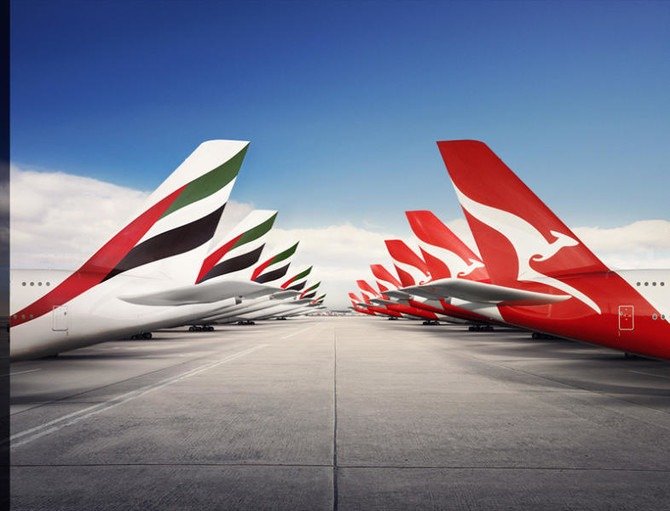
Through this partnership, passengers on either airline can earn and redeem points across both loyalty programmes, while elite members enjoy reciprocal benefits—effectively replicating many of the advantages traditionally associated with alliance membership.
It’s a reminder that while alliances shape much of the premium travel landscape, smart partnerships can be just as powerful, and in some cases, even more flexible.
Air Canada has an extensive list of airline partners outside of the Star Alliance group, such as Etihad, Gulf Air, Air Mauritius amongst others. This alone could easily sway your decision as to which Star Alliance programme you chose. Plus some programmes are much easier to deal with than others, this is something that warrants its own posts !
At-a-Glance Comparison: Alliance Benefits for Premium Travellers
You can present this as a simple, expandable table that becomes a reference point.
Airline Alliance Comparison Framework
| Feature | Oneworld | Star Alliance | SkyTeam |
|---|---|---|---|
| Global Network Size | Medium | Very Large | Large |
| First Class Presence | Strong | Limited | Very Limited |
| Business Class Consistency | High (varies by carrier) | Generally Reliable | Improving |
| Flagship Lounges | Excellent | Mixed | Improving |
| Elite Status Recognition | Strong | Very Strong | Moderate |
| Best For | Premium & First Class flyers | Frequent global travellers | Business class value seekers |
Which Alliance Should You Choose?
Choose Oneworld If:
-
You value premium ground experience
-
First Class matters to you
-
You want boutique, high-end carriers
Choose Star Alliance If:
-
You fly often and globally
-
You want consistent elite treatment
-
Network coverage is your priority
Choose SkyTeam If:
-
You mainly fly business class
-
You want competitive pricing
-
You travel Europe ↔ US or Europe ↔ Asia frequently
Final Thoughts: Alliances Aren’t Equal—Choose Intentionally
There is no universally “best” airline alliance.
There is, however, a best alliance for how you travel.
Your ideal choice depends on where you fly most, which cabins you book, how often you travel, and what you value most—lounges, upgrades, recognition during disruptions, or redemption flexibility.
One important caveat: don’t anchor your entire strategy to a single airline without understanding the broader alliance context. Airlines do change allegiances. We’ve seen LATAM leave oneworld, and SAS—once a founding member of Star Alliance—switch to SkyTeam. These moves can quietly reshape the value of your status overnight.
That’s why alliance-level thinking matters more than airline-level loyalty alone.
There’s also an irony at the heart of airline loyalty. The travellers who benefit most from elite perks are often those who need them least—frequent flyers in premium cabins whose employers are footing the bill. Meanwhile, travellers who might value those benefits most end up subsidising the system without qualifying for it.
It may not be fair, but it is navigable.
By being intentional about your alliance choice, consolidating your flying, and aligning loyalty with your real travel patterns, you can flip that script. Even moderate frequency, when focused correctly, can unlock disproportionate value.
If you choose an alliance deliberately—based on your routes, cabin preferences, and long-term goals—the difference in experience can be substantial. Not louder or flashier, but smoother, calmer, and more consistently premium.
Airline alliances will continue to evolve, especially as networks shift and partnerships deepen. But for now, understanding how they differ—and choosing with intent—remains one of the most effective ways to elevate how you travel.

Faze, founder of Wander Up Front and Elevate Your Stay, is a London-based travel specialist with a deep passion for aviation. With over 2 million miles flown, he has spent the last 7 years focusing on First and Business class experiences.
Faze provides straightforward, no-frills insights into premium airline products and services, sharing what matters to help travellers make informed choices.
Follow him on his adventures and behind the scene stories on Instagram !