
Uzbekistan Travel Guide: Tashkent, Samarkand & Bukhara
Wander Up Front Destination Guide
Uzbekistan Travel Guide: Tashkent, Samarkand & Bukhara
My first-hand guide to travelling through Uzbekistan’s great Silk Road cities, including how to get there, getting around, where to stay, what is actually worth your time and what I’d do differently on a return visit.
Uzbekistan wasn’t a country I’d spent years researching before visiting. I’d planned the trip months in advance, but beyond knowing something of its importance along the ancient Silk Road and having seen photographs of the extraordinary Islamic architecture of Samarkand and Bukhara, I arrived with relatively few expectations.
Perhaps that helped.
Rather than arriving with a checklist of places I absolutely had to see, I could let the country reveal itself as I travelled west from Tashkent, through Samarkand and finally to Bukhara.
What surprised me most was just how different those three cities felt.
Tashkent is the modern, sprawling capital with a distinctly Soviet character. Samarkand is the spectacular one: the city that delivers the architectural drama you probably came for. And Bukhara was where I felt the strongest connection to Uzbekistan’s Silk Road past.
My verdict: This was a fantastic 8 day trip, but if I were doing this trip again with limited time, I’d take one night away from Tashkent and give it to Bukhara.
How to Get to Uzbekistan
For most international visitors, Tashkent is the obvious gateway, although Samarkand is increasingly useful as an alternative depending on where you’re travelling from.
I flew Turkish Airlines from London via Istanbul, which was a straightforward way to reach Uzbekistan from the UK. From Europe, I’d primarily compare Turkish Airlines via Istanbul, Qatar Airways via Doha, Emirates/flydubai via Dubai, and Uzbekistan Airways with whatever regional options are available from your particular departure city.
From the United States, the same Gulf and Turkish hubs are generally the most practical options. I would look for the simplest one-stop itinerary rather than trying to construct something clever simply to save a little money.
For British passport holders, Uzbekistan currently permits tourist visits of up to 30 days without a visa. Entry requirements can change, so check the latest official advice before travelling.
Wander Up Front tip
Don’t overthink the flight. Uzbekistan is a destination where I’d prioritise a convenient one-stop routing and spend my planning time on the journey once you’re there.
Getting Around Uzbekistan
This was considerably easier than I expected. The train network runs through the length of the country, but has better coverage of the South East areas.
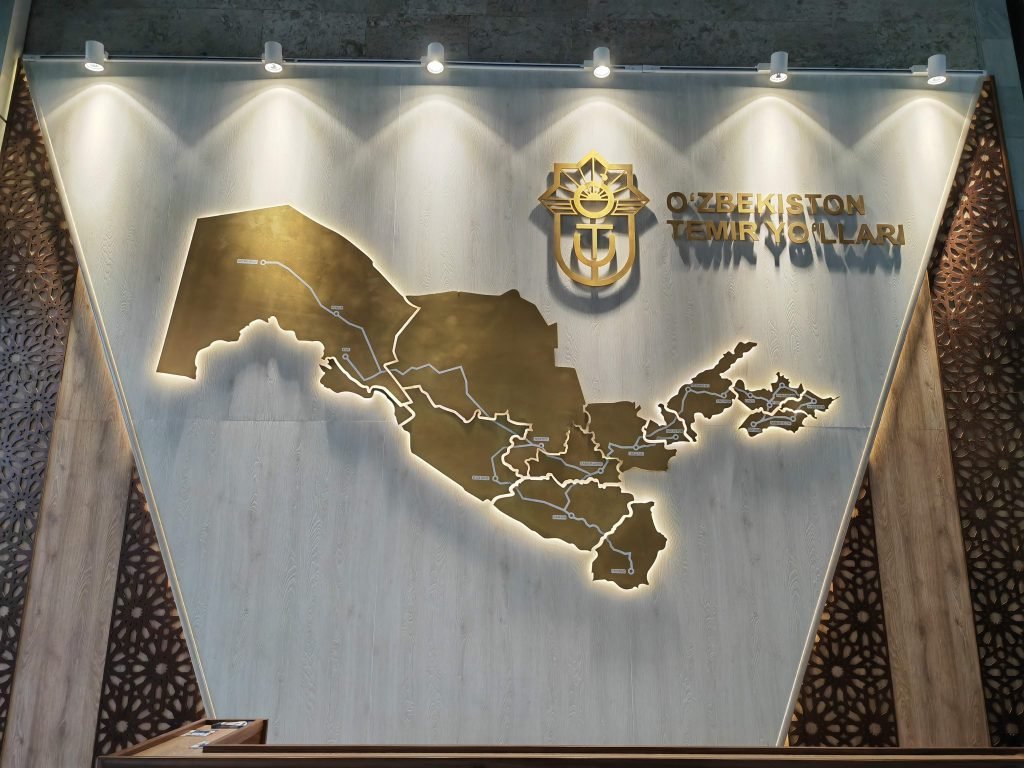
For the classic Tashkent–Samarkand–Bukhara itinerary, the Afrosiyob high-speed train is the obvious choice. The trains are modern, comfortable and fast enough that travelling between the cities becomes part of the experience rather than an inconvenience.
I found the tickets easy to book online, although I’d recommend booking several days ahead, particularly if you want a specific departure or class. Some services sell out surprisingly quickly.
The journey itself is enjoyable. You get to see a very different side of Uzbekistan as the cities give way to the countryside. I travelled in March 2025, when there was still plenty of snow around, which was a reminder that Uzbekistan isn’t necessarily the perpetually warm destination that photographs might suggest.
There was even a small onboard snack service with a drink and cake — nothing spectacular, but a pleasant surprise.
Booking note: If your itinerary depends on a particular Afrosiyob departure, don’t leave the train tickets until the day before. Check the current Uzbekistan Railways booking system before travelling.
Tashkent: The Soviet Gateway to Uzbekistan
Tashkent isn’t going to win the beauty contest against Samarkand.
And I think that’s precisely why you shouldn’t dismiss it.
The capital has an interesting character that feels partly Central Asian and partly Eastern European, with broad streets and Soviet-era architecture sitting alongside mosques, bazaars and newer development.
The contrast becomes particularly apparent once you eventually arrive in Samarkand.
I spent three nights here, deliberately taking things slowly rather than trying to cram the city into a packed itinerary. Two full days would probably be enough for most visitors, unless you’re using Tashkent as a base for excursions into the surrounding mountains.
Things to Do in Tashkent
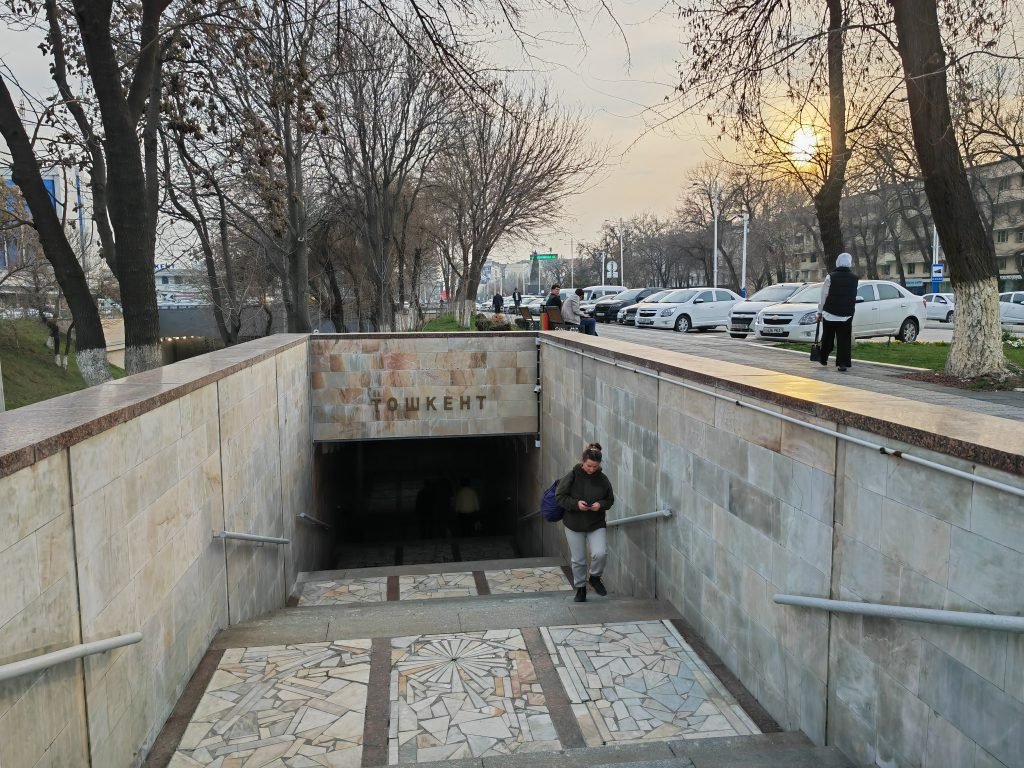
The Tashkent Metro
One of the things that genuinely surprised me was the metro.
The Tashkent Metro isn’t simply a way of getting around. It is an attraction in its own right.
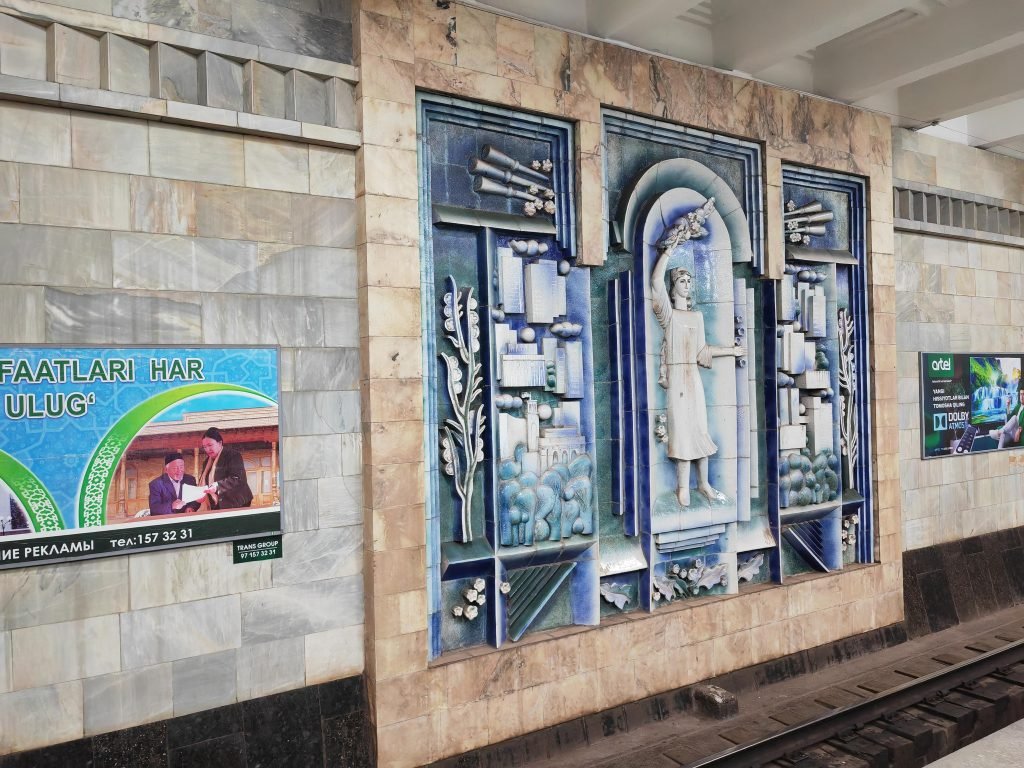
Stations feature chandeliers, marble, mosaics and elaborate decorative details, with individual stations having their own character. It is a fascinating legacy of the Soviet approach to monumental public infrastructure, where even something as mundane as a transport system could be designed to make a statement.
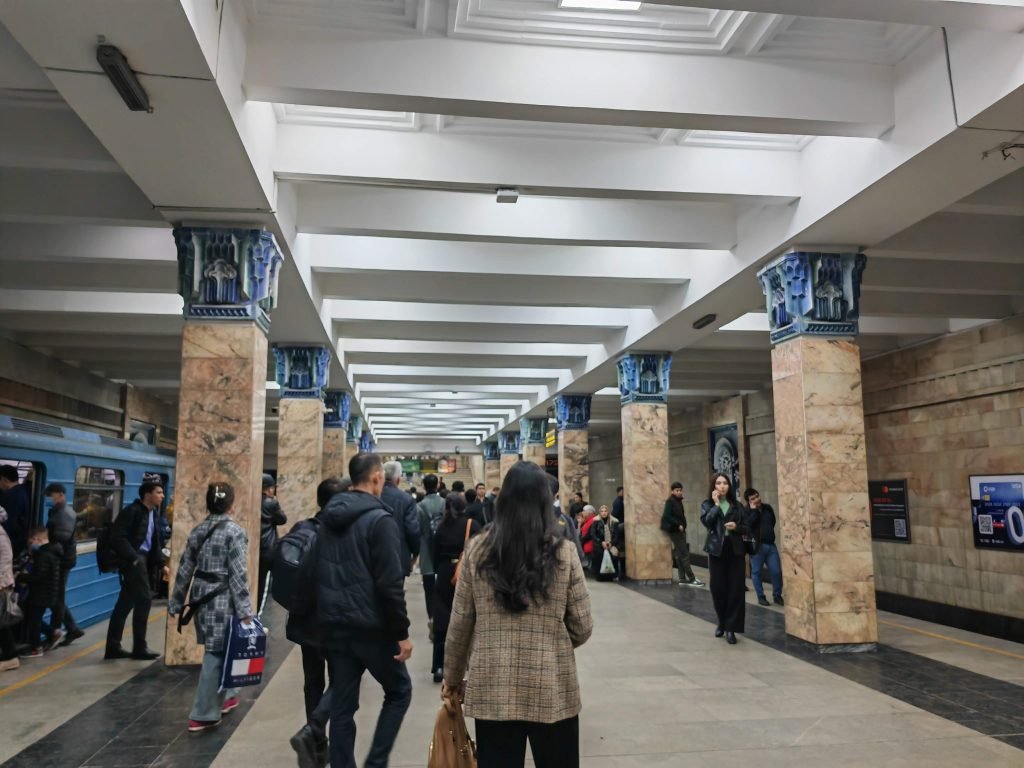
The network isn’t enormous, but it is inexpensive and useful — and worth riding even if you don’t actually need to get somewhere.
For everything else, Yandex taxis are extremely cheap and make getting around the city easy.
Practical information
Opening: The metro operates throughout the day, with individual station and service hours subject to change.
Entrance: A normal metro fare applies; check the current fare locally. You need to pay cash to buy your tickets.
Chorsu Bazaar
Chorsu Bazaar was one of my favourite places to simply wander.
The enormous blue-domed market is a good introduction to everyday Tashkent, particularly if you arrive without a shopping list and simply want to see how the city functions.
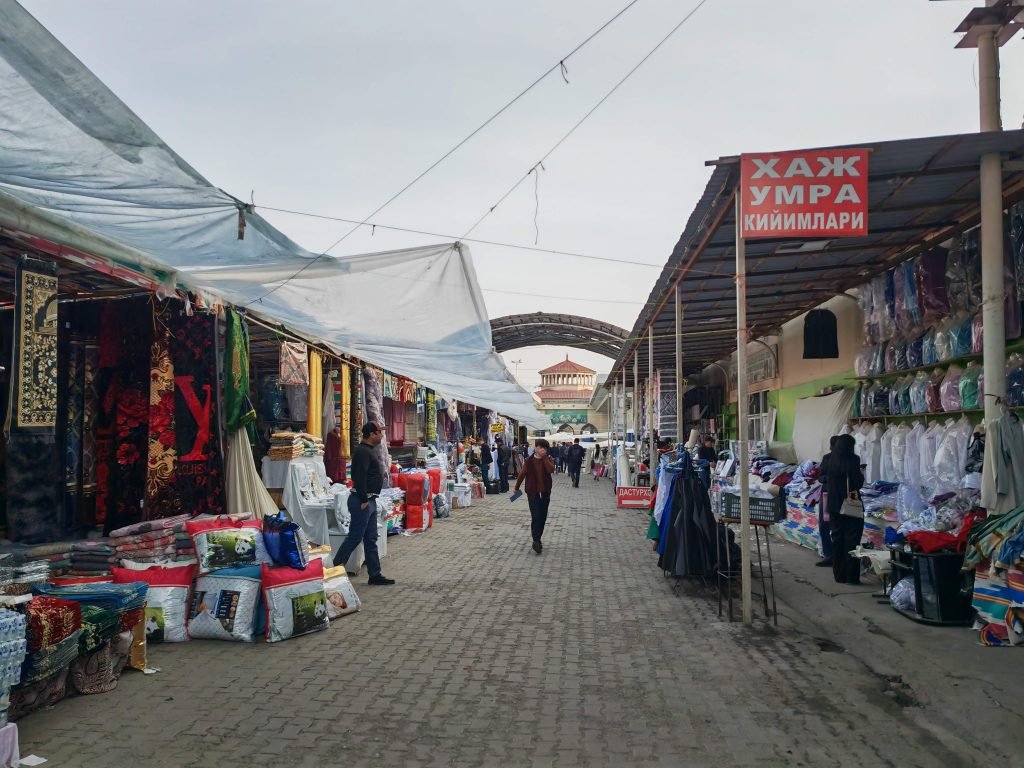
If you’re someone who travels light like me, you may struggle to take much home. But if you enjoy buying things while travelling, this is somewhere to look for ceramics, spices and other local products.
More importantly, it reminds you that Uzbekistan isn’t simply an open-air museum of Islamic architecture. There is a living culture underneath all those famous monuments.
Practical information
Opening: Chorsu is a functioning market rather than a conventional attraction, so individual sections and traders can have different hours. Going in the morning is the safest option if you want to see the market at its liveliest.
Entrance: Free to enter the market itself.
Khast-Imam Complex
The Khast-Imam Complex is another worthwhile stop, particularly for anyone interested in Uzbekistan’s Islamic heritage.
The complex consists of the Tillya Sheikh Mosque, Abu Bakr Kaffal Shashi Mausoleum, Barak Khan Madrasa and the Imam al-Bukhari Islamic Institute. It also houses the famous Qur’an associated with Caliph Uthman, traditionally dated to the 7th century.
The complex provides an interesting counterpoint to Tashkent’s Soviet architecture, with historic Islamic institutions sitting within the modern capital.
Practical information
Opening: Hours can vary between the individual buildings and religious areas. Check locally before visiting.
Entrance: The complex itself can be explored without a conventional attraction ticket, although individual museum or exhibition areas may have separate arrangements.
Plov: Get There Earlier Than I Did
You can’t come to Uzbekistan and ignore plov.
I deliberately went looking for an authentic version rather than simply eating whatever happened to be available near the tourist sights.
Unfortunately, I made one rookie mistake.
I was still jet-lagged.
I’d planned to visit Besh Qozon, one of Tashkent’s best-known plov centres, but I was still waking up late and missed the window when the famous plov was available.
Fortunately, I found another good version elsewhere. It was still very good — but next time, I’d be getting up earlier.
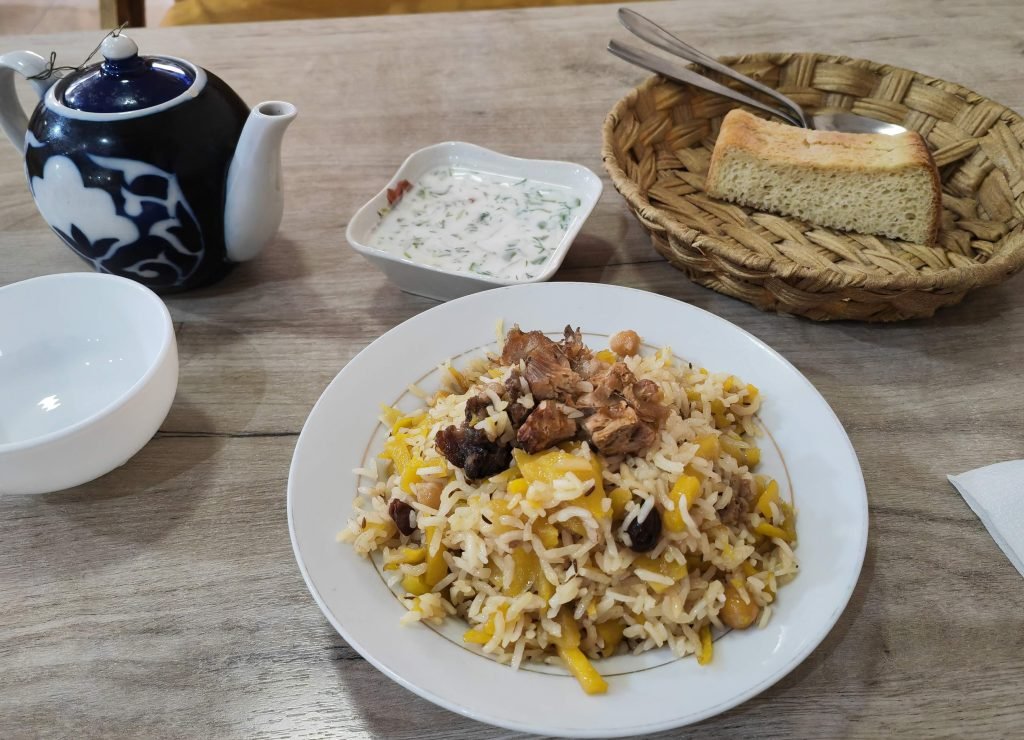
My advice: Get accustomed to Uzbek eating times. Don’t assume you can turn up for lunch at 3pm and find everything still serving.
Samarkand: The Moment Uzbekistan Really Begins
The journey from Tashkent to Samarkand feels almost like entering another country.
The Soviet-era character of the capital gives way to something much more elegant and visually spectacular.
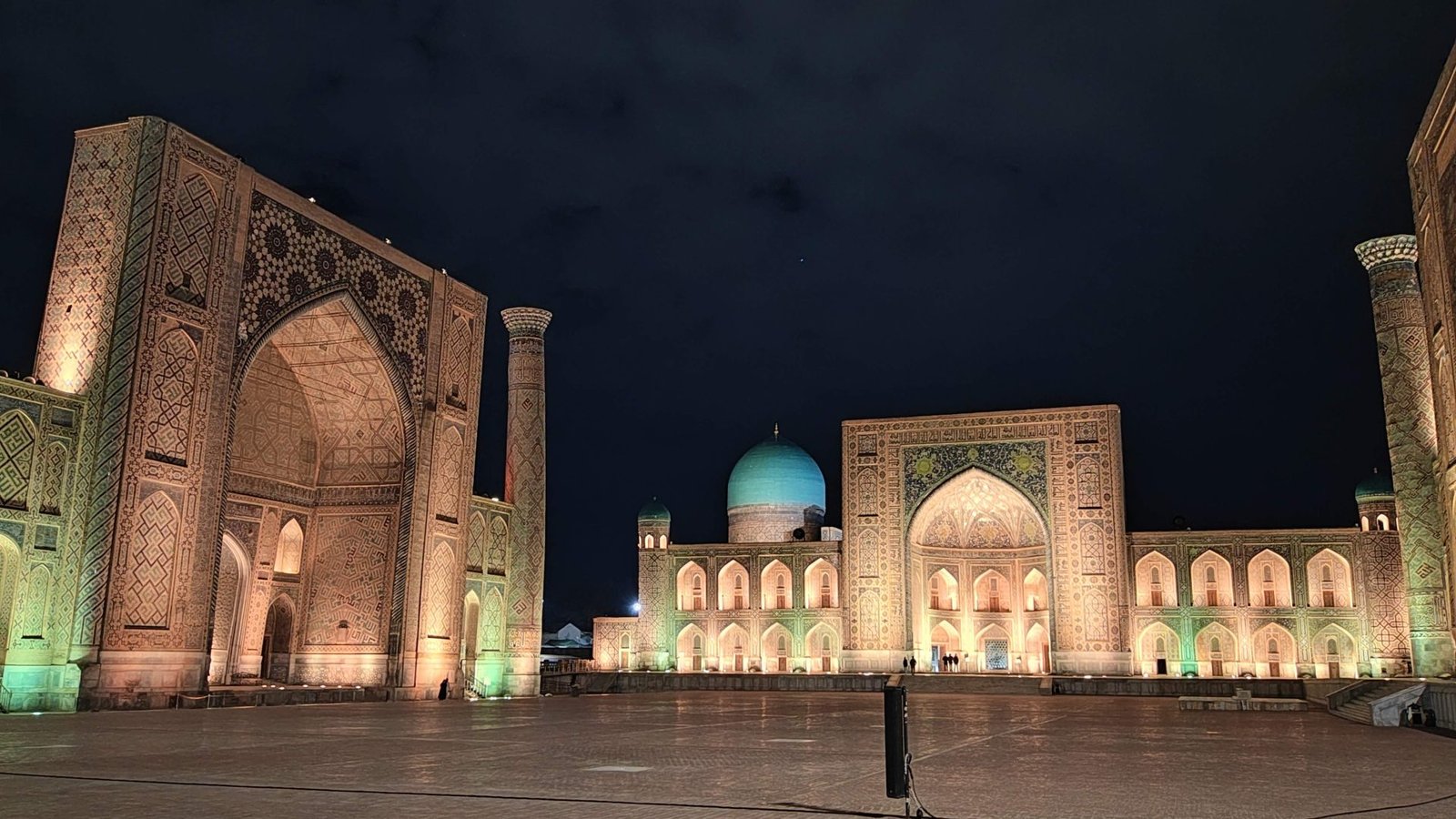
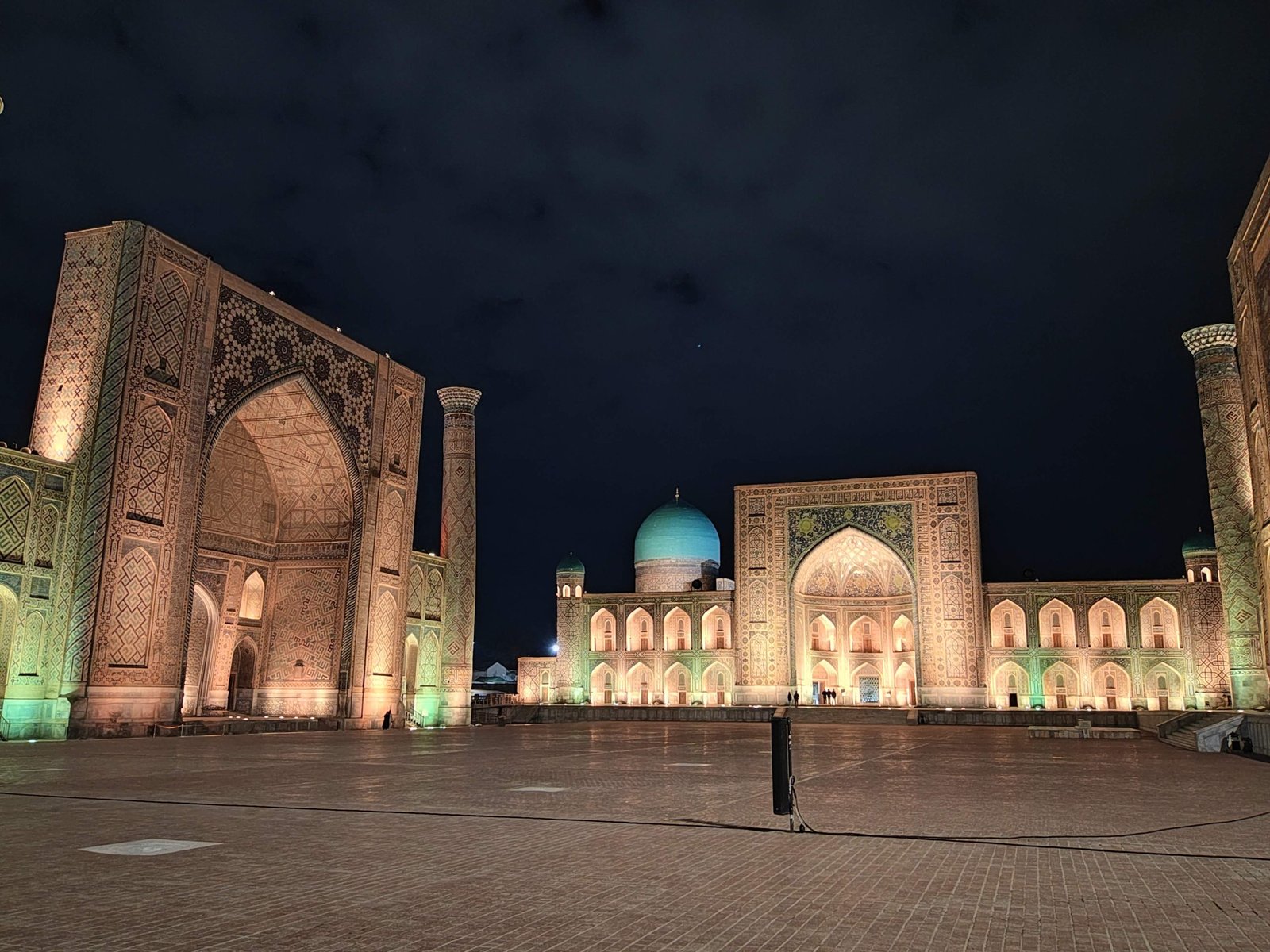
And then you arrive at the Registan Square, a UNESCO World Heritage Site
I knew what it looked like before I went. Many curious minds do.
But photographs don’t really prepare you for seeing it in person.

Registan Square, Samarkand
Things to Do in Samarkand
Registan Square
The Registan is an extraordinary ensemble of three monumental madrasas:
- Ulugh Beg Madrasa — constructed between 1417 and 1420 under Ulugh Beg, the Timurid ruler, astronomer and patron of science. This is the oldest building in Registan to still be standing.
- Sherdar Madrasa — constructed between 1619 and 1636. It’s name reflects the distinctive tiger-lion mosaics on its façade
- Tilla-Kari Madrasa — constructed between 1646 and 1660, completing the ensemble. This is regarded as a masterpiece of Timurid architecture, shaped by the aesthetics refined in Iran and Persia at the time. See the stunning mosaic and glazed tilework of the interior chamber in my pictures.
Registan means “sandy place” and the square evolved into the ceremonial and architectural heart of Samarkand, particularly under Ulugh Beg and later Timurid rulers.
What I found most impressive wasn’t simply the scale.
It was the detail.
The enormous blue domes and monumental portals are what you notice first, but spend some time looking closer and you’ll see an extraordinary amount of intricate mosaic work and decoration.
And then come back at night.
The Registan changes completely after dark, with projections illuminating the buildings and giving the square an entirely different atmosphere.
Despite being arguably the most touristy attraction in Uzbekistan, I found the experience surprisingly manageable. It never felt like one of those famous landmarks where the crowds completely overwhelm the place.
Practical information
Opening: Opening hours vary seasonally and can change. Evening access is particularly worth checking because the illuminated Registan is a different experience from the daytime visit.
Entrance: Paid admission applies to entering the Registan ensemble. Check the current foreign visitor price at the ticket office before visiting.
Shah-i-Zinda
If the Registan is Samarkand’s grand architectural statement, Shah-i-Zinda is its more intimate masterpiece.
The necropolis contains a remarkable collection of mausoleums and religious buildings constructed and developed over many centuries, with much of the surviving ensemble dating from the 11th through 15th centuries. The name is associated with Kusam ibn Abbas, traditionally said to have brought Islam to Samarkand.
The tiled facades and interiors are spectacular, but what I particularly remember is the setting.
Unlike the enclosed drama of the Registan, Shah-i-Zinda gives you a sense of Samarkand’s wider landscape, including the mountains in the distance.
That backdrop adds another dimension to the experience. If your really want to dive deeper into the history and legends of the place and the story of Kuam Ibn Abbas – this is a good read..
Practical information
Opening: Hours can vary seasonally. Check locally on the day of your visit.
Entrance: Paid admission applies. Check the current foreign visitor price at the entrance before visiting.
A Note on Guides and Photographers
One thing you’ll notice around Samarkand’s major monuments is the number of local guides looking for visitors who want a personal tour.
I wasn’t particularly interested in hiring a guide – mostly because I like to explore at my own pace, so I didn’t. I think they can be valuable and often possess deep local and personal knowledge that you may not find in research. My impression was that their initial prices were negotiable, so if you do want one, don’t necessarily accept the first price you’re given.
I did, however, meet a photographer who offered to take photographs of me around the sights. He was a genuinely nice guy and I was happy to let him. His approach was refreshingly straightforward: I only had to pay for the photographs I actually wanted.
It was a small interaction, but exactly the kind of thing that made the experience feel more personal than simply following a pre-arranged tour.
How Long Should You Spend in Samarkand?
I spent four days and never felt bored.
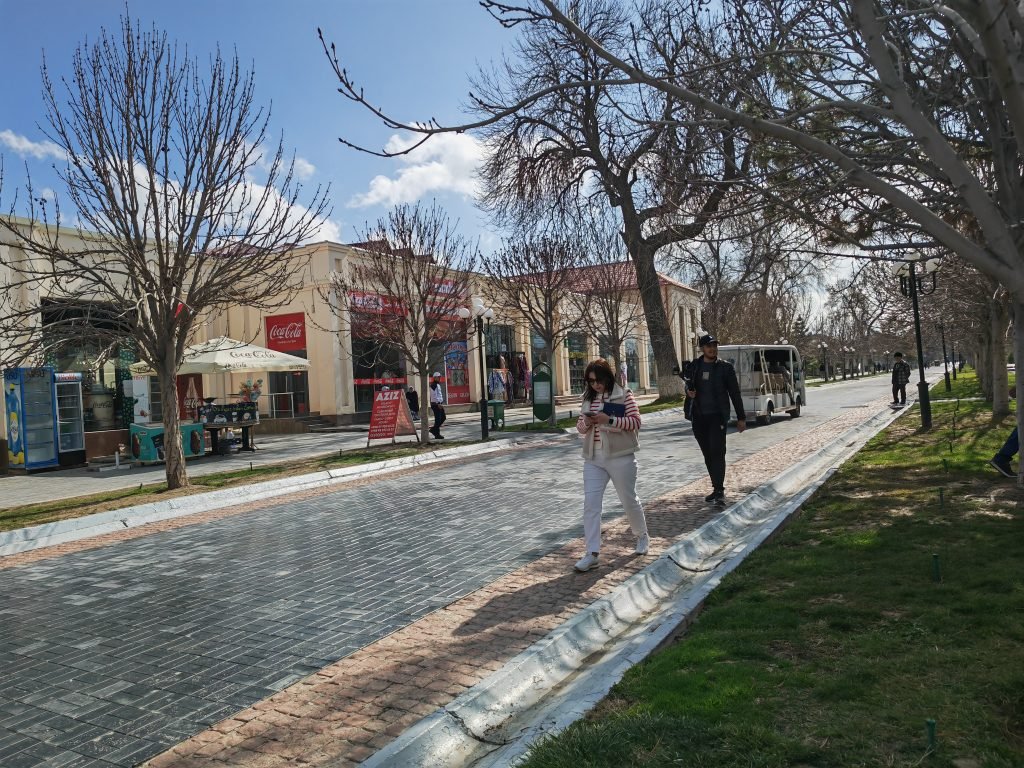
You could see the major sights more quickly, but I’d resist turning Samarkand into a one-night stop simply because you’ve “seen the Registan.”
There is enough here to slow down. What I truly appreciated was being able to see the change of seasons within 4 days of being here. My first couple of days were relatively warm and sunny spring days, the third day was positively arctic with heavy overnight snow !
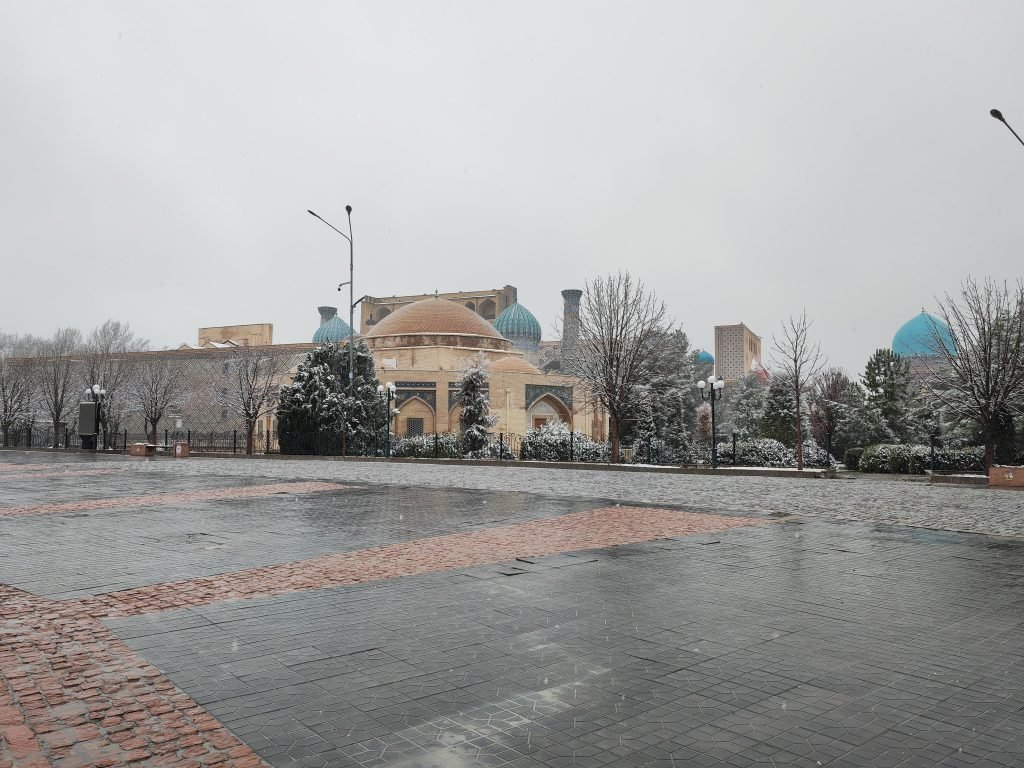
It sure creates a whole different atmosphere. This was near the guesthouse where I stayed and I managed to catch all the school kids enjoying the sudden snow !
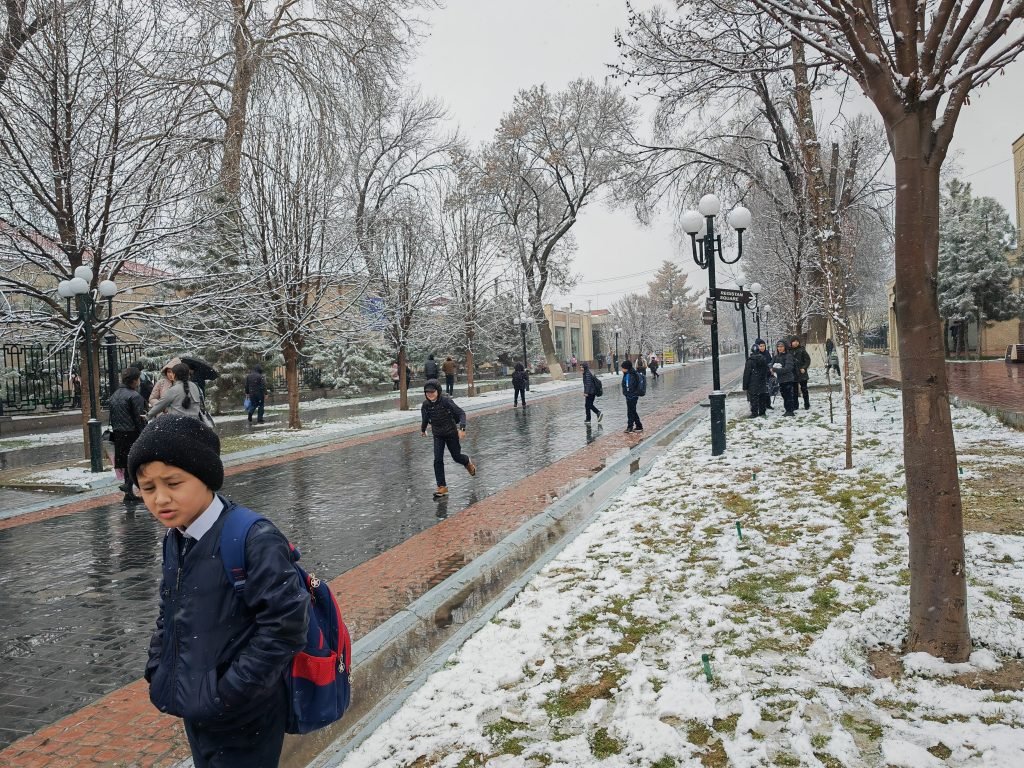
And that was one of the things I deliberately tried to do throughout this trip: not turn every day into an exhausting checklist.
Bukhara: Where I Found the Soul of the Silk Road
If Samarkand is the showstopper, Bukhara was the city I wish I’d had more time to experience.
I only spent one day here, which in retrospect wasn’t enough.
The atmosphere felt more intimate and more local than Samarkand, and with fewer tourists around, I found it easier to simply wander, stop for a coffee and watch everyday life unfold.
Bukhara was one of the great centres of Central Asian civilisation and an important Silk Road trading, religious and intellectual centre. Its historic centre has been a UNESCO World Heritage Site since 1993.
Bukhara’s historic centre
Things to Do in Bukhara
Ark Fortress
The Ark Fortress is the obvious starting point. The enormous citadel dominates the old city and served as the fortified residence of Bukhara’s rulers for centuries.
It’s impressive partly because of its scale, but also because it gives you a sense of how different Bukhara was when it was a powerful Silk Road city rather than simply a destination for visitors.
Practical information
Opening: Check locally before visiting, as hours can change seasonally.
Entrance: Paid admission applies. Check the current foreign visitor price at the entrance.
Poi Kalyan
Don’t miss the Poi Kalyan complex, centred around the enormous Kalyan Minaret.
The ensemble includes the Kalyan Minaret, Kalyan Mosque and Mir-i-Arab Madrasa. The minaret dates to the 12th century and has become one of the defining symbols of Bukhara.
Practical information
Opening: The exterior of the ensemble can be appreciated throughout the day; access to individual religious buildings follows their own opening arrangements.
Entrance: Some areas require a ticket while others can be viewed freely from the surrounding square. Check locally for current admission prices.
Lyabi-Hauz
I’d also make time for Lyabi-Hauz, the historic ensemble built around a pool.
This is less about ticking off another monument and more about slowing down. Sit, have something to drink, watch people and let Bukhara happen around you.
That, to me, is where the city really works.
Practical information
Opening: The square and surrounding old-city area are effectively open throughout the day.
Entrance: Free to walk around the ensemble itself.
Other Bukhara Sights I’d Add With More Time
Because I only had one day, there are several places I’d prioritise on a return visit:
- Chor Minor — the unusual four-towered madrasa that has become one of Bukhara’s most recognisable smaller landmarks.
- Trading Domes — the historic covered bazaars that once formed part of Bukhara’s commercial network.
- Bolo Haouz Mosque — known for its extraordinary wooden columns and ceiling.
- Samanid Mausoleum — one of Central Asia’s great early Islamic monuments.
- Abdulaziz Khan Madrasa and Ulugh Beg Madrasa — two historic madrasas that provide a useful contrast in architectural styles.
Where to Stay in Uzbekistan
I stayed in the Ramada by Wyndham in Tashkent, and found it rather dated and really needed better upkeep, so I won’t recommend that unfortunately. In Samarkand, I booked a guesthouse for first 2 night, I enjoyed the vibe and extended for rest of my stay .. I think the whole point is this is the most authentic way to travel!
My hosts were wonderful, treating me very well, including cooking me breakfasts in the morning and eating with their family!
I deliberately did not take pictures out of respect for their privacy.
I’ll be honest, there isn’t an abundance of high end properties around, and I questioned the value of ones they do have because they price alot higher than similar countries due to that scarcity factor. These are five properties I’d researched as backups, that are worth considering, split between genuine high-end options and more characterful/value stays.
InterContinental Tashkent
High-end
A polished international luxury option in the capital, particularly suitable if you want full-service facilities. This is probably the best place to stay in Tashkent. See booking options
Mövenpick Samarkand
High-end
A modern luxury option in Samarkand with full-service facilities and a contemporary feel. It is very well located, a quick walk to Registan Square. Booking options. There are various mid-range Hilton’s around but they looked rather boring !
Amelia Boutique Hotel, Bukhara
Value / character
A heritage-style boutique option where location and atmosphere are more important than resort-style facilities.
Platan, Samarkand
Value / character
A smaller property offering more personality than a conventional international chain. The onsite garden restaurant looks stunning ! Booking options.
Malika Prime, Samarkand
Value
A straightforward option in a convenient location for exploring Samarkand’s major sights.
My general advice: unless you’re particularly committed to hotel points or a full-service luxury experience, I’d seriously consider boutique accommodation in Bukhara and potentially Samarkand. You’re spending much of your day outside anyway, and the character of smaller properties fits the destination.
Practical Uzbekistan Travel Tips
Carry Some Cash
Uzbekistan was inexpensive compared with Western Europe, but don’t assume your card will work everywhere.
Many hotels, restaurants and more modern businesses accept cards, but smaller food establishments and markets may not. I also found that local ATMs could charge fees for foreign cards.
My strategy would be to withdraw enough cash early in the trip rather than repeatedly paying ATM fees.
Don’t Assume English Will Get You Everywhere
English isn’t as widely spoken as it is in many European tourist destinations.
I found people friendly, although not necessarily especially warm or chatty on first contact. In hindsight, I wish I’d known more Russian. That’s partly on me: knowing even a modest amount would have made spontaneous conversations with locals much easier.
Get Used to the Local Clock
This was probably my biggest practical lesson.
My guesthouse host gave me some excellent food recommendations, but I was often eating lunch and dinner much later than locals do, and by the time I wanted to try some of the places, they were already closed or had finished serving the dishes I’d gone looking for.
Get onto local time as quickly as possible, particularly if food is a major part of your trip.
What Not to Do in Uzbekistan
I’m deliberately not going to manufacture a list of “tourist traps” simply because.
I didn’t encounter anything during this trip that made me think, don’t bother coming here.
Instead, my advice is more nuanced: don’t treat Uzbekistan as a checklist of monuments.
Yes, you absolutely should see the Registan. You should visit Shah-i-Zinda. You should walk around Bukhara’s historic centre.
But give yourself time to sit in a café, explore a market, ride the metro, eat somewhere that wasn’t recommended by an algorithm and simply walk around without a destination.
Those moments were some of the things I remember most.
What I’d Do Differently Next Time
I don’t actually have a long list of things I’d tell you to avoid in Uzbekistan.
That is probably one of the strongest endorsements I can give it.
Instead, my advice is mostly about how I’d allocate my time differently.
One Less Night in Tashkent
Tashkent was interesting enough to warrant visiting, and I’m glad I didn’t simply use it as an airport.
But with limited time, two days is probably enough.
One More Night in Bukhara
This is the big one.
I only had a day, and I left feeling that I’d barely scratched the surface.
Bukhara had something that Samarkand doesn’t quite possess in the same way: a sense of the old Silk Road city still existing around you.
I’d happily trade a couple of day wandering Bukhara’s streets for another day in Tashkent.
Explore Beyond the Cities
The biggest thing I missed was the landscape.
There are mountains and outdoor areas within reach of Tashkent, and I’d like to explore them on a return visit.
That’s the danger of an Uzbekistan itinerary focused exclusively on the Silk Road cities: you see an extraordinary part of the country, but only one part.
Wander Up Front Reality Check
Don’t come to Uzbekistan expecting three interchangeable Silk Road cities. Tashkent, Samarkand and Bukhara each offer something quite different — and if you’re short on time, I’d sacrifice a little time in the capital to experience more of Bukhara.
Is Uzbekistan Worth Visiting?
Absolutely.
What I liked most was that Uzbekistan still felt like somewhere I was discovering, rather than somewhere I was simply consuming.
There were no Starbucks or McDonald’s seemingly waiting for me around every corner. Western chains weren’t defining the experience. The architecture felt genuinely distinctive. The food was inexpensive. The trains were excellent. And the three cities I visited each had a noticeably different personality.
Tashkent
Soviet Central Asia
Samarkand
The Architecture
Bukhara
The Silk Road Soul
I’d go back , and next time, I’d slow down even further.
For a first trip, I’d suggest roughly 2 nights in Tashkent, 4 nights in Samarkand and 2–3 nights in Bukhara, with additional time if you want to explore the mountains or continue onwards to Khiva and beyond.
Looking to visit the other Stans? See my Kazhakstan Guide here
This guide is based on my own trip to Uzbekistan in March 2025, visiting Tashkent, Samarkand and Bukhara. Opening hours, admission prices, transport schedules and entry requirements can change, so check official sources locally before travelling.