
What to Do in Nusa Penida
Wander Up Front Destination Guide
What to Do in Nusa Penida
The heat hit me before anything else did.
Somewhere close to 40 degrees, and the air had that stillness to it, almost no breeze, no relief, just heat that sat on your bare shoulders like a second bag. I’d also underestimated the island itself, it’s bigger and more sprawling than others suggest, and I’d made a classic rookie error before I’d even landed: booking a villa deliberately five minutes from the port I assumed I was arriving at, with no idea Nusa Penida has more than one landing point along that same stretch of north coast!
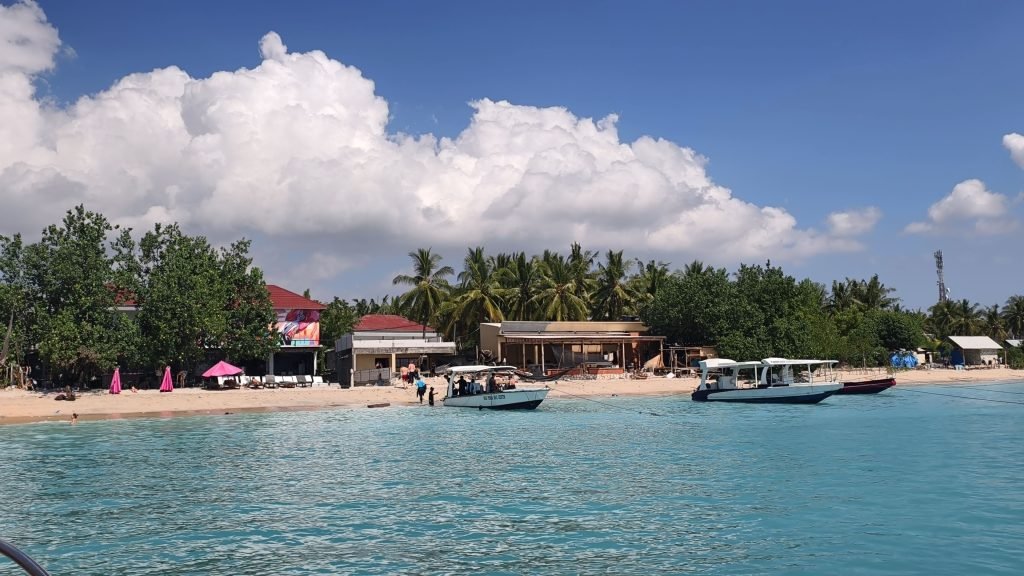
My boat, naturally, chose the other one. Close as the crow flies, maybe 10 to 15km, but far enough that what should have been a straightforward hop turned into a 300k IDR taxi for a 12 to 15 minute ride, still cheap by European standards, but steep next to what the same distance costs on Uber back on the main island.
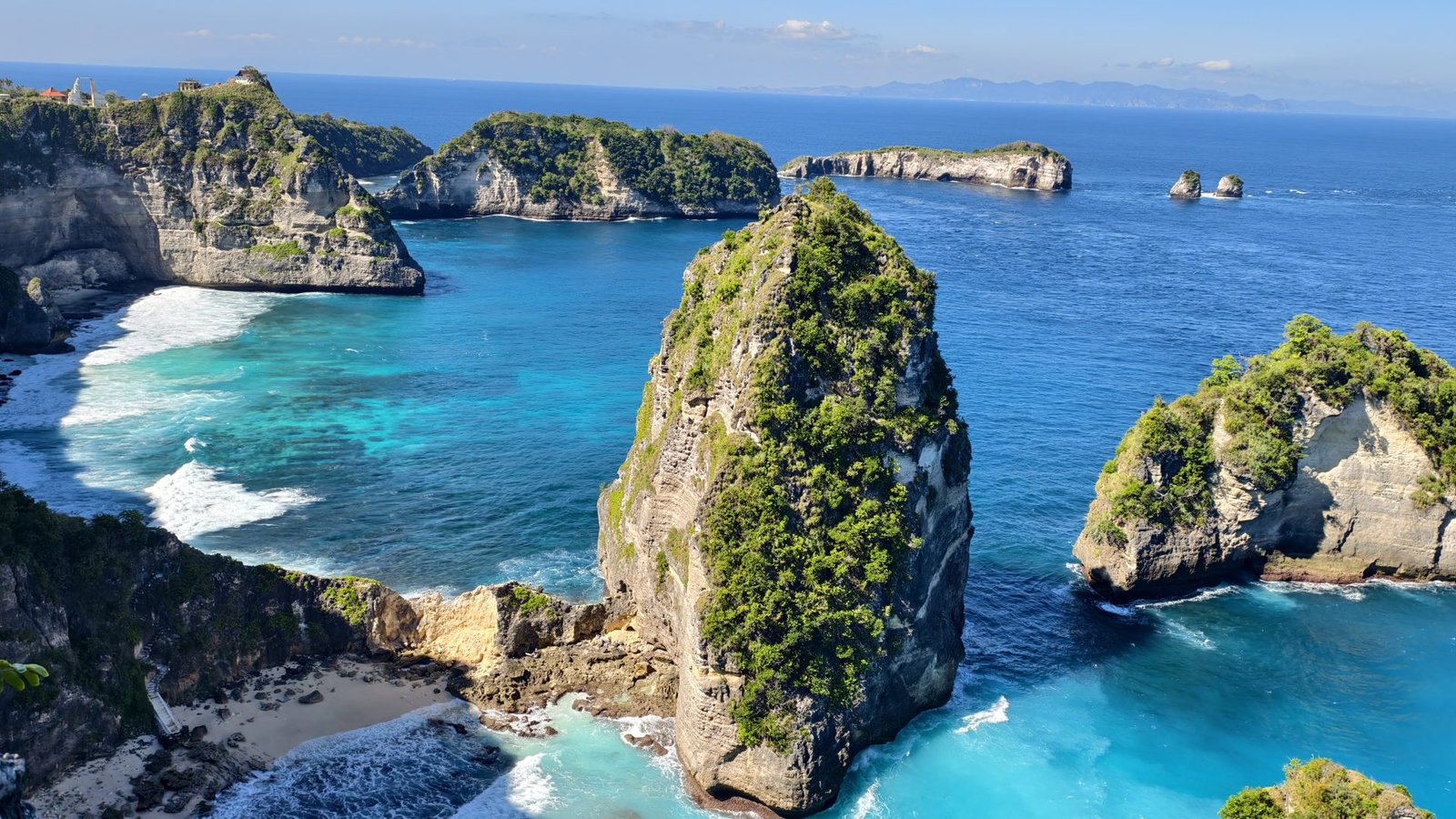
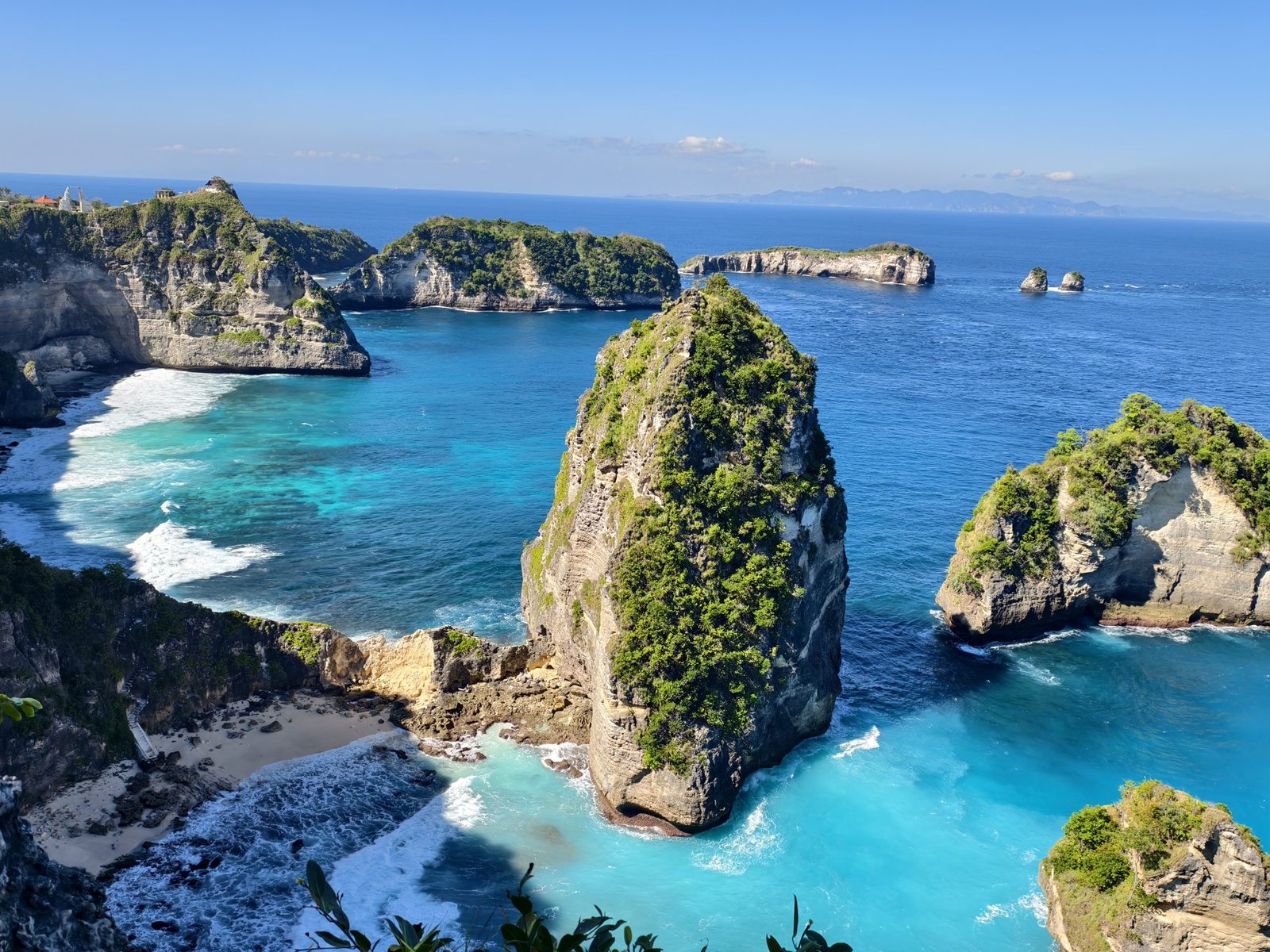
None of that mattered much once I actually saw the place. Nusa Penida wears two faces at once, a slow, village-hearted calm down by the harbours, and something wilder and untamed the moment you head inland: cliffs dropping straight into the sea, roads cutting through raw rock, hills that roll on for longer than the island’s size has any right to allow. That contrast is never more obvious than a few hours into a hike up Teletubbies Hill, looking back and realising how far you feel from the sleepy port town you woke up in, even though it’s barely an hour’s drive.
My verdict: Nusa Penida doesn’t hand you its best moments, you earn them, sweating up and down cliff paths in punishing heat for landscape that genuinely doesn’t look real in places. It rewards patience and a decent level of fitness more than anywhere else I visited in Bali. Five days gave me a proper feel for it, though I’d have happily stayed longer.
Getting There and Getting Around
Nusa Penida has at least 4 different ports – something known by different names to confuse you even more! Knowing which is which matters more than most people expect before they arrive.
What’s listed online as the Nusa Penida Ferry Port is, on the ground, the same place as Banjar Nyuh Port, near Toyapakeh village on the north coast. Buyuk Harbour sits further along that same coast, roughly 10 to 15km away, and Sampalan Port sits further round again on the northeast side, the port you want if you’re heading straight for the east-coast attractions: Diamond Beach, Atuh Beach, and Teletubbies Hill.
I’d booked accommodation deliberately close to the Nusa Penida Ferry Port, assuming that covered it. When I booked the tickets the map showed the north of the Island, so I thought that must be my one. But my boat landed at Buyuk Harbour instead, close on a map but not close enough, and a boat that lands somewhere unplanned is exactly the moment a taxi driver knows they’ve got you.
I’ve been used 12go.Asia to book my boat transfers, but they do not always make the ports clear !
Wander Up Front tip
Confirm the exact named port your boat arrives at, by name, directly with your operator/booking entity.
Once you’re on the island, roads narrow, buckle, and climb without warning, a scooter is the standard way to get around, and rental generally runs cheaper the longer you commit upfront rather than by the hour. I ended up sharing a bike with one of the guys I met on day one rather than renting my own.
That said, treat the roads with real respect. There were a few genuinely nervous stretches where I could feel we were struggling for grip on the bumps and bends, and on one uphill corner we simply didn’t have the speed to hold the line, the bike tipped and we went down into the bushes at the edge of the road.
We were lucky, we’d already lost most of our speed by that point, so we walked away without a scratch. Not every ride ends that cleanly! Caution is always best.
Diamond Beach
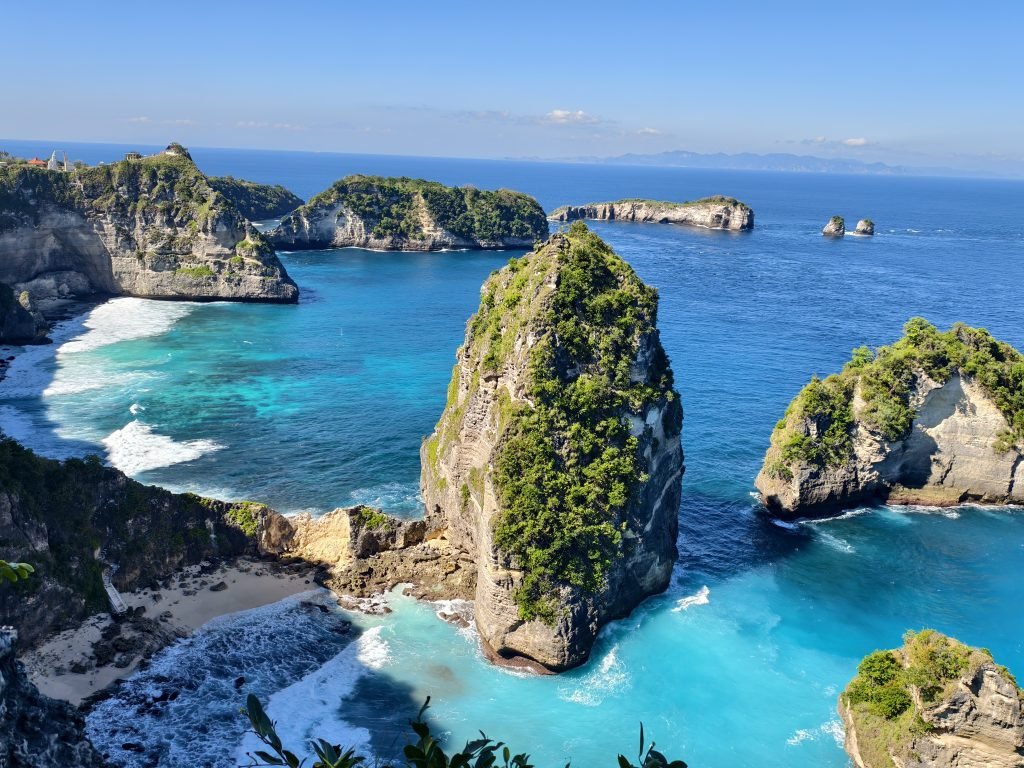
Absolutely stunning, and it doesn’t feel entirely real. Giant rock formations seem to float in the ocean just offshore, almost as if they hold their own separate ecosystem within them. The beach takes its actual name from a diamond-shaped limestone sea stack standing just off the shore, one of the most photographed rock formations on the island.
Getting down is a relatively new privilege. Until fairly recently there was no way down at all, the cliff face was simply too sheer, and the beach could only be viewed from the top. A staircase of 166 steps has since been carved directly into the limestone, taking most people 15 to 25 minutes to descend, with a rope-assisted section near the bottom where the steps give way to bare rock.
This isn’t a beach for anyone very unfit or carrying an injury, but it’s genuinely one of the best things I saw on the whole trip.
Swimming here is now officially prohibited. The open ocean beyond the cove carries genuinely dangerous rip currents, and there have been several drownings since the beach reopened to visitors, so any warning signs at the bottom are worth taking seriously rather than treating as the usual overcautious signage.
Atuh Beach
A short distance from Diamond Beach and usually covered together given the shared access point, close enough that from the ridge above you can look down at Diamond on one side and Atuh on the other. Same story on the descent, a proper hike down and back up, with dramatic cliff scenery the whole way…
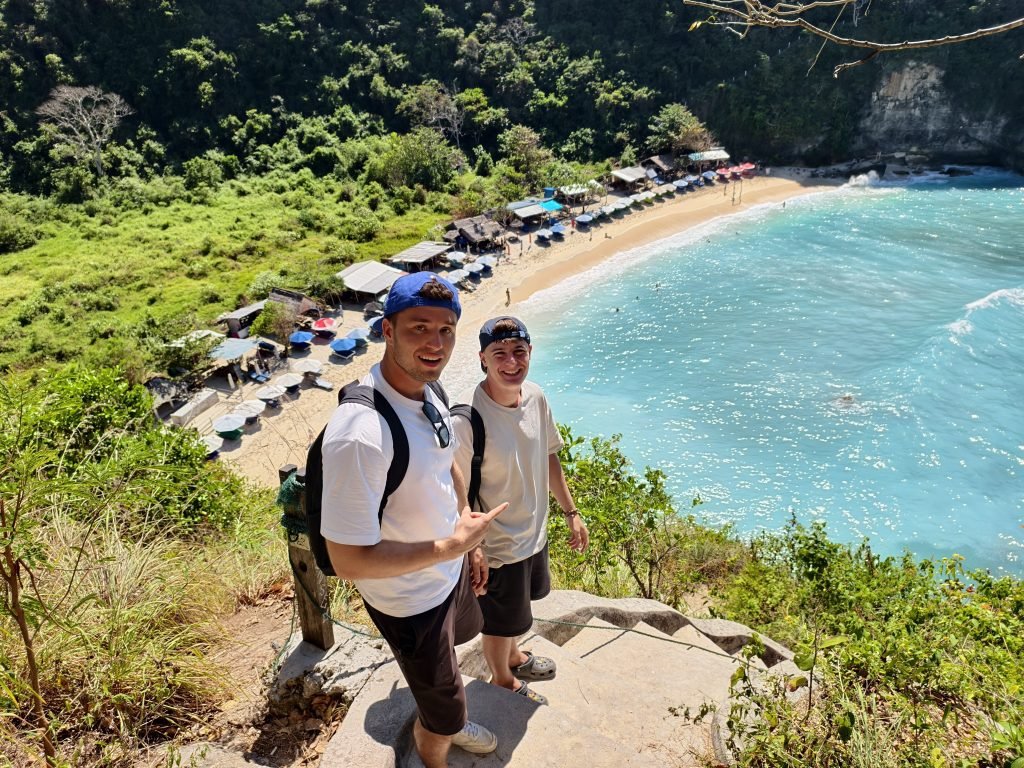
Its defining feature is Banah Rock, a limestone formation with a natural hole worn clean through its centre, rising out of the water at the eastern end of the bay. Unlike Diamond Beach, Atuh is genuinely tidal, the amount of visible sand and the character of the beach shift noticeably depending on when you arrive, and high tide is generally considered the better time to visit.
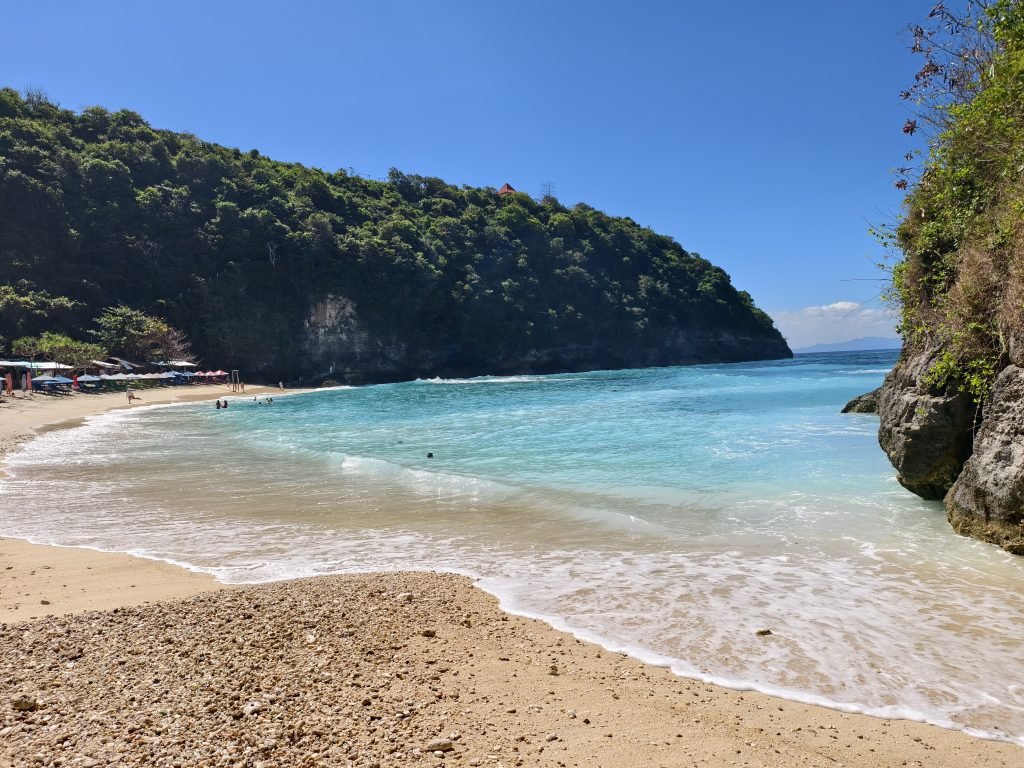
A separate, shorter staircase on the beach’s left side gets you back to the top in under ten minutes if the main descent feels like too much on the way down.
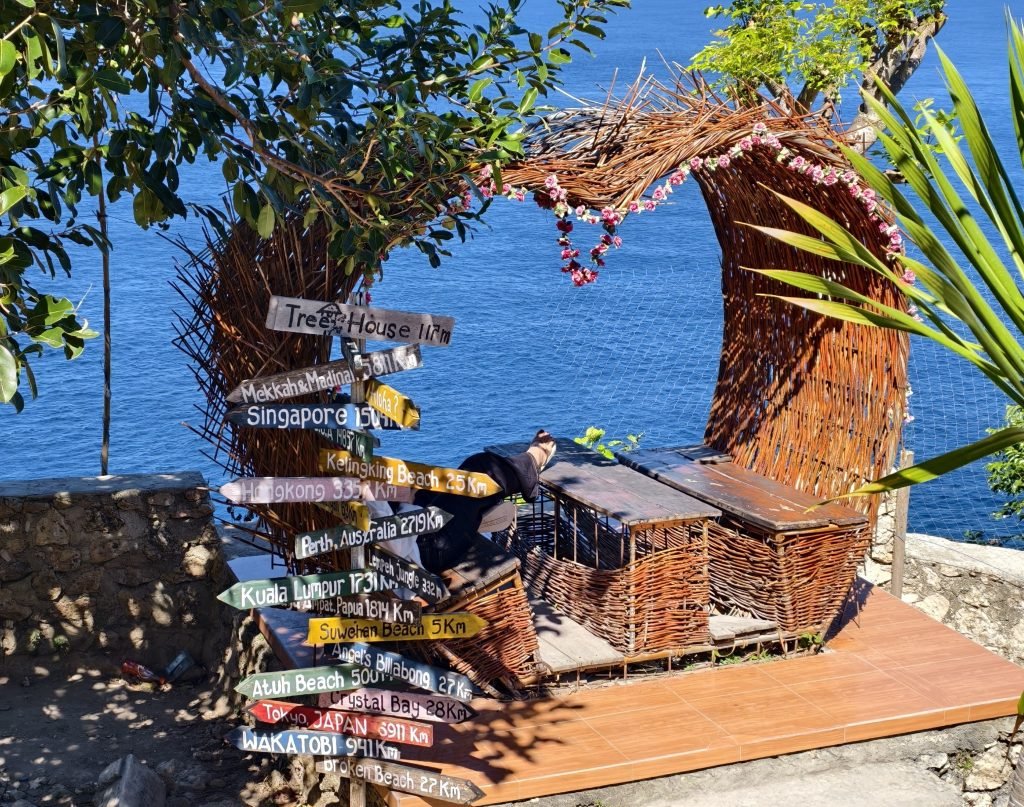
Tree House (Rumah Pohon Molenteng)
Cool in concept, a small hut perched on a genuinely great vantage point, but a bit overhyped in practice. Officially called Rumah Pohon Molenteng, it sits within the same grounds as the Thousand Islands Viewpoint (Pulau Seribu), named for the scattering of small rock islands visible from the clifftop, some large enough to have their own local names.
After the amount of climbing it takes to get up here, on a route that’s already up and down steep hills, you’d expect the view to just be your reward. Instead, they try to charge you to even take a photo from it.
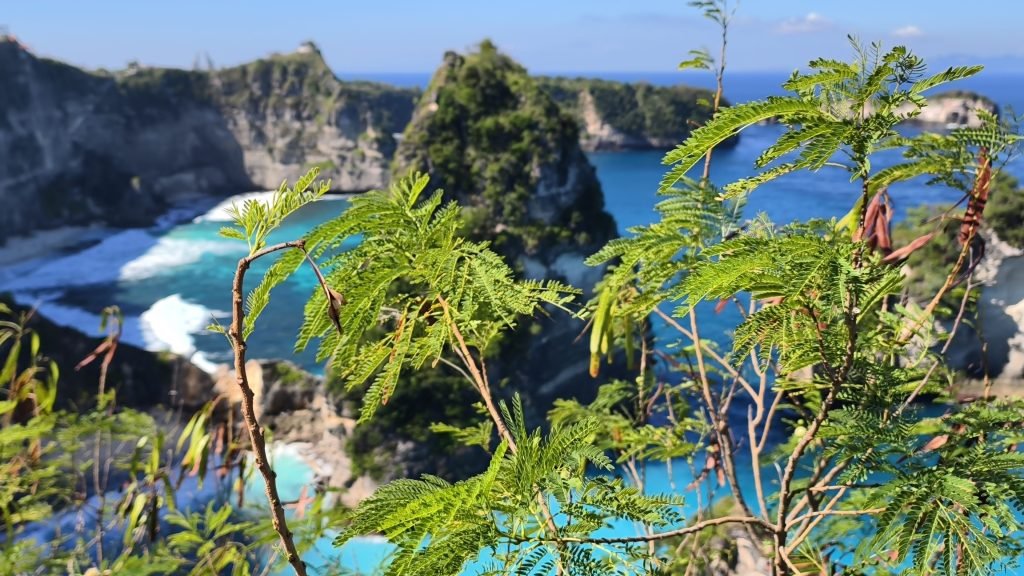
As it turns out, one ticket covers entry to both the treehouse structure and the viewpoint trail beyond it, and the treehouse itself is treated as the standout photo spot within the wider site rather than a free extra, which is presumably the reasoning, even if it doesn’t make the extra charge sting any less after everything else you’ve already put in to reach it.
Along the walk from there, you will see some other good spots and vantage points, including this cute little setup by a coffee/drinks vendor..
Teletubbies Hill
Rolling green hills that genuinely do look like the show’s set, a strange, storybook contrast to the cliffs and raw coastline everywhere else on the island. A few hours of hiking here, and it’s one of the clearest examples of just how varied Nusa Penida’s landscape actually is within a fairly small area.
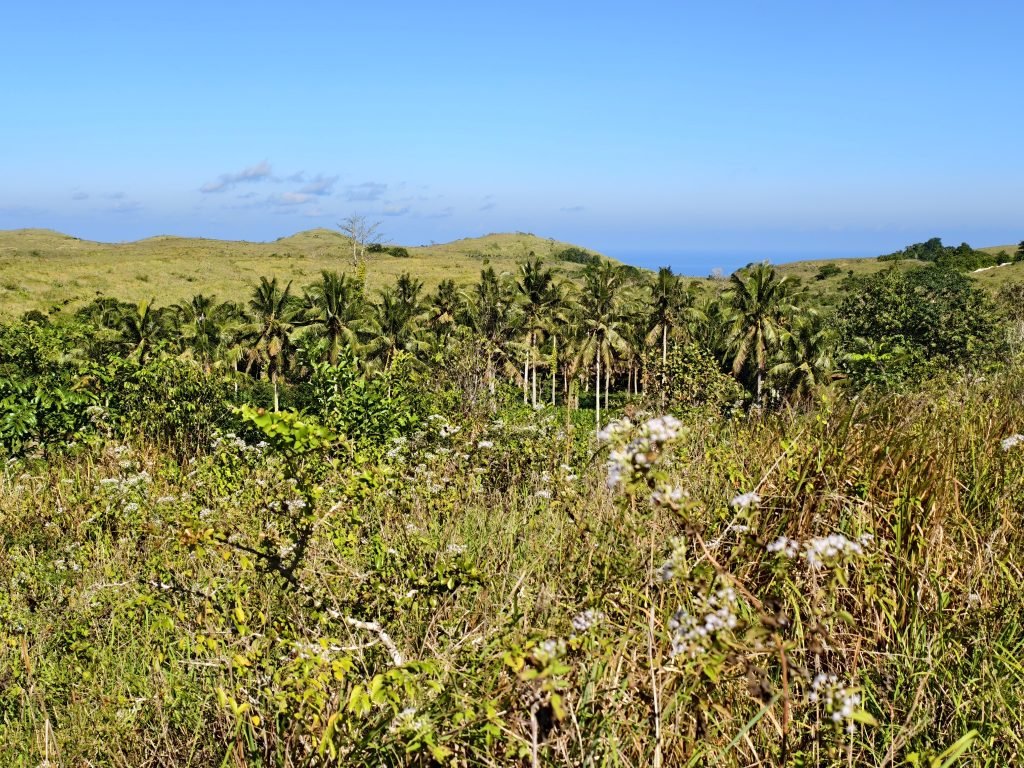
Before it had anything to do with children’s television, this stretch of hills was known locally as Gamal Hill, named after the gamal trees once grown here to feed livestock. The Teletubbies name only stuck after tourist photos of the rounded, grassy mounds started circulating online and drew the comparison.
The hills themselves are limestone with only a thin layer of topsoil over them, which is why the grass turns noticeably greener and more vivid in the rainy season, and closer to bare and sunburnt in the dry.
Crystal Bay
A proper rest day spot after all the clifftop hiking. We swam, played a bit of football on the sand, and stuck around to watch what was one of the best sunsets of the whole trip.
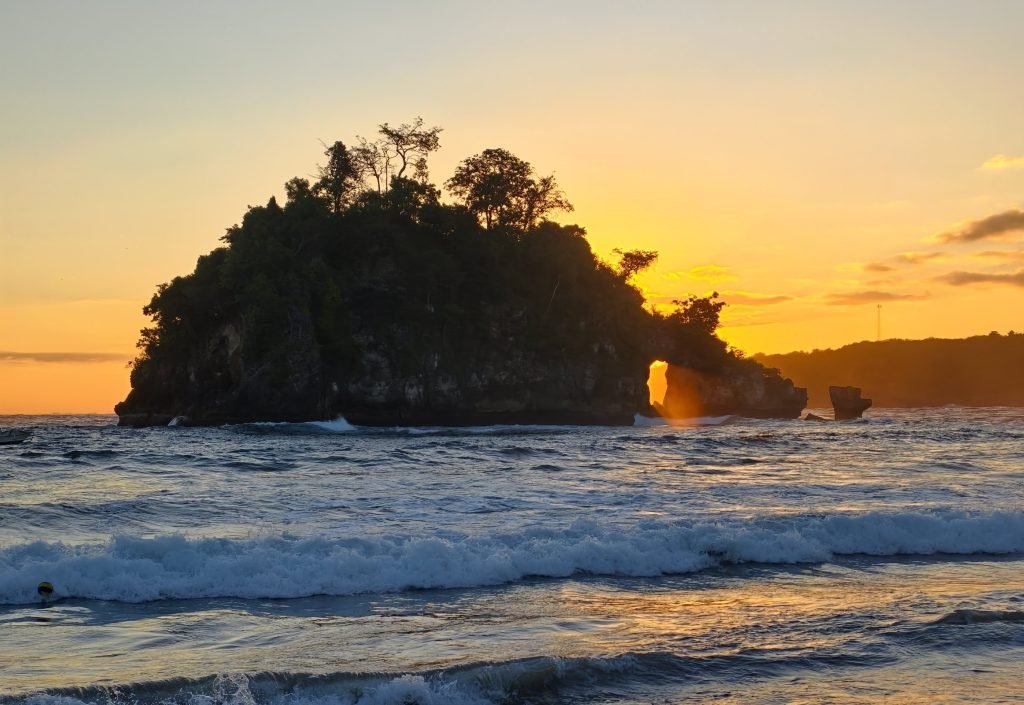
Less about ticking off a specific attraction, more about just enjoying a normal beach afternoon, and it’s easy to see why: Crystal Bay is one of the only west-facing beaches on Nusa Penida, which is what makes it such a reliable sunset spot. It’s also a proper trip in its own right rather than a quick add-on, roughly 30 to 40 minutes by scooter from Toyapakeh, so it’s worth setting aside a half day rather than expecting to pop in on the way to somewhere else.
Here’s an aerial view of this beach…
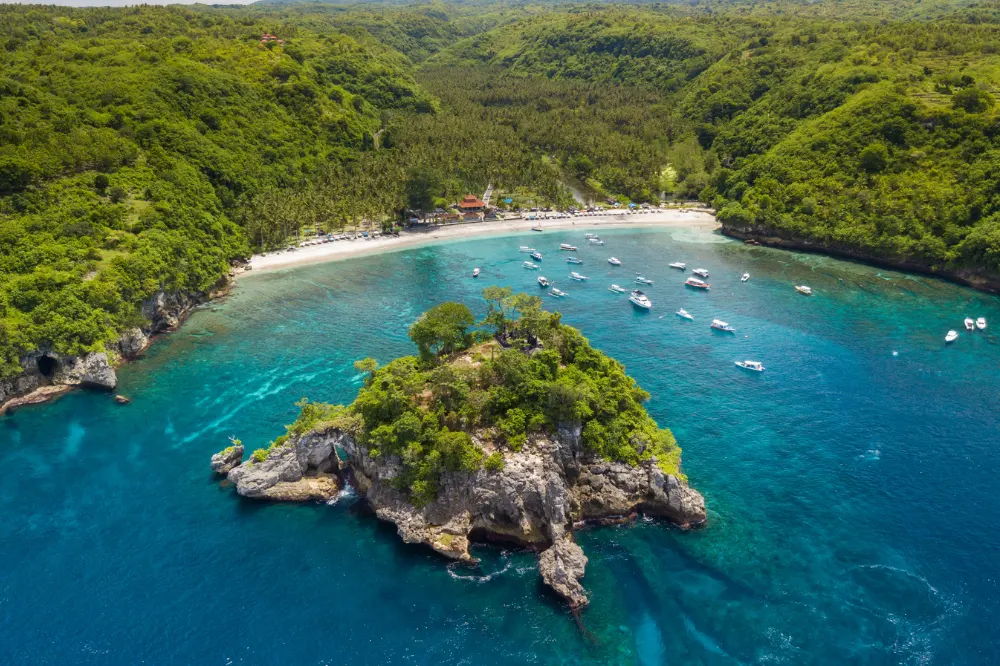
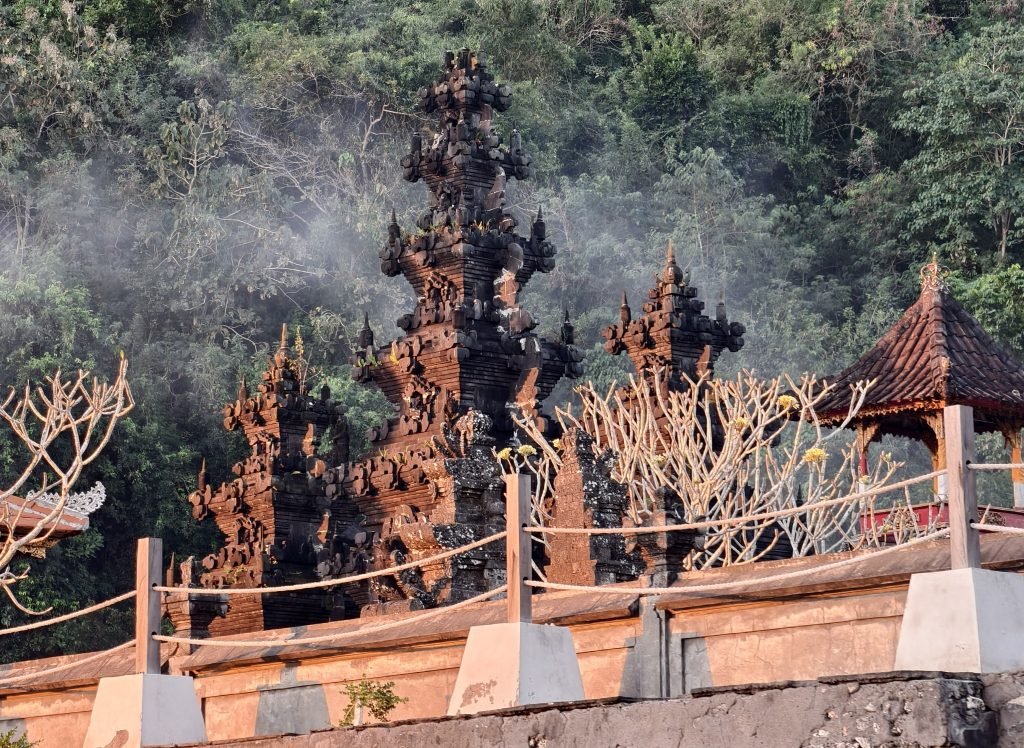
It was originally known as Pantai Penida, renamed by visitors for the clarity of its water rather than through any official process. A small offshore formation known locally as Mejinong Stone Island helps shelter the bay from the swell that hammers much of the rest of the coastline, and two temples sit within the wider area, Pura Batu Jineng, built on a rock just off the beach, and Pura Penida, part of Bali’s wider network of Sad Kahyangan directional temples.
There is a even little temple in the foot of the beach..
Between July and October, it’s also one of the more reliable places in Indonesia to dive with mola mola, the ocean sunfish.
Kelingking Beach
The famous Instagram spot. The name Kelingking actually translates to “pinkie,” a reference to a finger-like promontory in the original landscape, though it’s now known internationally almost entirely by its nickname, T-Rex Bay, for the way the cliff’s silhouette resembles a dinosaur’s head and spine.
I only saw it in passing, once from the boat during the snorkelling trip, and once driving past on land, since the rest of the group had already been the morning before I arrived. Their verdict was that it isn’t anything especially special next to Diamond Beach. I didn’t come to the island chasing this specific shot, so I stayed fairly neutral about whether I properly visited it or not.
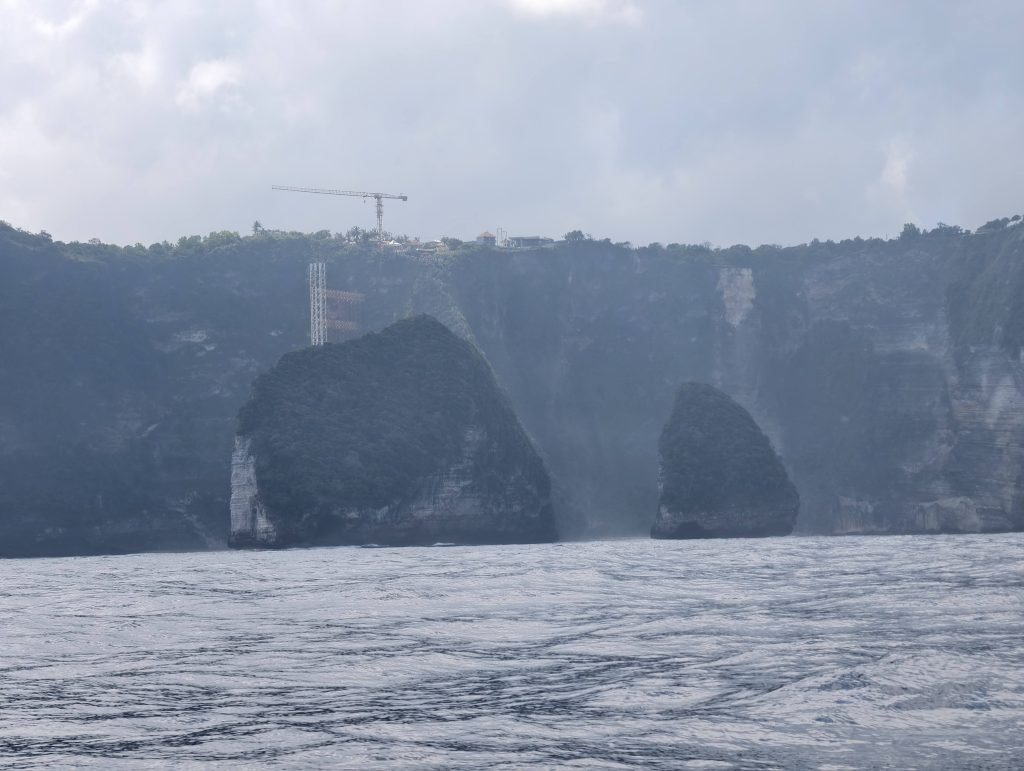
It was reportedly first noted by foreign backpackers around 2003, back when it was still known locally as Karang Dawa and had no path down to the beach at all.
It stayed largely unvisited until photos began circulating on Instagram around 2016 and 2017, at which point it went from an obscure clifftop to one of the most photographed beaches in Southeast Asia within the space of a couple of years, at one point ranked the second-best beach in Asia by TripAdvisor, which says something about how quickly a quiet spot on this island can turn into exactly the kind of place I wasn’t in a rush to see.
Snorkelling for Manta Rays
Organised through our accommodation rather than a specific operator we sought out, and it cost around 350k IDR. The trip covered three points, and it was well run, but the water was considerably rougher than I’d expected.
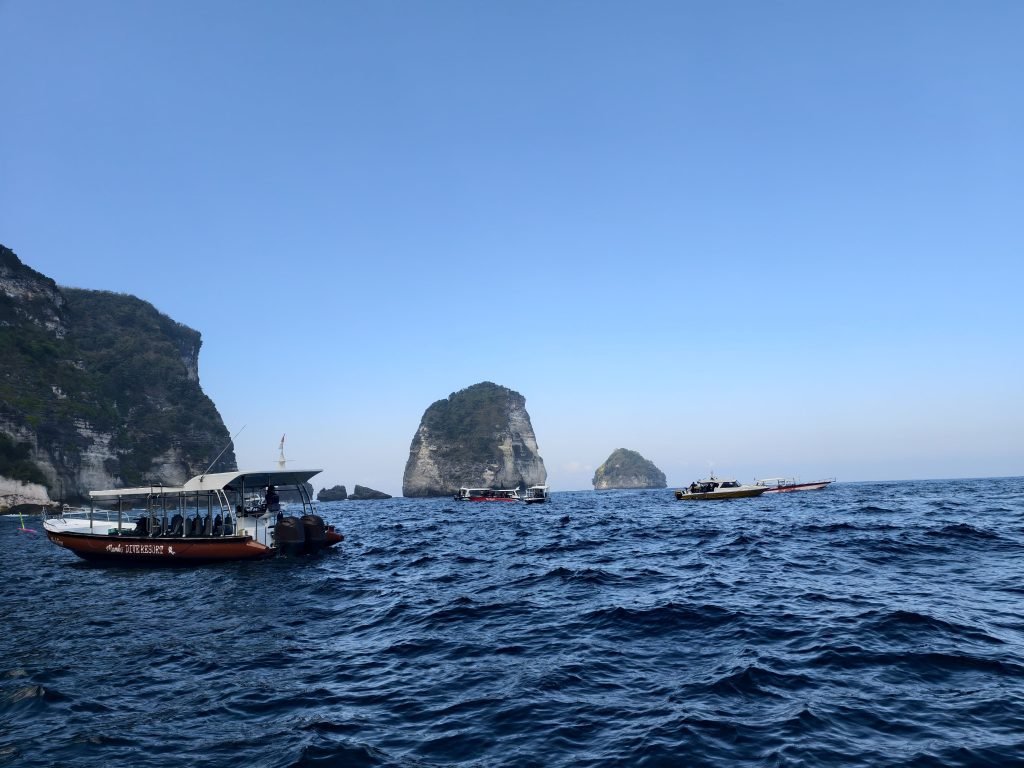
At the first spot, we swam straight into a bad patch of jellyfish, painful enough that I genuinely felt it, and frustrating both because we weren’t warned in advance and because the boat crew either couldn’t or didn’t move us somewhere else.
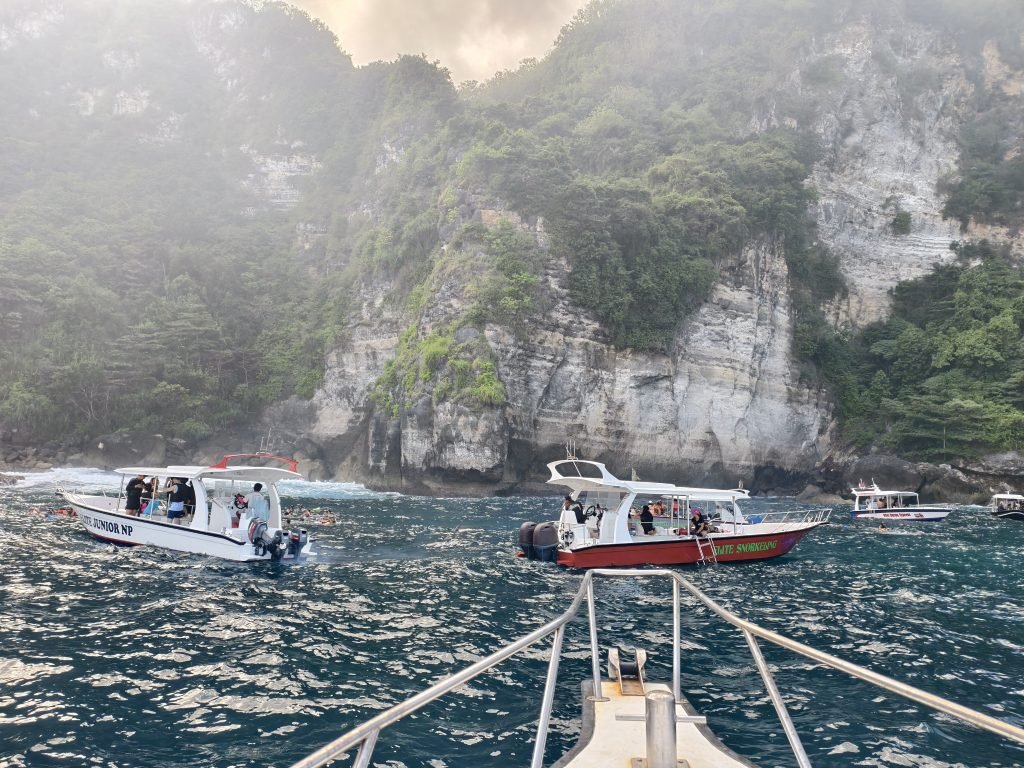
In the haze of the jelly fish stings almost every inch of my body, and then having issues with my googles, I had entirely missed the Manta rays. About half our group of 20 or so travellers saw it. I was gutted.
I’ve snorkelled in Thailand, the Philippines, Malaysia, the Seychelles, and the Caribbean, and never met anything close to the concentration of jellyfish we hit here in such a short stretch of water. Most of those other places felt like there were none at all by comparison.
Our two next spots would not feature any Manta rays at all – again something we only found out after that first stop ! In a bid to make up for it, I booked another snorkelling tour for my last day, more on that later !
Wander Up Front tip
The jellyfish and the mantas aren’t a coincidence, both are drawn to the same plankton-rich water, so the spots best known for manta sightings are often exactly where jellyfish larvae concentrate too. A rash guard genuinely helps here – I’d probably even go for a body suit! I ended up distracted fixing my goggles after getting stung and missed the Mantas entirely, while the some of the group, further from where the stings hit, saw them clearly.
Where to Stay
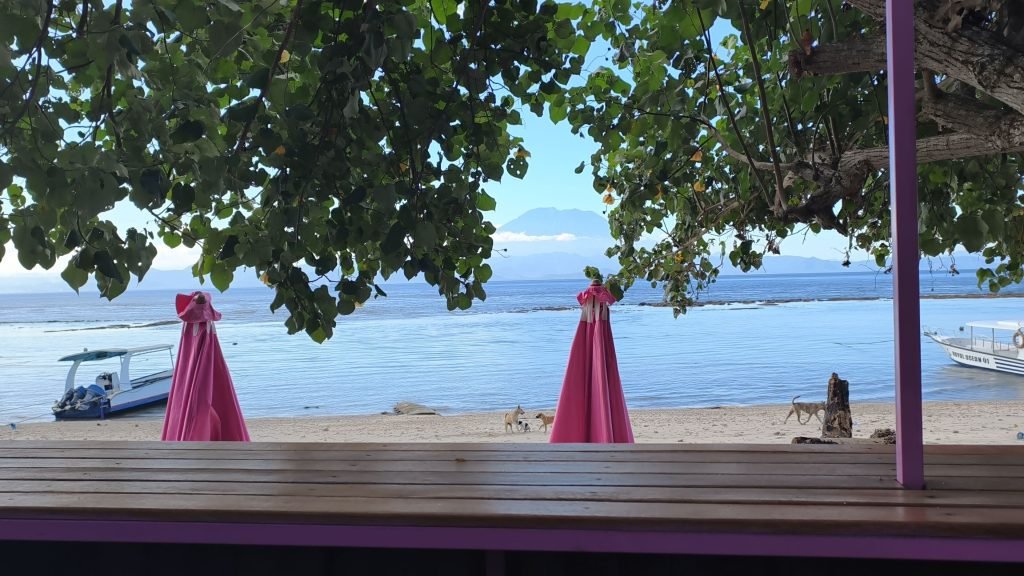
I stayed at Mantra Villa Nusa Penida, on the northwest side near Toyapakeh, right on the beachfront with direct sand access from the door. It’s a small, newer property, just a handful of individually furnished villas, each with a private outdoor hot tub and en-suite bathroom.
The location put me a short walk from the port itself, along with a petrol station, pharmacy, and mini-mart nearby, genuinely convenient for a first few days getting orientated on the island.
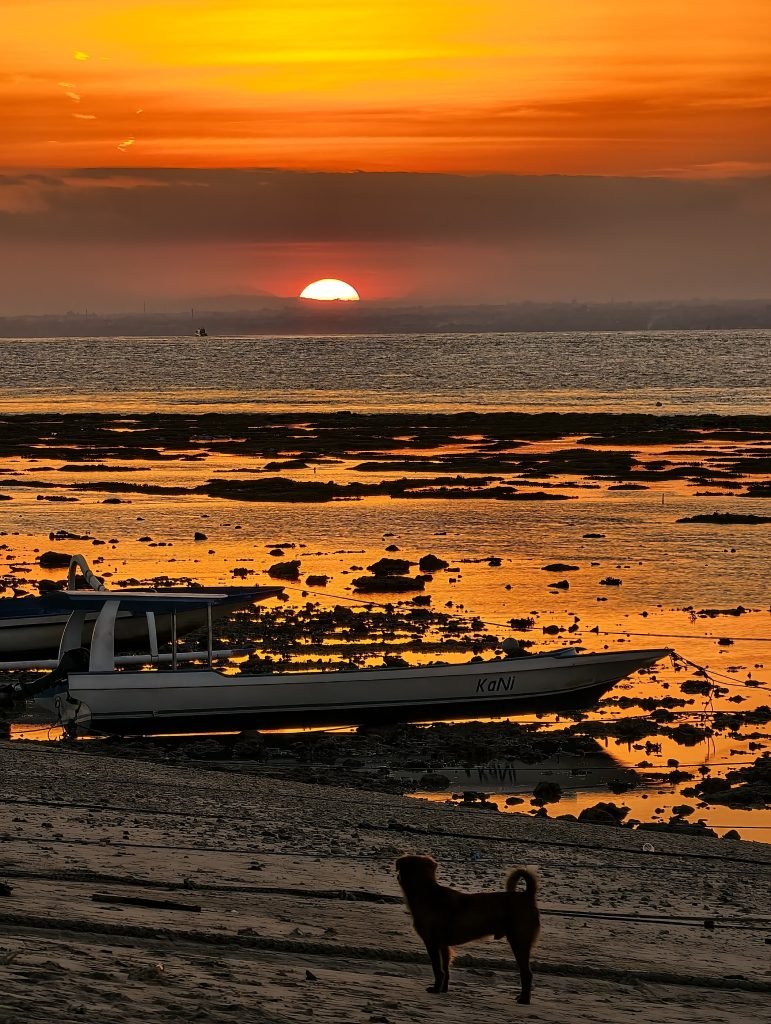
The beach right there, Ma’ent’s Beach, ended up giving me some of the best sunsets of the whole trip without ever having to go looking for one.
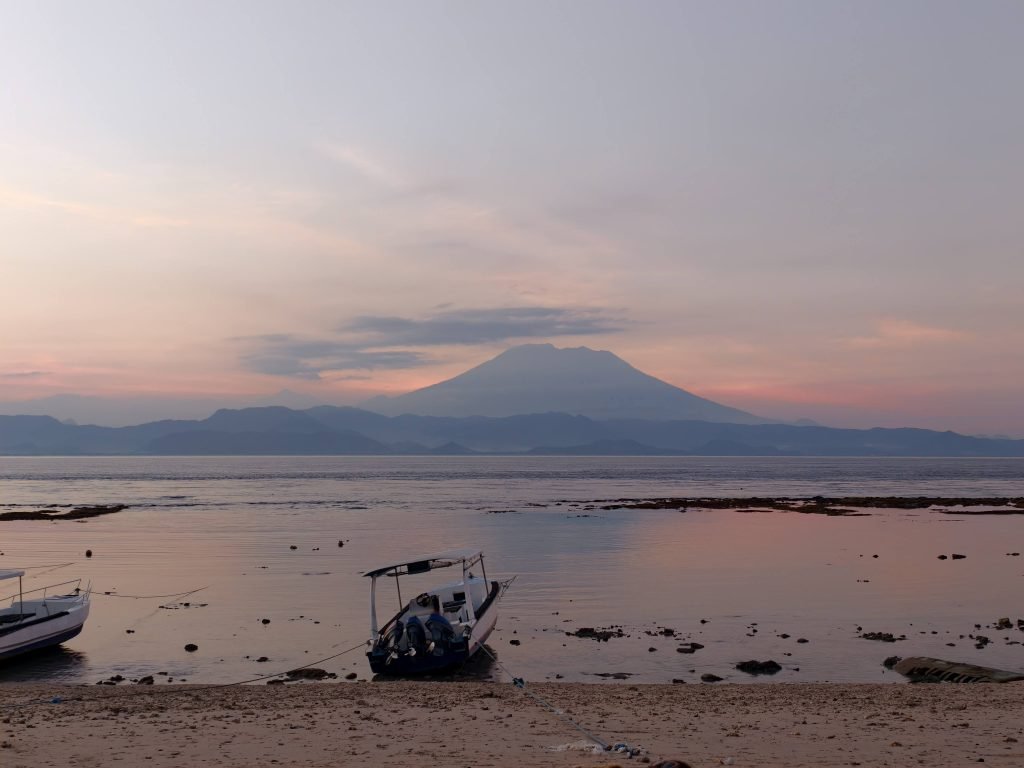
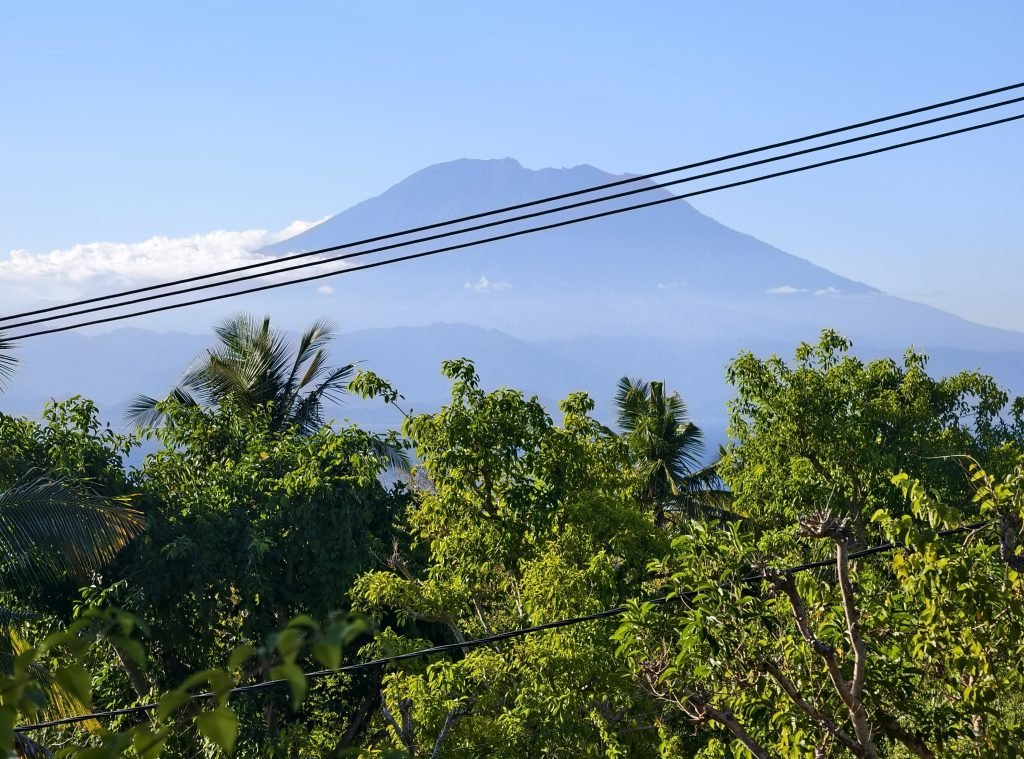
On a clear evening you can pick out Mount Agung on the horizon, Bali’s highest and most sacred volcano, standing well behind the closer silhouette of Nusa Lembongan, easy to mix the two up at a glance, but it’s Agung doing the heavy lifting on the skyline.
Māua Nusa Penida
High-end
The island’s first genuine 5-star property, 25 private-pool villas overlooking Gamat Bay, each with its own garden and dressing room. Home to the PADI 5-star Dune Penida dive centre, and close enough to Toyapakeh to stay convenient for the harbour and Crystal Bay. The clearest choice on the island if you want proper luxury rather than an upscale mid-range hotel dressed up as one. View and Book here
Adiwana Warnakali
High-end
An adults-only boutique resort near Kelingking Beach on the east side, consistently rated the island’s top boutique stay. Ocean-view suites, a full spa, and new private-pool villas opening later in 2026. Further from Toyapakeh than the other picks here, but worth the trade-off if Kelingking and the east-coast hikes are your priority. View & Book here
Sea La Vie Resort
Mid-range
Right on Toyapakeh harbour, with a sea-facing infinity pool and consistently strong reviews for feeling more expensive than it actually is. A genuinely good value pick if you want a proper pool and view without paying resort prices, and it puts you a short walk from where most boats to the other islands depart.
Mambo Beach Resort
Mid-range
Right along the main road in the northwest, walking distance to the harbour, restaurants, and the area’s evening live music scene. A solid, sociable base if you want to be in the middle of things without booking a full resort, similar in spirit to how I ended up using Mantra Villa.
Food and Drink
Not quite as cheap as you might expect given Nusa Penida’s reputation as the less touristy, more low-key option compared to the main island. Still, I’d call it good value overall.
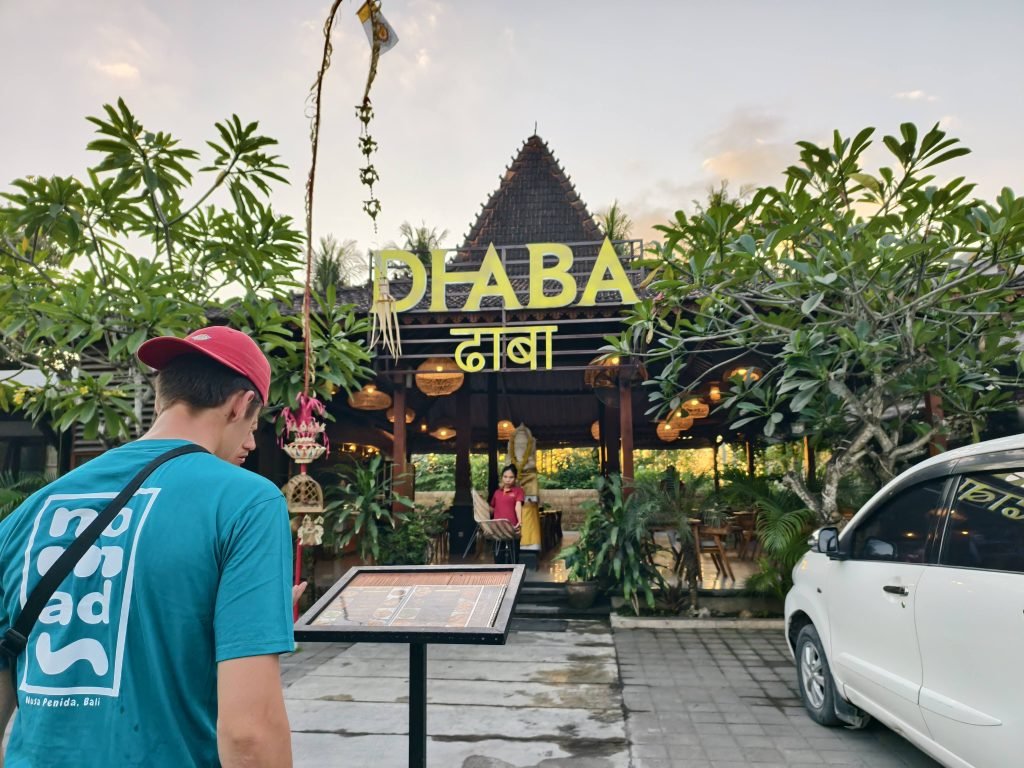
The island’s food scene has grown considerably in recent years alongside the tourism boom, with a genuine mix now available: local Indonesian warungs serving nasi and mie goreng alongside a growing number of Western-leaning cafes, smoothie bowl spots, and beachfront restaurants aimed squarely at the day-tripper and digital nomad crowd now passing through.
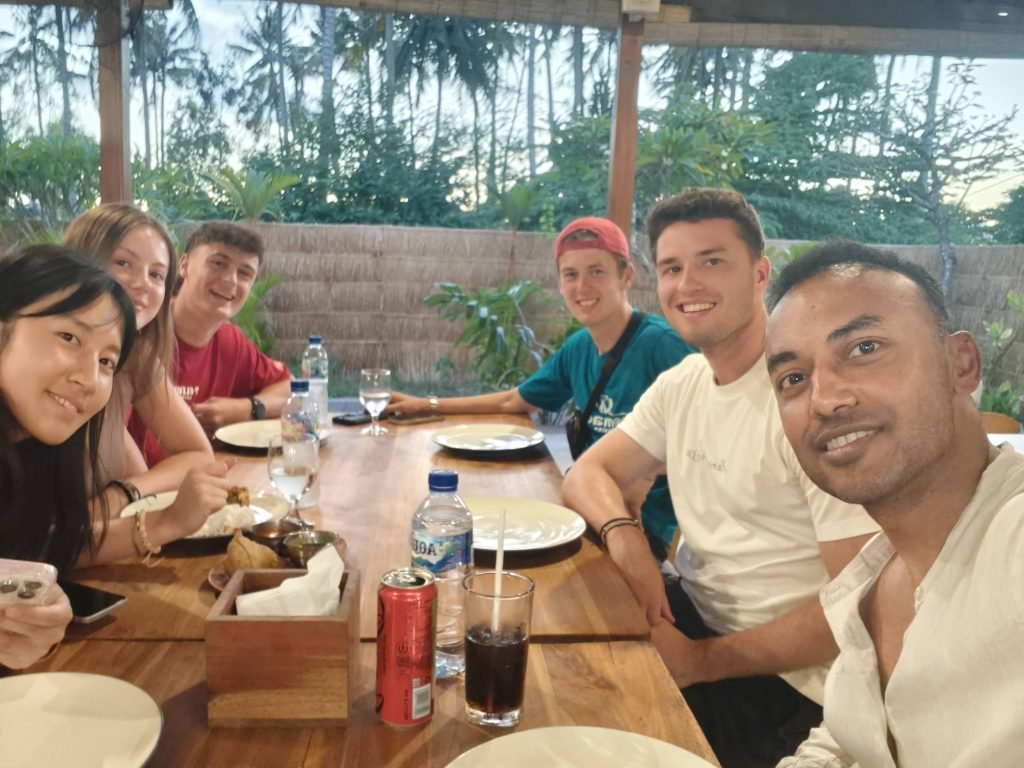
I didn’t take note or photograph everywhere we’d eaten but some of the places we liked near the North/West side of the Island include Joglo Penida, La Coco, Vegan Soul Cafe and Dhaba – if you happen to crave Indian food like us !
Toyapakeh and the area around Crystal Bay have the widest spread of options if you want variety within walking or short scooter distance.
Nightlife
There’s more of a scene here than the island’s reputation suggests, just don’t come expecting anything wild here, its definitely more laid back and toned down.
A hostel near our villa ran regular parties and drinks promotions, and we ended up there two nights running almost by default, easy, sociable, and right on our doorstep.
The best night, though, came out of nowhere: mid-dinner one evening, we got talking to some people who invited us to a full moon party happening that night, in yet another hostel, this one out in the middle of the island…
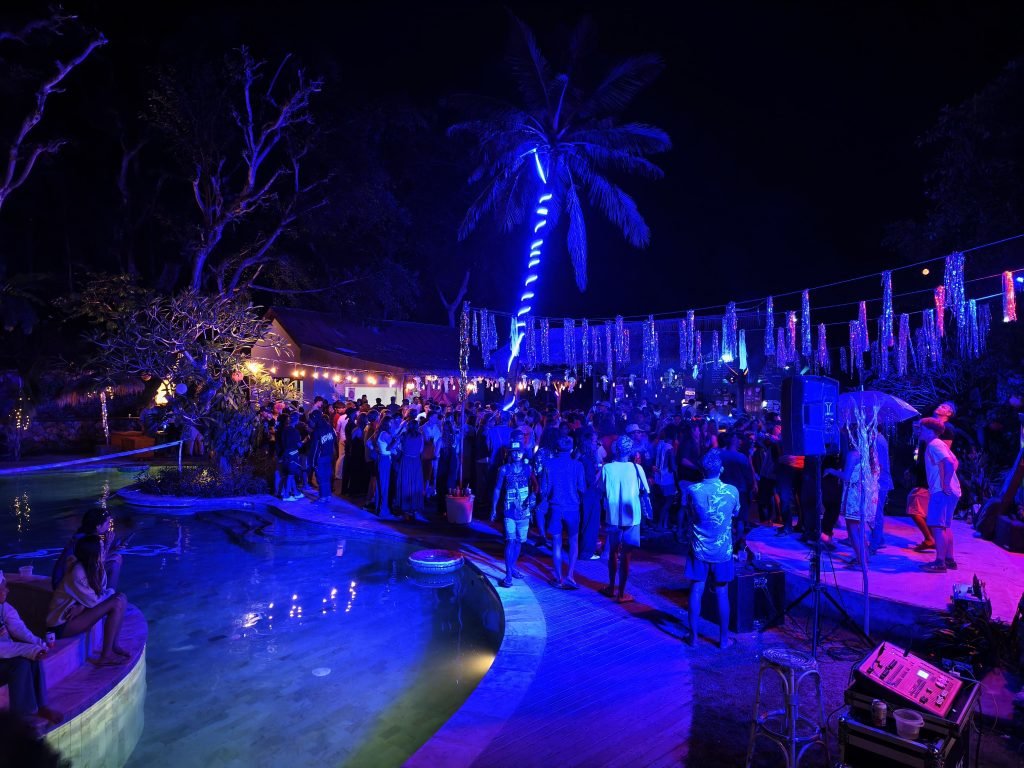
It had all the trappings of a proper full moon party, the music, the crowd, the atmosphere, but on a noticeably smaller scale than the legendary versions you’d find in Thailand.
Nusa Penida’s nightlife, in short, is real and worth having a night or two around, but it’s paired back compared to the established party circuits of Thailand, the Philippines, or Cambodia, more a pleasant surprise than a reason to build your trip around it.
The Eye Incident
I’m a contact lenses wearer. On day five, I woke up with a painful, swollen right eye. At first I assumed some kind of allergic reaction, or that I’d just been rubbing it in my sleep and made it worse. But once I got up and properly looked in the mirror, it clearly didn’t look good.
It was 5:30am, but the pain kept building as the hours passed. My eyesight itself was still fine, which was some relief, but I was scared enough about the possibility of it being something more serious that I started frantically searching for an eye clinic on the island.
There wasn’t one.
That realisation pushed my anxiety up considerably, and I genuinely started replanning my trip to head back to Bali’s main island, since I already knew Gilli T’s health services were even more basic than what was available here.
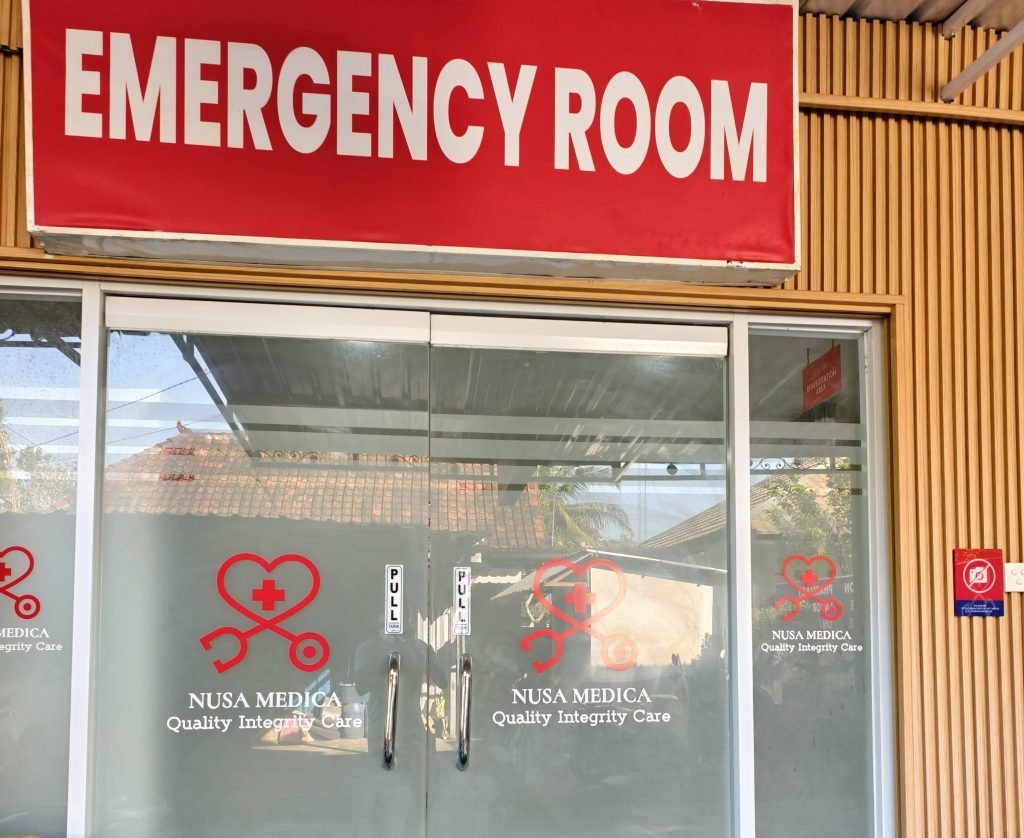
By around 9:30am, once I’d managed to calm down a bit, I figured there was no harm getting checked out at the island’s general emergency clinic first, rather than jumping straight into an expensive, stressful transfer.
It cost 750k IDR to be seen by an actual doctor. Thankfully, they seemed competent, diagnosed a scratch to my eyelid with possible early signs of infection, reassured me my eyesight itself was fine and would stay that way, and started me on antibiotic treatment.
I was told that if it hadn’t improved within 24 hours, heading to Bali’s main island was still an option. Unfortunately not only did I have to cancel my second snorkelling tour ( now refund offcourse ) and extending my stay by a day to let it settle before travelling on, but also trying to avoid any further sea water splashing my eyes.
Wander Up Front tip
There’s no dedicated eye clinic on Nusa Penida. If you wear contacts or have any eye concerns, know that the general emergency clinic can at least examine and treat basic issues, but anything more serious means a transfer back to Bali’s main island, so factor that into how much risk you’re comfortable with around open water here.
Worth Considering
Broken Beach (Pasih Uug)
A striking natural rock arch forming a circular bay on the west coast, carved out over millennia by erosion. You can’t actually get down to the water here, the cliffs are steep and fully enclosed, this is a viewpoint rather than a beach you swim at, so go in expecting exactly that rather than picturing sand underfoot.
Angel’s Billabong
A short walk from Broken Beach and usually covered in the same stop. A naturally carved tidal rock pool that turns into something close to a genuine infinity pool at low tide, with turquoise water settling into layers against the surrounding limestone cliffs. Best visited in the morning before the tour buses start arriving around 11am, and only worth swimming in when the tide is actually low, it’s not safe to get in during high tide.
Peguyangan Waterfall
A blue cliffside staircase descends down to a series of natural pools and a small waterfall spilling out into the sea. Less visited than Broken Beach and Angel’s Billabong, and by most accounts one of the more rewarding, less crowded spots on the island if you’re willing to make the climb back up afterwards.
This Is Why You Should Come to Nusa Penida
Yes, without much hesitation.
The heat, the port mix-up, the jellyfish, even the eye scare, none of it changes the fact that this was one of the most visually rewarding stretches of the whole Bali trip. Nusa Penida asks more of you physically than most stops on this itinerary, the hikes down to its beaches aren’t casual strolls, but the landscape on the other side of that effort is genuinely unlike anywhere else I saw in Indonesia. Come with decent footwear, a rash guard, and a realistic sense of how much walking you’re willing to do, and it delivers.
You can find my main Bali Destination Guide here