
What to Do in Ubud ( I Was Wrong About This Place )
Wander Up Front Destination Guide
Things to Do in Ubud, Bali
Ubud doesn’t announce itself so much as it seeps into you, incense drifting off a temple offering on the corner, a rooster somewhere behind the traffic, rice water running down a stone gutter towards a river you can’t quite see yet. It’s the rare tourist town that never fully stopped being a village, even as villas, yoga studios and coffee shops built themselves into the gaps between temples.
You come for the rice terraces and the palaces. You might stay, without quite meaning to, because the place has a pulse that has nothing to do with you.
Home to the highest concentration of Hindus anywhere in Indonesia, in the world’s largest Muslim-majority country. You could easily lose several weeks here, but 5 or 6 days is enough to do it properly. I first passed through in 2019 and found it overwhelming enough that I cut my visit short and headed to Malaysia early instead.
In 2026, I came back to give it a fair try.
Is all the hype overdone? Is it oversaturated? Is there anything left to do here that hasn’t already been done a thousand times before, or is it all just an endless Instagram-versus-reality trail? The honest answer sits somewhere in the middle, considerably more nuanced than either extreme.
This time I arrived with an open mind and no set itinerary. I just took each day as it came and let curiosity guide me. But if you’re the type who needs a plan, here’s why Ubud still deserves your time and attention.
My verdict: Ubud is not the cesspool of digital nomads faking it till they make it that I wrote it off as back in 2019, nor the tourist-overrun town I couldn’t catch a breath in. It still has a genuinely beating, local heart, and no amount of Western Instagram hype has managed to change that.
What to do in Ubud
Kajeng Rice Field
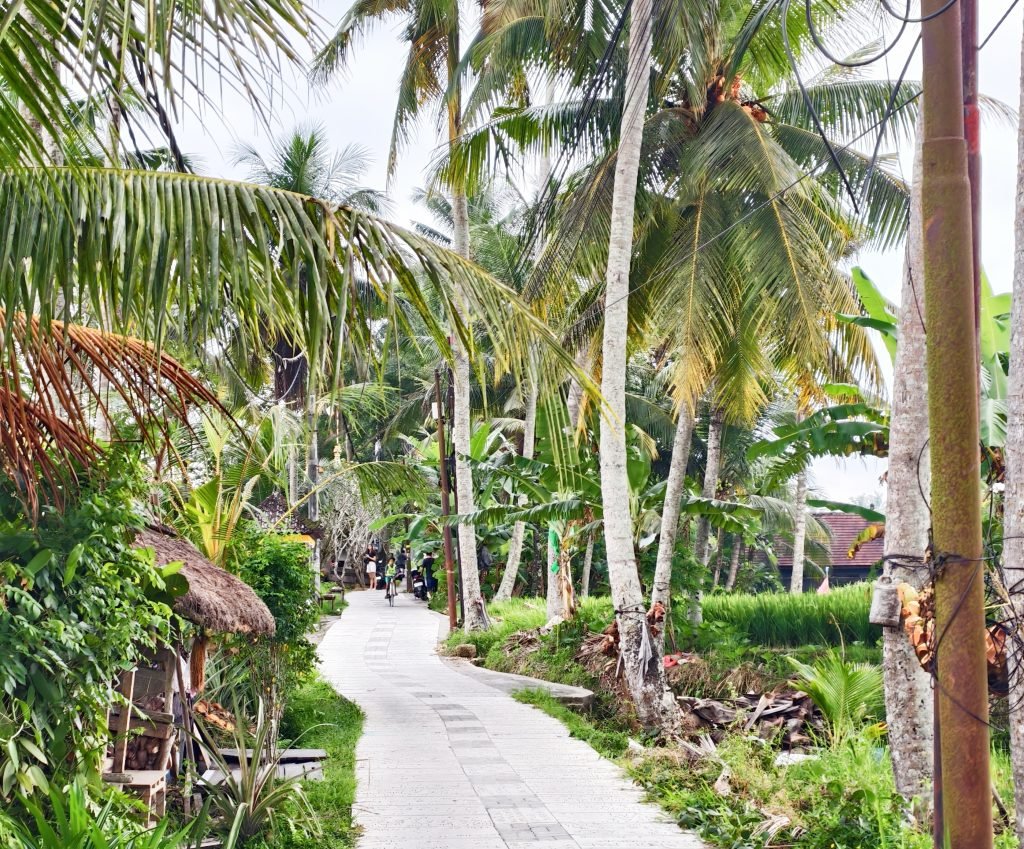
A nice 20-minute walk from central Ubud, and a world quieter than the famous terraces everyone else is queuing for. It won’t win any drone-shot competitions, but for genuine peace, and rice fields without an audience, it’s worth the short detour.
Tegalalang Rice Terrace
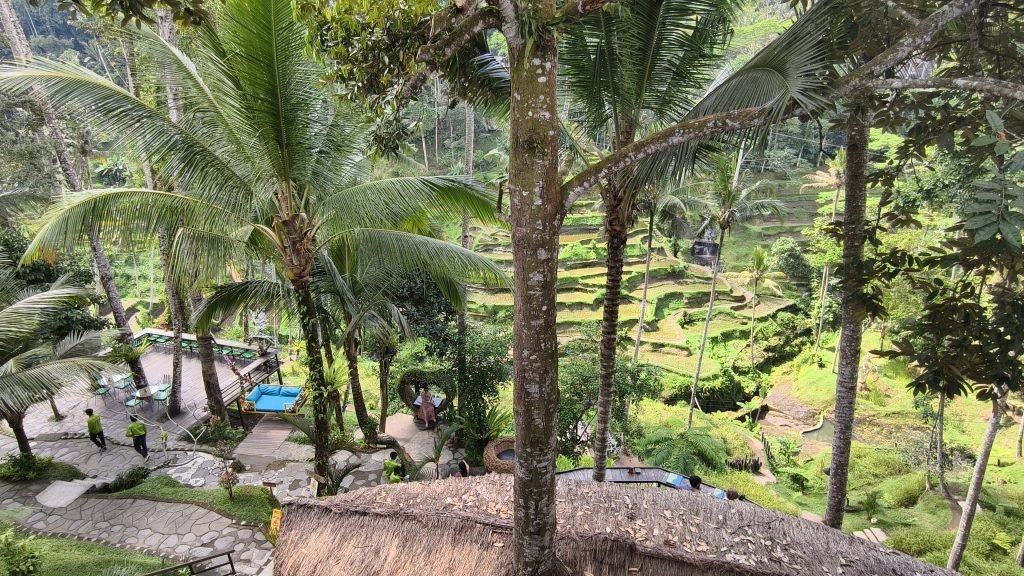
The most famous of the lot, and the one every Bali highlight reel eventually gets around to. Smaller than I’d pictured, if I’m honest, but undeniably stunning all the same. It was fairly busy, but there’s still something quietly hypnotic about watching a landscape work this hard at being beautiful.
There’s more to it than admiring the view from the top, though even the walking here counts as a small workout, the paths wind up and down constantly, and the midday heat has a way of making itself known fast. Bring water, wear something you don’t mind sweating through, and treat the swim afterwards as your reward rather than an optional extra.
Beyond the walking, there’s zip-lining, a Bali swing over the rice fields, a bike line, and infinity pools to relax in once you’ve earned it.
I was torn between the zipline and the bike ride, and eventually went with the zipline, both cost 350,000 IDR. The process is refreshingly simple: pay, head to a designated area to sign a waiver, strap into a safety harness, then head up to the deck.
It’s a genuinely unique way to take in the terraces, though don’t come expecting bungee-jump levels of adrenaline, this sits fairly low on that scale. The crossing itself takes around 45 to 50 seconds, and the nice touch is you cross back on a second, different line rather than simply retracing your steps. There’s a clip on my Instagram if you want to see it in action before deciding.
Wander Up Front tip
Tegalalang gets hot and busy fast once the tour buses arrive mid-morning. If you want it closer to how I found Kajeng, go early.
Sacred Monkey Forest Sanctuary
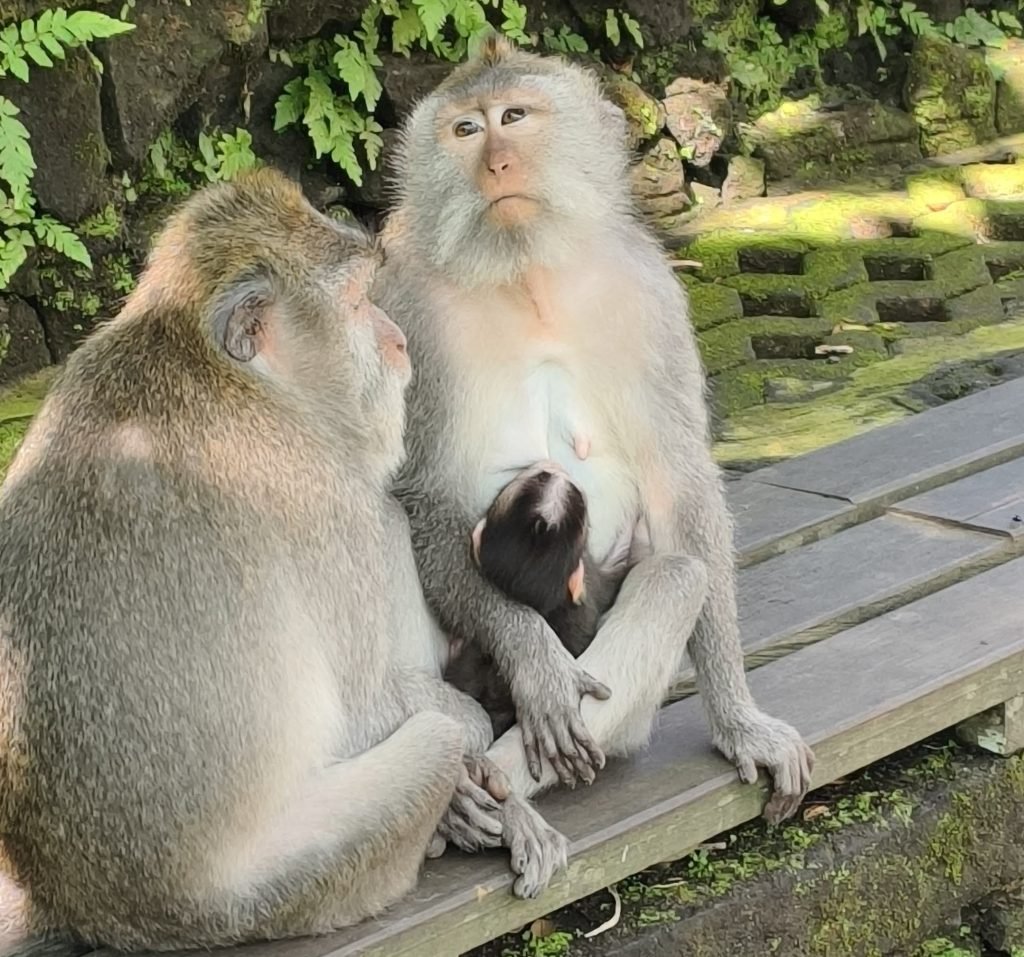
I met several people on this trip who were reluctant to visit, put off by fear of the monkeys. Most of that is misplaced. You should absolutely exercise reasonable caution, don’t get in their way, don’t try to touch or feed them, but I’ve seen monkeys in plenty of places across Asia, Malaysia and Brunei included, and these aren’t any more aggressive than that.
Beyond the monkeys themselves, the nature here is all-consuming in the best possible way.
The sanctuary, officially Mandala Suci Wenara Wana, covers around 12.5 hectares and is home to over 186 species of trees and plants, some of them centuries-old and used in traditional Balinese rituals, alongside more than 1,200 long-tailed macaques split across ten separate territorial groups.
There’s also a small enclosure of Timor Rusa deer, native to Timor rather than Bali, tucked into one corner, and three working temples inside the forest itself, Pura Dalem Agung Padangtegal, the Holy Spring Temple, and Pura Prajapati, all still used for purification and worship rather than existing purely for visitors.
Practical information
Opening: Daily, 8:30am–6pm.
Entrance: Paid entry, supports the sanctuary’s upkeep and conservation work.
Ubud Art Market
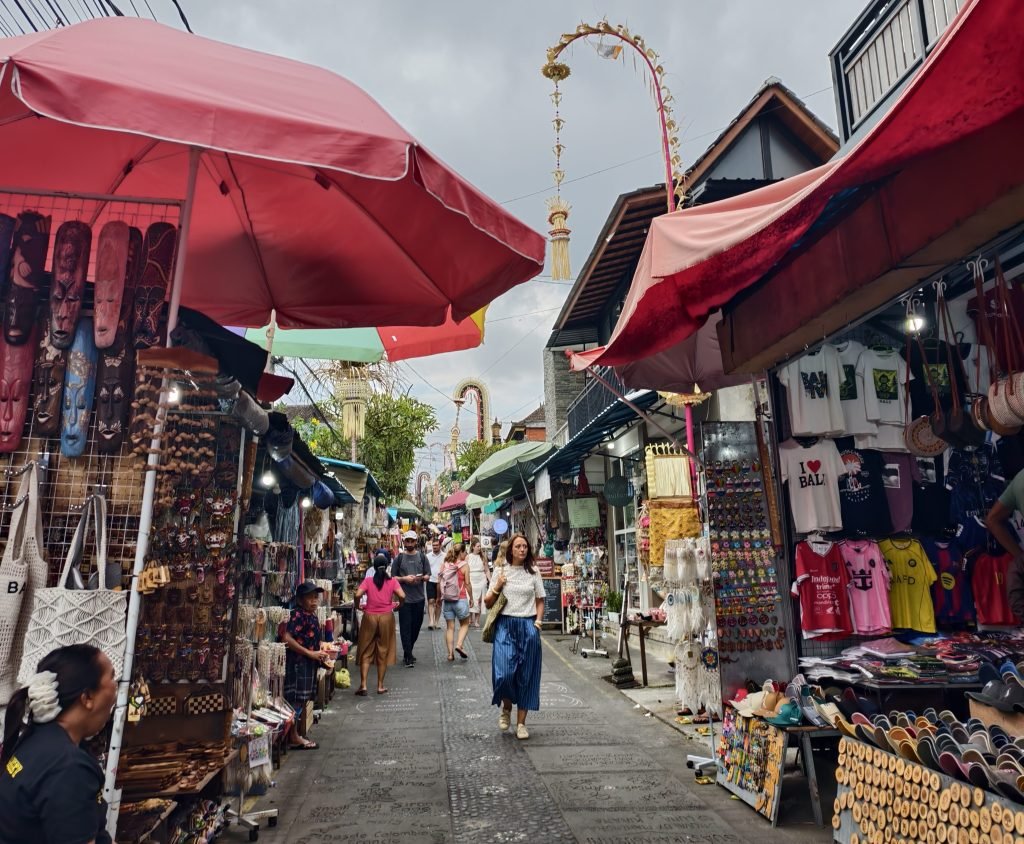
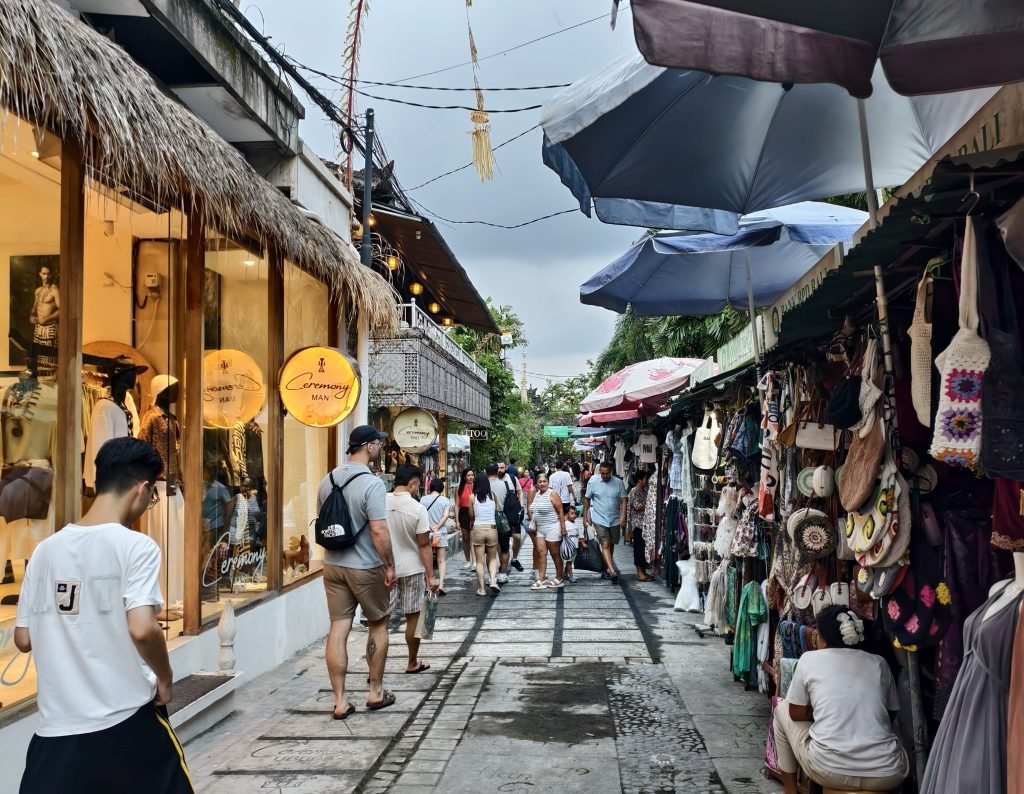
Did some shopping here for linen shorts and sarongs, and could easily have kept going. The range on offer is huge, clothing, handcrafted ornaments, and everything in between, enough that bartering is basically part of the experience rather than an optional extra.
Waterfalls
I went to Uma Anyar Waterfall. Having stood in front of some of the biggest, most stunning waterfalls on the planet, I’ll be upfront: this isn’t in that league. But as smaller waterfalls go, it’s a properly decent gush of water, and exactly the kind of unpretentious spot Ubud does well.
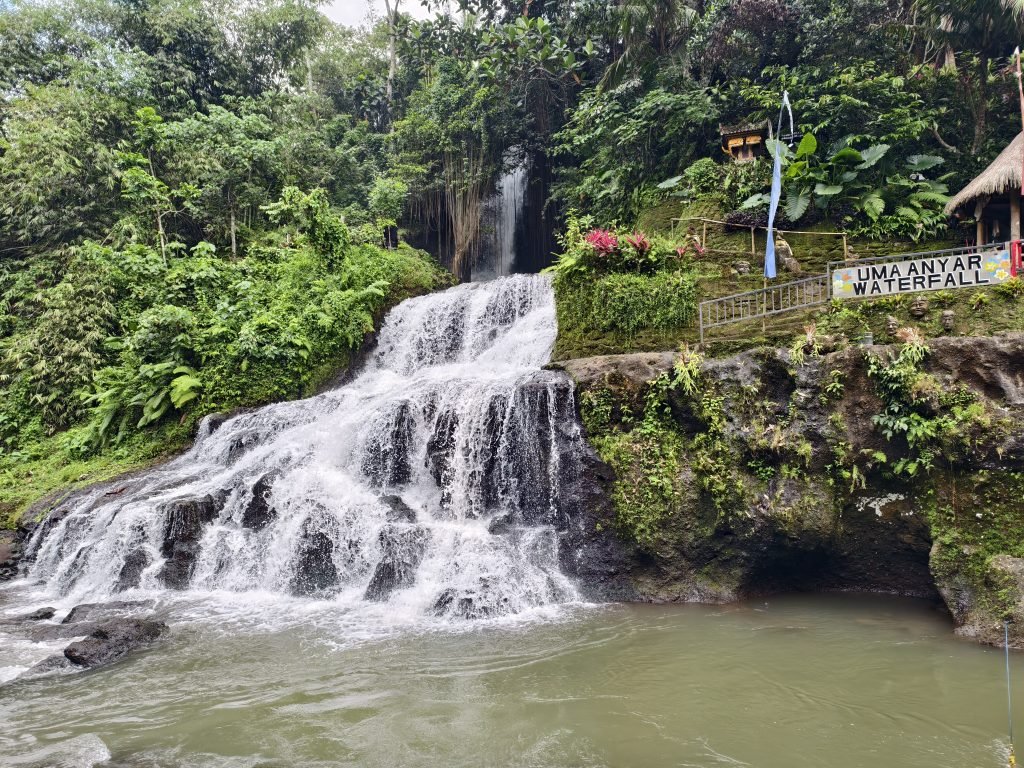
You can bathe underneath it, which is a nice way to cool off after the heat of the rice terraces.
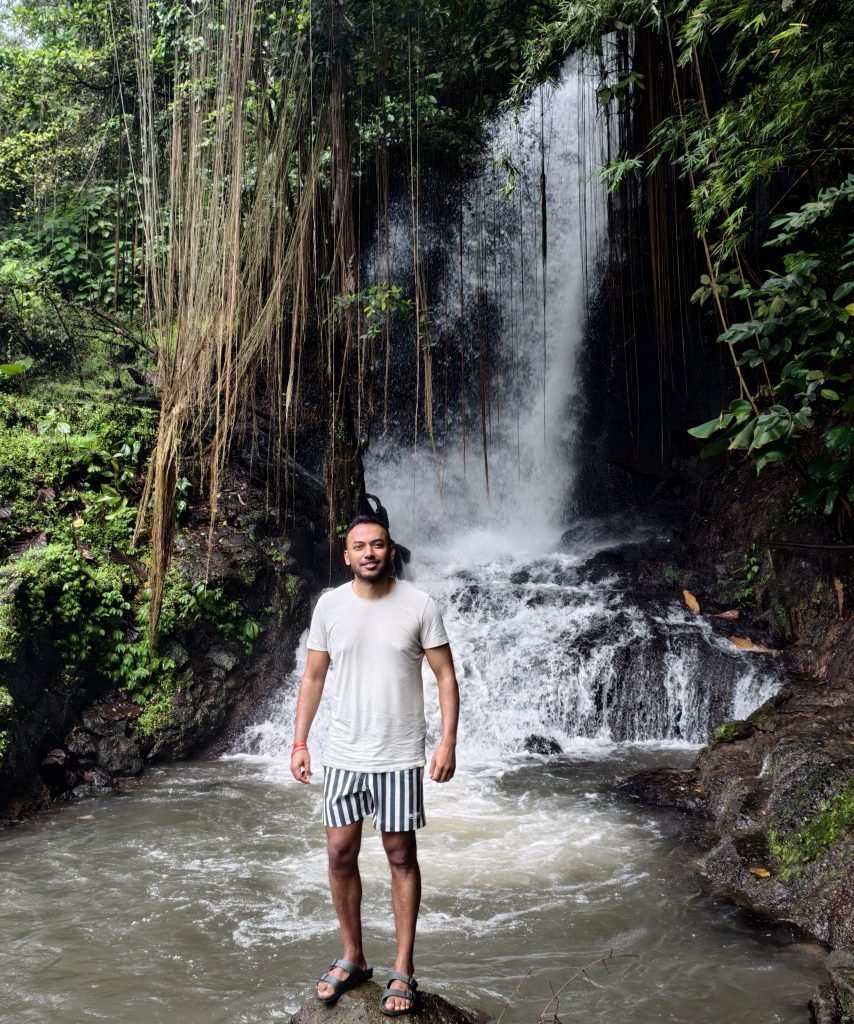
If you want to see more without doubling back on yourself, a few others worth knowing about: Tegenungan is Ubud’s biggest and most famous, easily accessible and popular for swimming, though also the most crowded, best visited early morning before the tour groups arrive.
Sumampan is a properly quiet alternative, tucked through a short walk via a palm forest, with jungle vines and stone carvings that look ancient despite being relatively unknown. Kanto Lampo and Tukad Cepung are both popular for photography, the latter for the way light filters into its narrow cave-like gorge. If you want to make a proper day of it, most tours combine two or three of these with hotel pickup included.
Practical information
Opening: Uma Anyar, 8am–6pm, entrance around 15,000 IDR.
Best time: Early morning for any of the more popular waterfalls, to beat both the heat and the crowds.
Ubud Palace
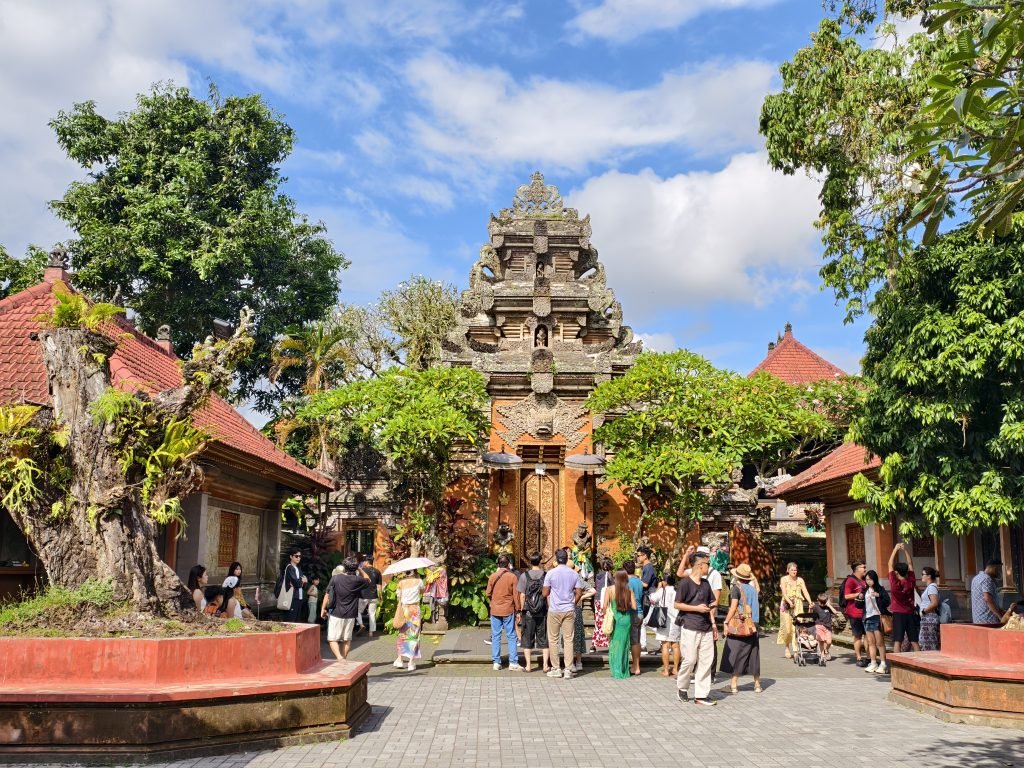
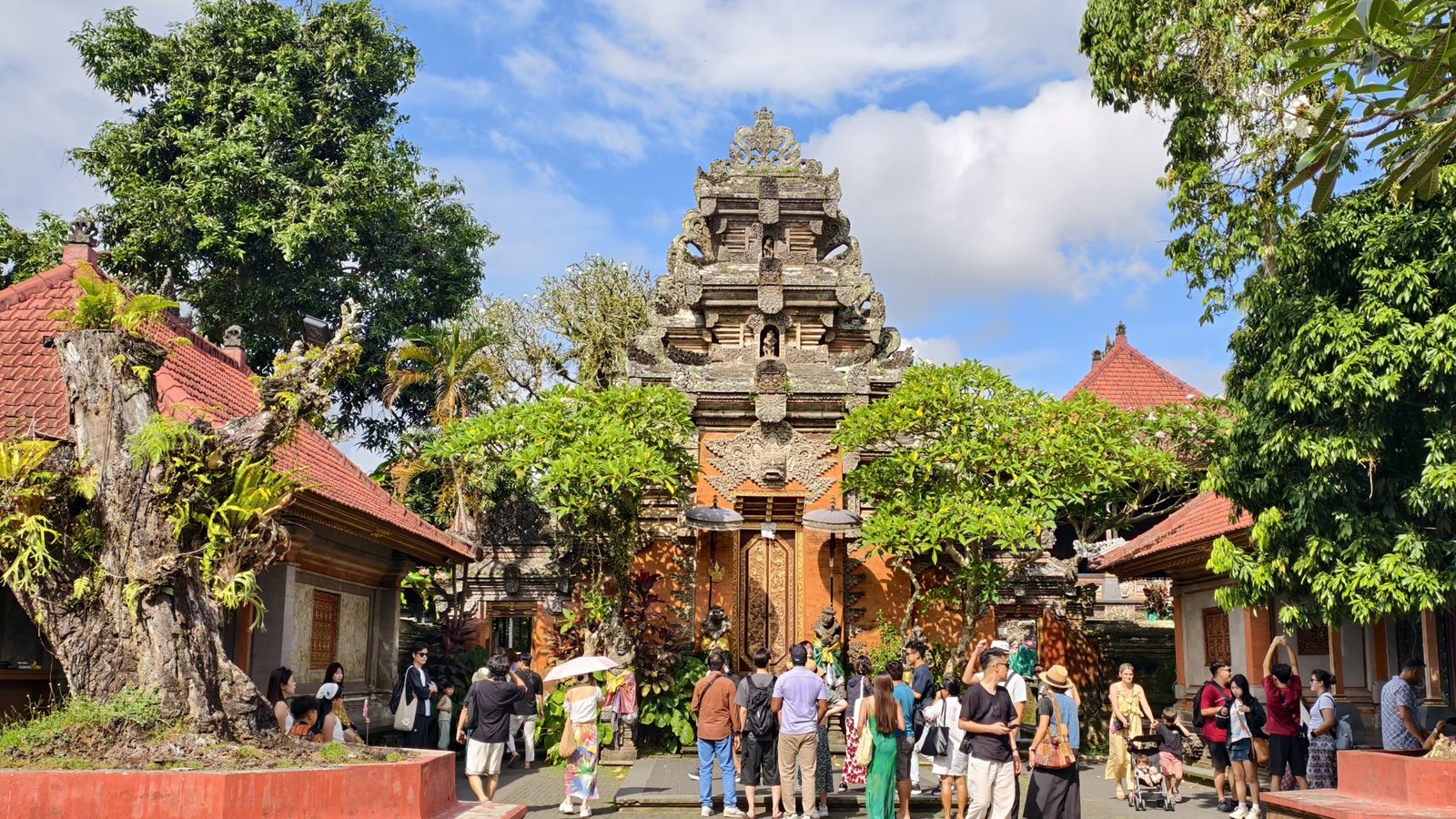
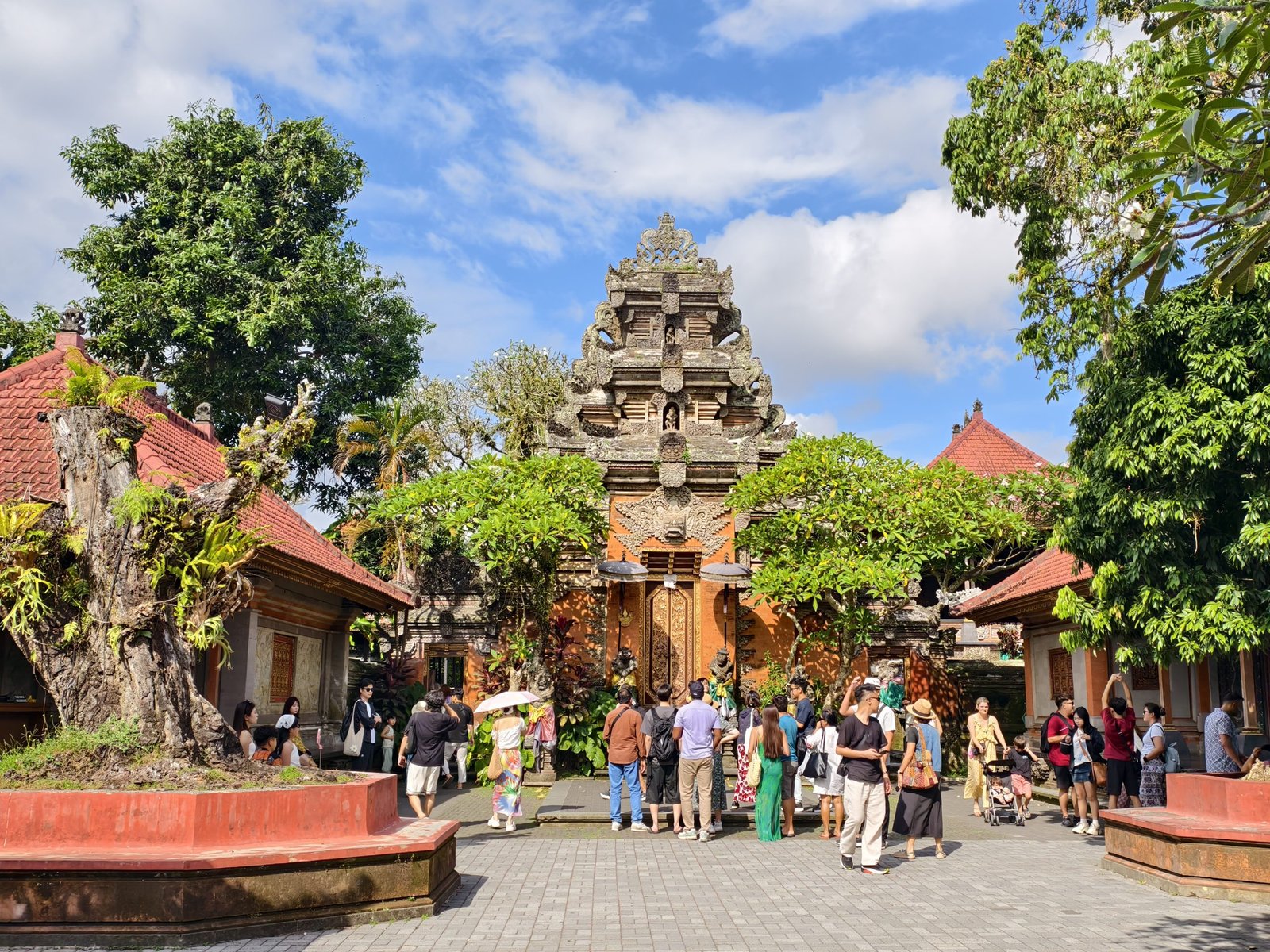
The official palace of Ubud’s royal family, and a genuine anchor point for Balinese Hinduism in the town. I visited by day, pleasant enough, with historic stone carvings throughout, though the heat by midday is no joke. If you can only make it once, go for an evening traditional dance performance instead, it’s the better version of this visit.
Practical information
Opening: Daytime for the grounds and carvings; evening for traditional dance performances.
Ubud Water Palace (Pura Taman Saraswati)
I visited just before sunset, and it was simply spectacular. To my surprise, there weren’t many people there at all, so I was able to walk around and really take it in.
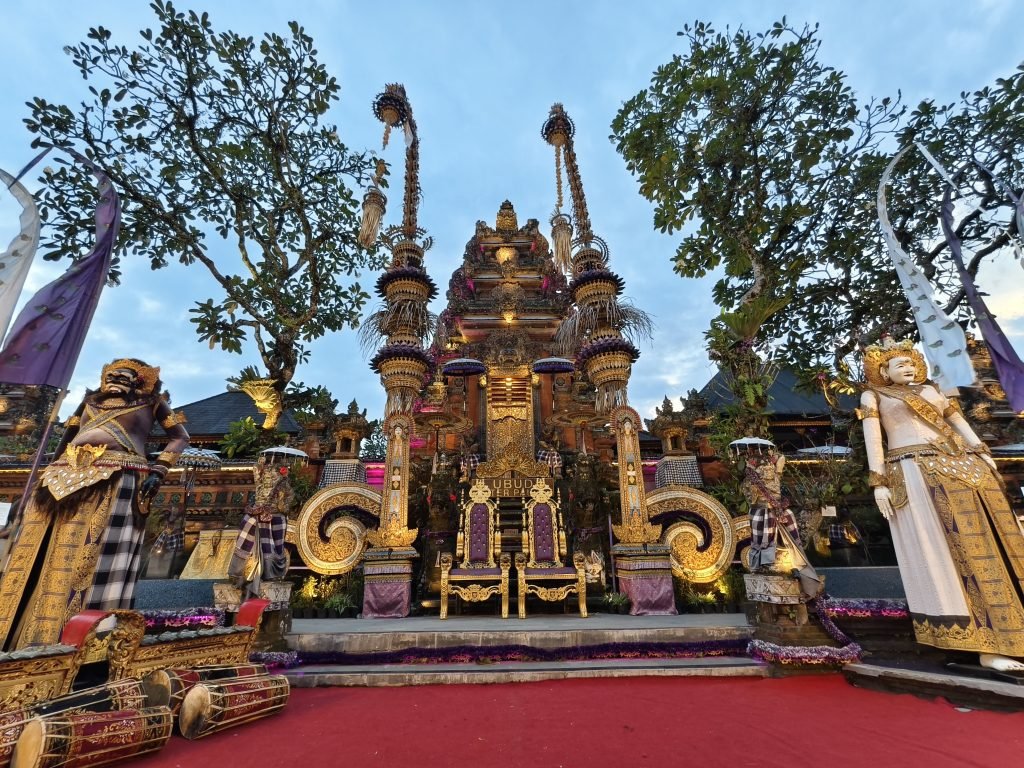
I loved the design of the place: a central walkway with wooden platforms over the water leading from both corners up to the palace itself. They even provide sarongs to wear, mandatory if you’re showing too much visible skin, before you’re allowed in.
This place had a genuine atmosphere all its own, and the evening light did the intricate stonework every favour.
The temple was designed in 1951 by I Gusti Nyoman Lempad, one of Bali’s most celebrated sculptors and architects, commissioned by the Prince of Ubud to honour Saraswati, the Hindu goddess of knowledge and the arts.
Its layout follows Tri Mandala, a Balinese principle of sacred space allocation, arranged into three concentric zones moving from the outer, more public lotus pond and water garden, through a middle zone of pavilions and intricate red-and-white sandstone carvings, to the innermost sacred shrine.
The centrepiece lotus pond is the whole point of a visit; pink lotus flowers, considered sacred in Hinduism, bloom across water gardens that reflect the temple’s carvings back at you, especially striking right around sunset, which is exactly when I got lucky with the quiet.
Practical information
Opening: 8am–7pm, until 9:30pm on Fridays.
Entrance: Around 60,000 IDR for adults. Dance performances run most evenings for an additional fee.
The Coffee Villages
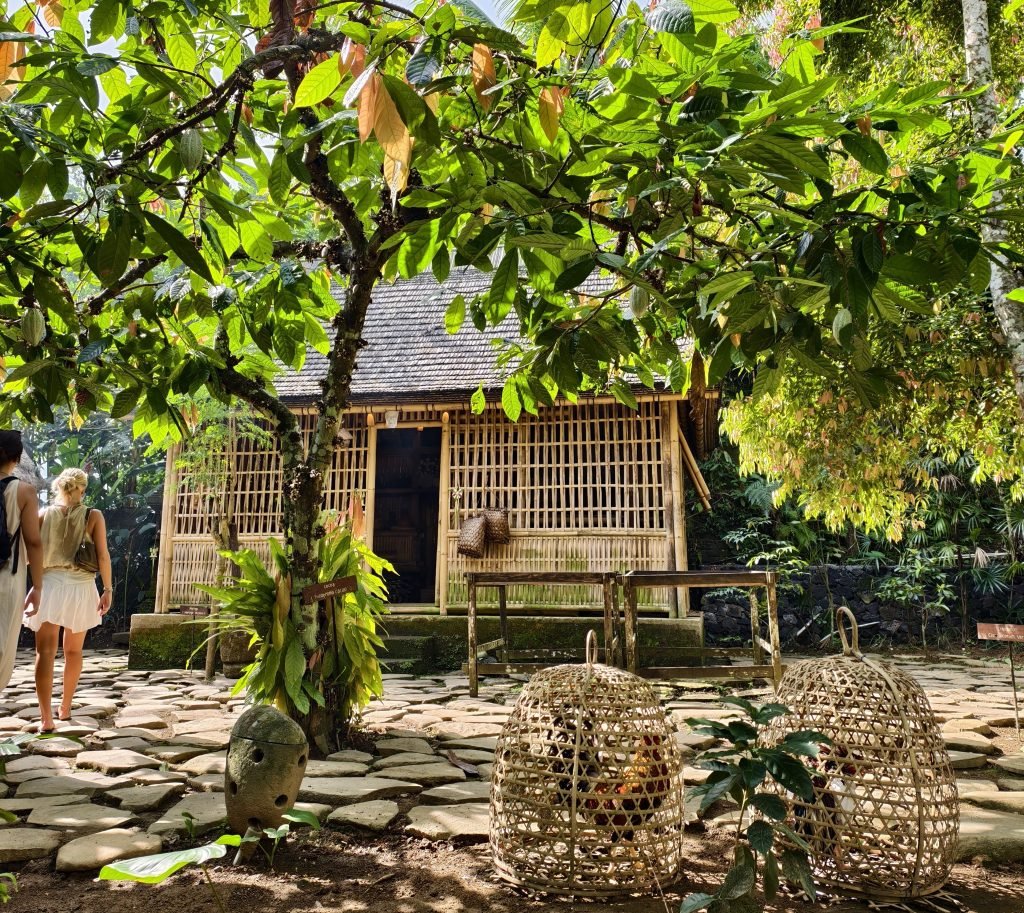
I visited a plantation where you can see the different varieties of coffee grown and made, including the full production process. I even helped a lady mill some coffee by hand, using a large, heavy wooden pestle. They also explained how some of their coffee is deliberately fed to a particular small animal, and the beans come out the other end whole, which apparently changes the flavour and aroma of the resulting coffee.
That’s kopi luwak, made from beans that have passed through the digestive tract of the Asian palm civet, a small, cat-like nocturnal mammal native to Indonesia. The civet selectively eats only the ripest coffee cherries, and enzymes in its stomach break down the proteins responsible for coffee’s usual bitterness as the beans ferment inside it.
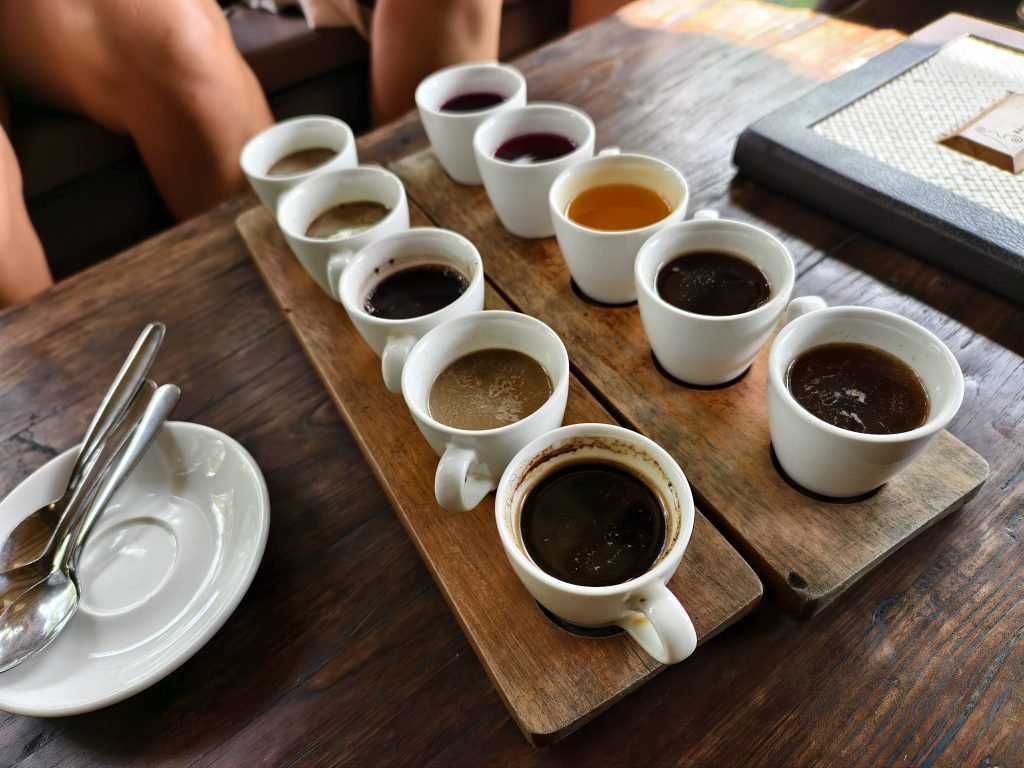
The beans are collected by hand from the ground, washed multiple times, sun-dried, and roasted. The result is noticeably smoother and less acidic than regular coffee, earthier too, and it’s often cited as the world’s most expensive coffee as a result of how labour-intensive and rare the genuine process is.
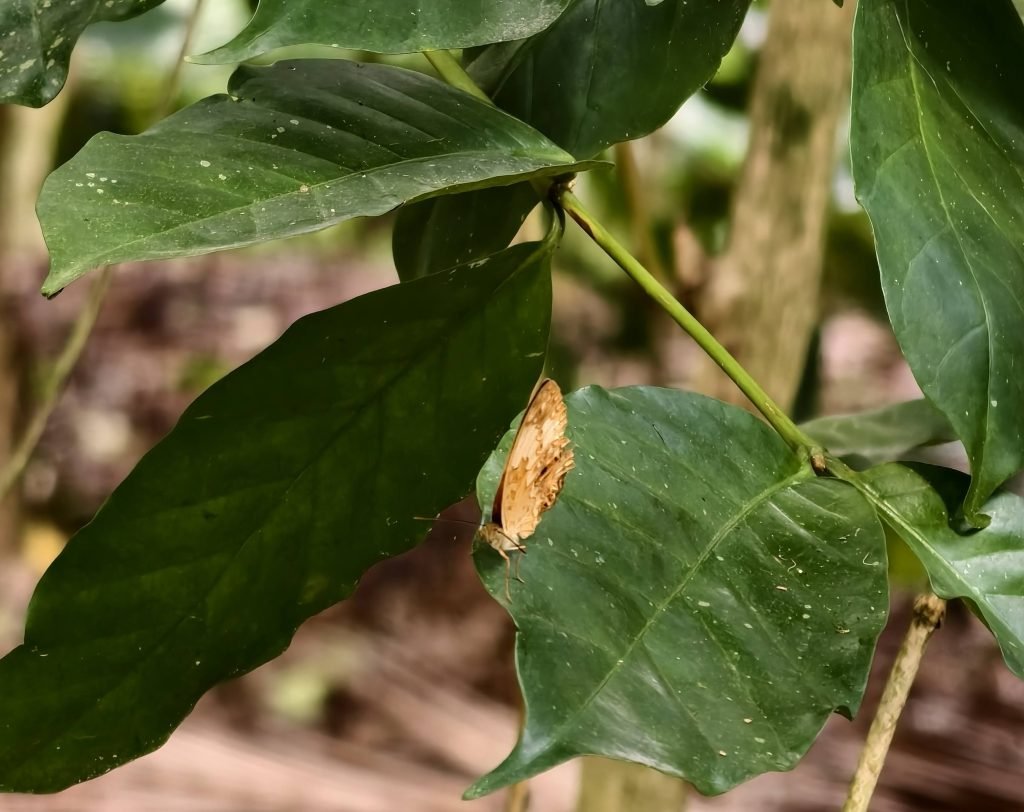
One thing worth knowing before you visit a plantation: genuine wild kopi luwak, where civets roam free and are never caged, is increasingly rare. A significant share of the market now comes from caged, force-fed civets, a practice condemned by animal welfare groups for the stress and poor health it causes the animals. If it matters to you, it’s worth asking the plantation directly whether their civets are wild or caged before you commit to the tasting menu.
I then spent an hour trying a variety of teas and coffees, an excellent way to work through the different flavours while overlooking some properly beautiful trees.
Massages
A Bali classic, and an absolute must. Despite getting free massages at my accommodation every day, I still went out to try an authentic Balinese massage elsewhere too.
They’re so good and so cheap compared to European prices that it feels wrong not to take full advantage while you’re here.
Where to Stay
I stayed at Savanna, right in the heart of Ubud yet tucked away behind one of the main streets, opening up into a tranquil little sanctuary of its own. It’s a collection of villas and traditional hut-style rooms with king-size beds, private verandas, and en-suite bathrooms with bathtubs.
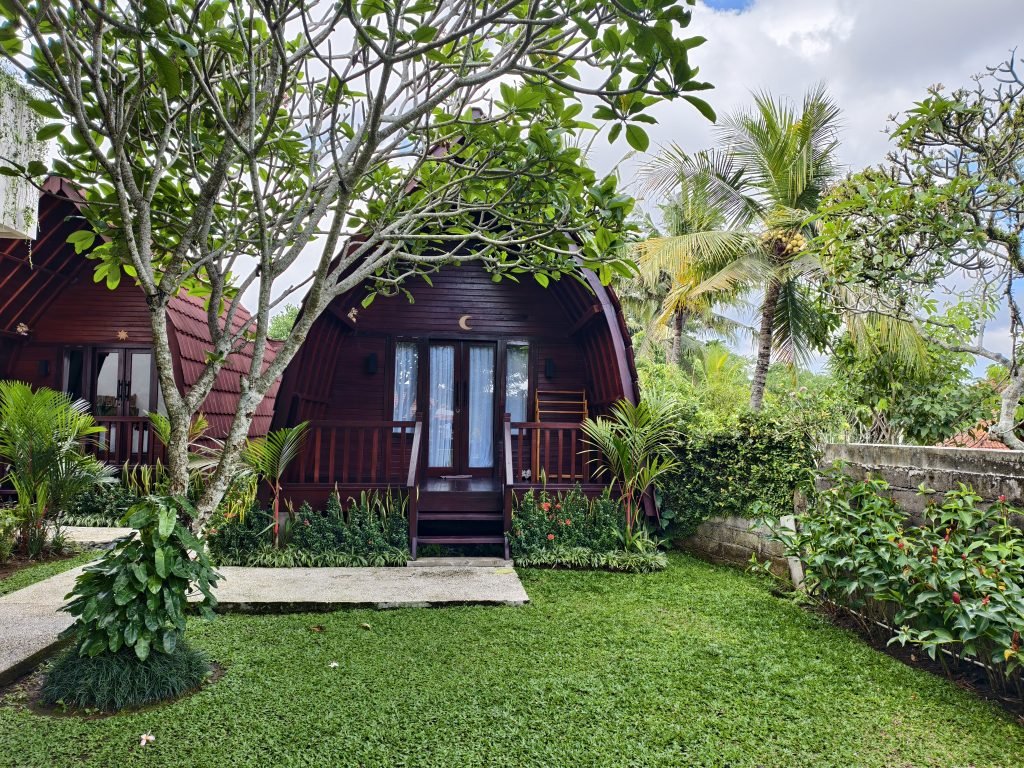
The place has an exclusive resort feel without being a full-blown resort. There’s an onsite pool, restaurant, bar, gym, yoga classes, live music, activity guides, and nightly socials. The staff were wonderfully warm, and there was almost always someone nearby the moment you needed anything, happy to serve you wherever you happened to be sitting.
One of my favourite features was the koi pond with its own little footbridge, all kinds of fish to watch, with comfortable seating lined along it and small water features trickling away. It was just so serene and peaceful. And on top of all that, they offer free massages every single day.
The service was properly in line with a 5-star resort. I only booked two nights initially, planning to check out other accommodation, but ended up extending my stay here for the entire trip instead. Some of the other options I researched and short-listed for my stay..
Four Seasons Resort Bali at Sayan
High-end
Perched above the Ayung River within a UNESCO-listed valley, reached by a suspension bridge across the jungle canopy that opens onto a circular lotus pond seemingly floating above the treetops.
This Four Seasons has around 60 villas and suites built from local timber with thatched roofs, most with private plunge pools, plus a highly rated spa and cooking school. About 10-15 minutes from central Ubud with a shuttle running throughout the day.
The standout luxury pick if the arrival experience alone is worth the trip.
COMO Uma Ubud
High-end
A wellness-led resort with rooms strung along wooden pathways flanked by koi ponds, an open-air yoga pavilion, a 25-metre pool, and a daily schedule of complimentary wellness activities and treatments for guests staying two nights or more.
Quieter and more restorative than Sayan’s dramatic setting, better suited to anyone treating Ubud as a genuine reset rather than a sightseeing base. Book here
Green Field Hotel and Resort
Mid-range
Set among rice fields around a 10-minute walk from the Monkey Forest, with spacious, contemporary rooms, private terraces, and some with their own plunge pool and outdoor dining area.
A good pick if you want the rice-terrace views without the price tag of a full jungle resort, while still staying close enough to walk into central Ubud. Book here
Food in Ubud
There’s no shortage of places to eat here, from simple local Balinese dishes to other Asian cuisine and international/Western options. You could happily spend a month in Ubud just trying new places.
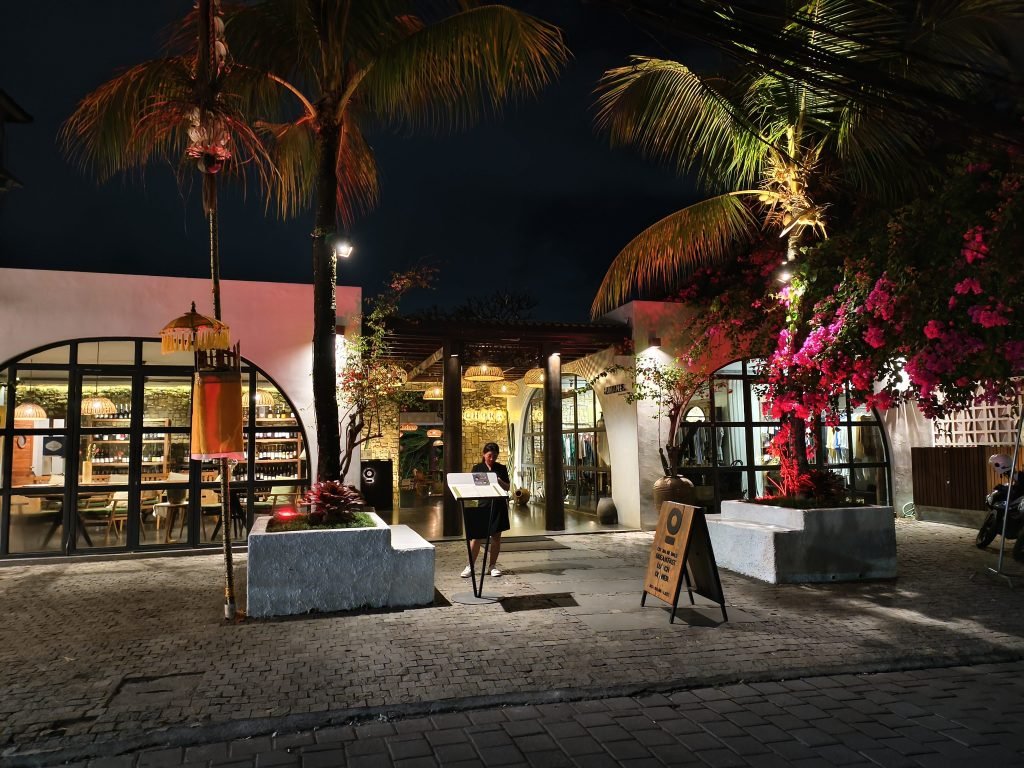
Maluku Ubud is a more upmarket spot, and the atmosphere and furnishings reflect that, modern yet warm, with a great atmosphere and live music.
On my first visit I had the Beef Rendang – braised beef rump, rendang paste, coconut milk, star anise, cinnamon, and lime leaf, served with white rice and Black Sticky Mango rice.
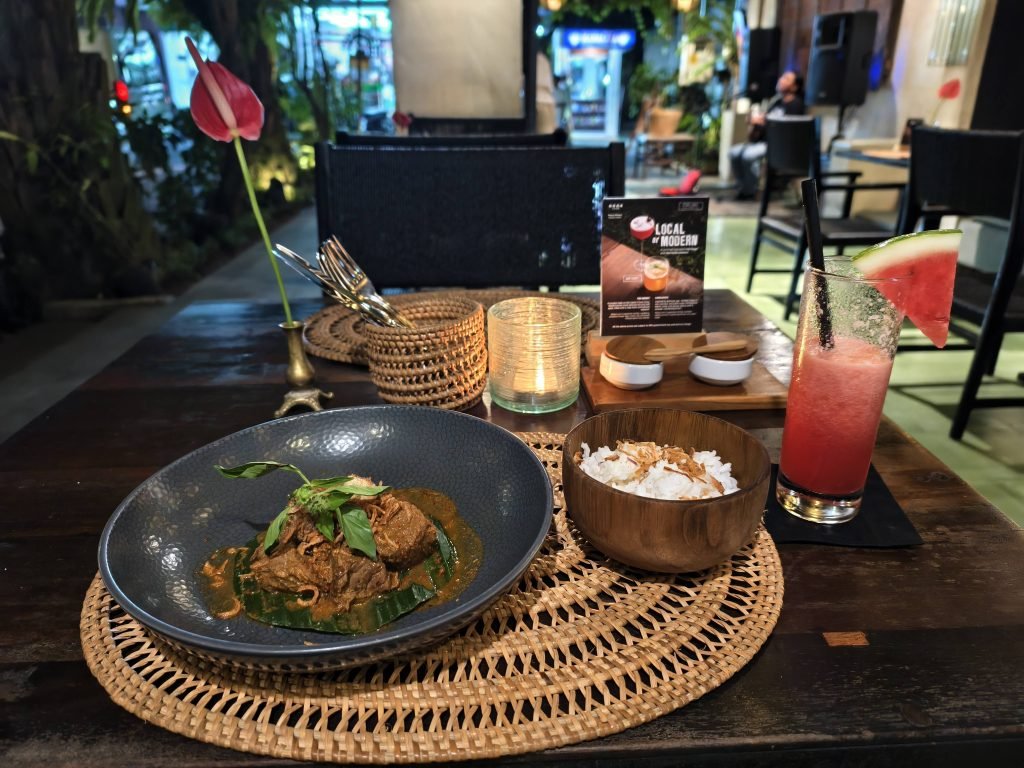
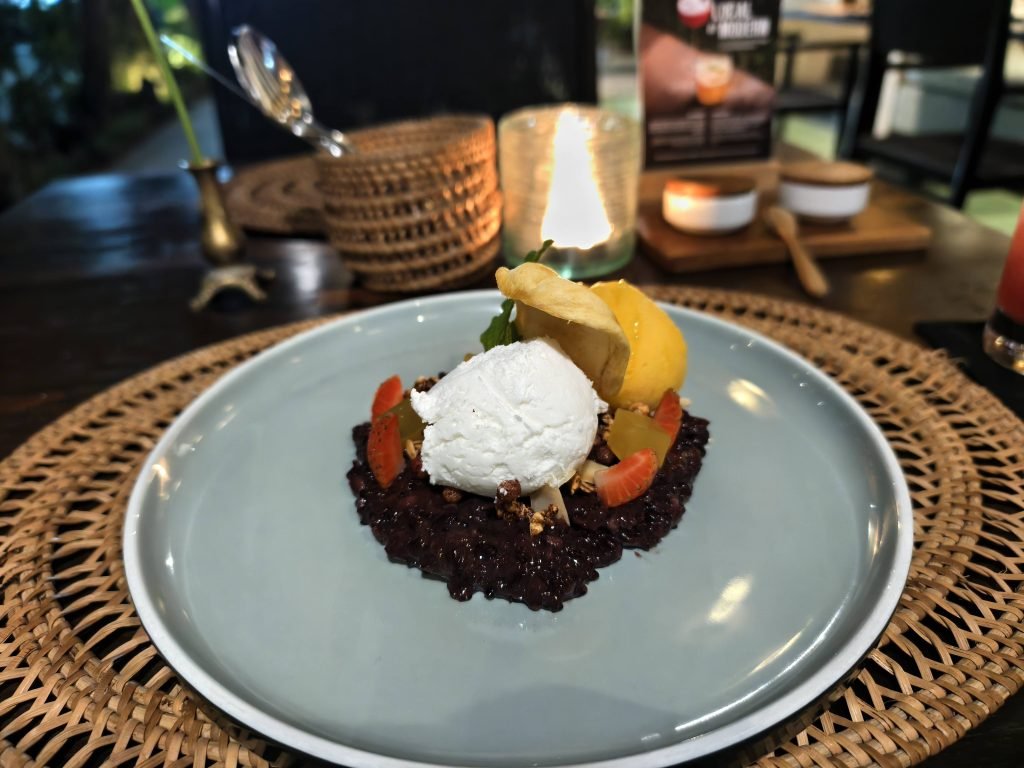
I came back a second evening and tried the Crispy squid, Nasi Goreng Rendang, and, of course, the black sticky rice again. Good cocktail selection too. You can check their current menu at malukuubud.com in case it’s changed by the time you visit.
For something faster and more comforting, Joe’s Junior does great burgers, the Sloppy Joe Combo is worth trying..
Warung Local kept missing its window since it closes early, worth checking hours before you plan around it.
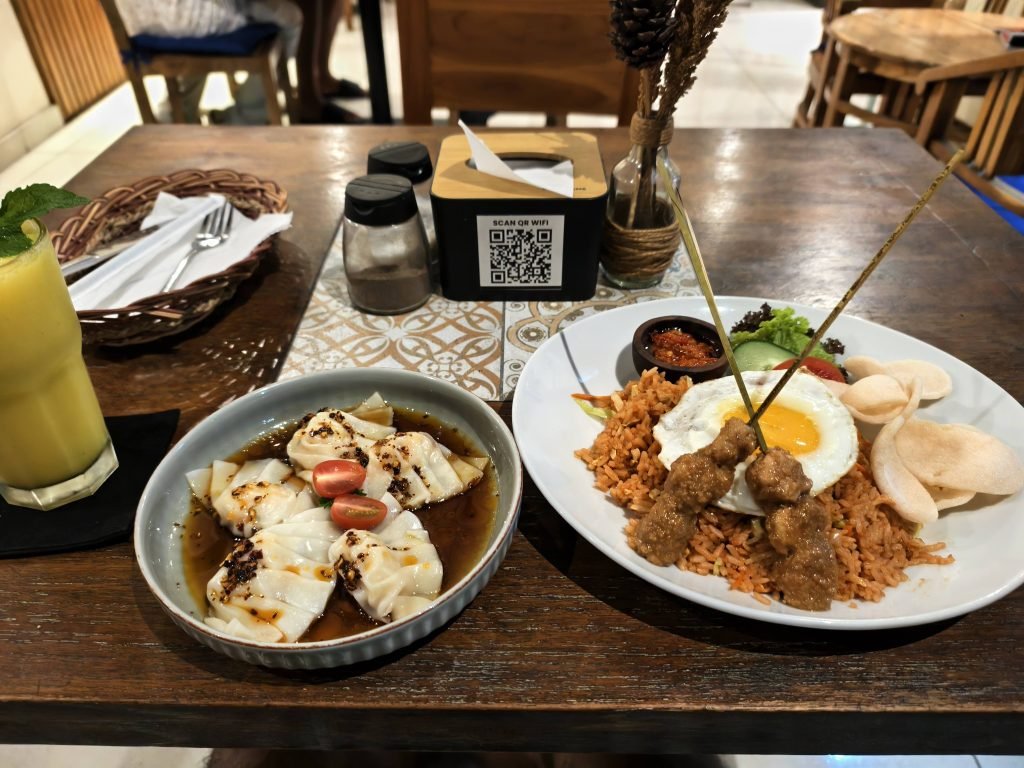
Rus Kitchen was lovely, ate there twice, including the classic Nasi Goreng and some gyozas, low-key but genuinely great food and service.
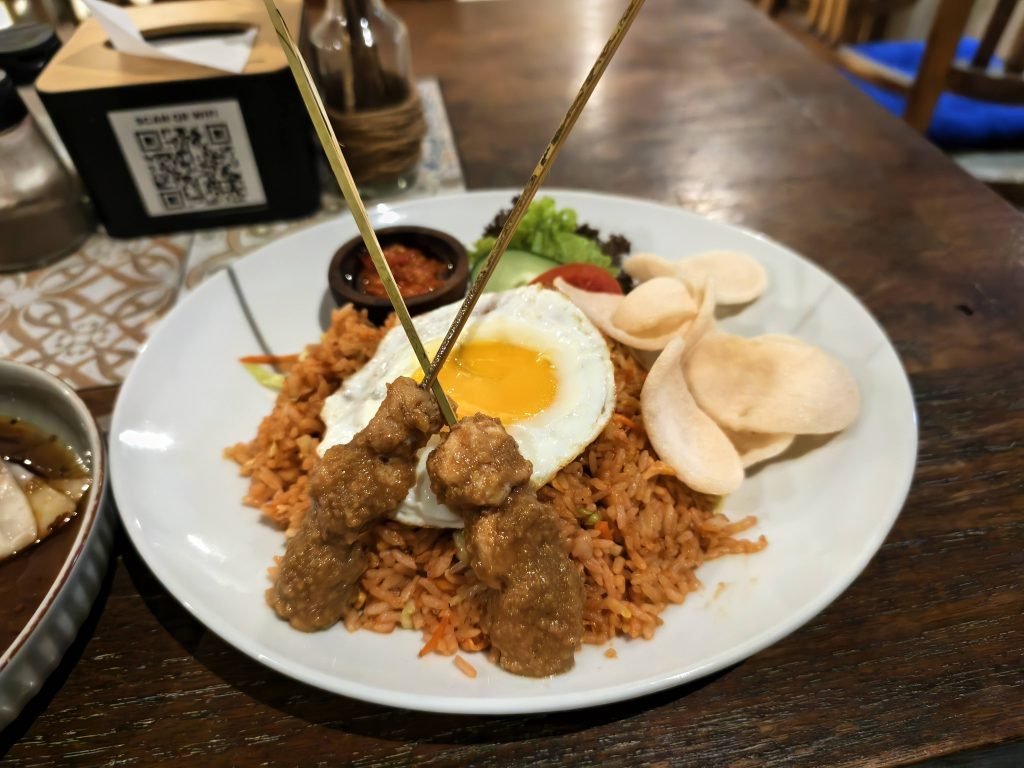
Uma Ceking Warung is a stunning spot to eat overlooking lush green paddy fields.
Breakfast, I had at my accommodation every day, an à la carte spread with pancakes, eggs done a few different ways, granola, and açai bowls.
There was only one place where the food and service weren’t great, right after visiting the Monkey Forest. A restaurant nearby lured me in with a bold 20% off sign for anyone holding a Sanctuary ticket, visible from across the road. Once seated, half the menu turned out to be unavailable, so I ordered chicken bao, which was fine, and some cheesy potato wedges on the side, which they completely forgot about.
When the bill came, all they offered was a discount on the Coke. Apparently the discount was for specific menu items!
Wander Up Front tip
Be a little wary of restaurants advertising discounts specifically for Monkey Forest ticket holders right by the exit. It’s not a rule, but it was the one disappointing meal of the whole trip.
I Escaped Bali Belly
Bali has a reputation for this, like a few other big destinations do. To my pleasant surprise, I didn’t get sick once across the entire three-week trip. I stayed a little on edge and kept a somewhat vigilant stance throughout: I didn’t eat at any market or street food stalls, and only drank bottled water or filtered water provided by proper restaurants.
So my honest take is that it’s easy enough to avoid any nasties if you follow some basic common sense.
Wander Up Front Reality Check
I was wrong about Ubud. It isn’t a cesspool of low-grade “digital nomads” faking it till they make it, and it isn’t so overrun with tourists that you can’t catch a breath of peace, which is exactly how I labelled it back in 2019.
The place still has a beating heart and soul that’s powerfully local and authentic, and no amount of Western Instagram hype seems able to change that. Maybe my timing helped, but I get the feeling the place has calmed down a little regardless, whether that’s government policy restricting how long and how many tourists can stay, or something else entirely. Whatever it is, I’m glad it happened.
Is Ubud Still Worth It?
Yes, without much hesitation.
Even though I’ve only been back in London a few weeks, I already feel fond of the place and want to go back. That’s not something I expected to say about a town I cut my visit short on back in 2019. Come with an open mind, don’t over-plan every hour, and let the temples, the rice fields, and the food do the rest of the work.
Looking for the wider picture before you commit to Ubud specifically? See my full Bali homepage guide for where else is worth your time, and where I’d actually steer you away from.
FAQs
How many days do you need in Ubud?
4-5 days should be enough to cover the highlights, but I’d recommend a full week if you want to enjoy it at a good, unhurried pace rather than rushing between temples and rice terraces.
Is Ubud walkable, or do you need a scooter?
If you stay centrally, you can walk to most places you need day to day. For trips out of town, the rice terraces, waterfalls, and so on, a scooter or Uber covers the rest.
What’s the best time of year to visit Ubud?
April to October is generally considered the best, driest stretch. I visited in July, the most expensive and busiest month, so if low crowds matter more to you than guaranteed sunshine, March/April or October/November look like the sweet spot.
Is Ubud good for vegetarians and vegans?
The food scene here genuinely caters to everyone, and given the strong Hindu population, you’ll find plenty of vegetarian and vegan places alongside everything else.
Do you need to dress a certain way to visit the temples?
Modest dress is suggested, but from what I could tell, it isn’t always strictly enforced.
Is Ubud expensive compared to the rest of Bali?
Ubud runs slightly more expensive than the rest of Bali, probably comparable to somewhere like Canggu.
How much should you budget for Ubud?
For peak season, I’d budget 120-150 USD per day staying in mid-range or boutique hotels and mixing local warungs with more elevated dining. For a luxury trip, there’s really no ceiling, but 300-400 USD a day should be plenty to enjoy finer hotels and food.